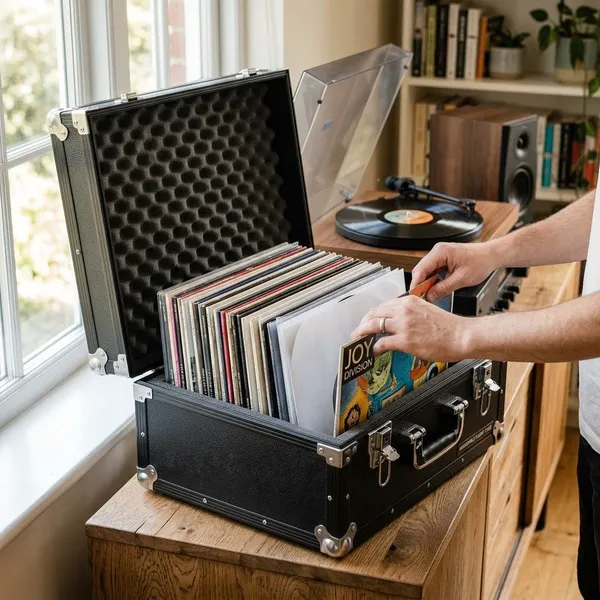
Choosing the Right Vinyl Record Storage Cabinet
Choose a vinyl record storage cabinet by checking three things first: whether it can carry the weight, whether LPs fit without scraping, and whether you can browse without packing the rows tight. Style matters, but a good-looking cabinet that sags, crowds your records, or makes the turntable awkward will become annoying fast.
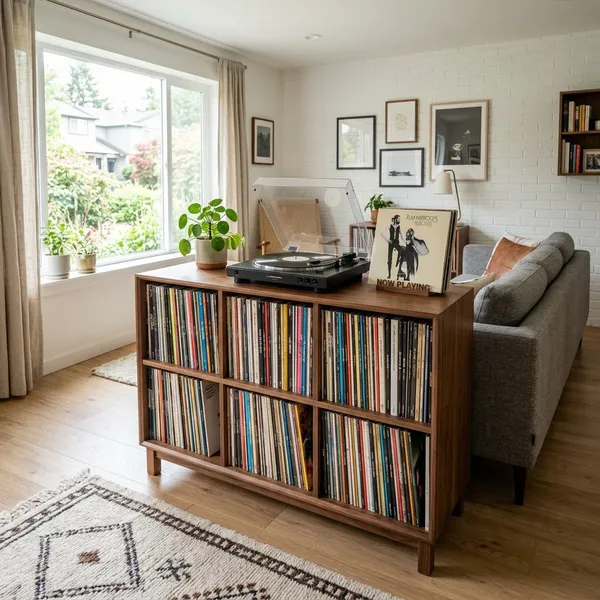
What to Look for in a Vinyl Record Storage Cabinet
The best cabinet is not simply the one with the highest advertised capacity. Records are dense, sleeves need room, and a cabinet that works for display may not work for daily listening. Start with the parts that affect safety and use, then decide which style fits the room.
- Check strength first: shelves, dividers, joints, and the back panel should feel rigid, not decorative.
- Measure the inside: LP jackets need comfortable clearance, especially if you use outer sleeves or own gatefolds.
- Plan for real browsing: a row packed edge to edge is technically full, but not pleasant to use.
- Think about the room: a small apartment setup needs a different cabinet than a living-room listening station.
Strong shelf support
Records can make a shelf sag long before it looks overloaded. Short shelf spans, thick panels, vertical dividers, a firm back, and solid fasteners are all good signs. If a cabinet wobbles when empty or the shelves flex when you press lightly on them, it is not the one I would trust for a growing record collection.
Proper record clearance
Internal measurements matter more than the product photo. A cabinet should give standard 12-inch LP jackets enough height and depth to slide in easily, with extra room for protective sleeves and thicker releases. As a practical check, measure your largest jacket or box set and compare it with the cabinet's usable opening, not just the outside dimensions.
Enough storage capacity
Buy for usable capacity, not the maximum number printed in a listing. A cabinet advertised for 200 records may only feel comfortable with fewer once you add gatefolds, dividers, outer sleeves, and browsing space.
- Casual collection: leave one partly empty section so new purchases do not immediately create crowding.
- Active collector: choose a larger or modular setup before the current collection reaches the limit.
- Box set owner: reserve a wider or more flexible compartment instead of forcing bulky releases into tight rows.
Easy record access
A cabinet should make you want to play records, not avoid them. Waist-height storage is often easier to browse than very low compartments, and open-front sections are faster than doors if you choose records every day.
For a living room where the collection needs to look tidy, doors may be worth the extra step. For a listening corner where you flip through albums often, open cubes or divided shelves usually feel more natural.
Room for collection growth
Some empty space is useful, not wasteful. It keeps rows loose enough to browse, gives you room for new records, and prevents the "full on day one" problem. If you already buy records regularly, one spare cube or an expandable system is usually smarter than a cabinet that fits your current count exactly.
How to Size a Vinyl Record Storage Cabinet
Sizing is where many buyers make the wrong tradeoff. A cabinet can be wide enough for the wall but too shallow for records, or roomy enough for records but too heavy once loaded. Work through collection size, floor space, and weight before comparing finishes.
Count your current records
Do a real count instead of guessing from the shelf. Separate standard LPs from box sets, oversized editions, and anything stored in thick outer sleeves. If your records are spread across crates and shelves, count by location and add them up; a rough estimate can easily miss enough albums to change the cabinet size you need.
Allow space for box sets
Box sets do not behave like regular LPs. They can be wider, deeper, heavier, or awkwardly shaped, so a cabinet that fits normal jackets may still fail here.
A simple fix is to assign one flexible section to bulky releases. That keeps the main rows easy to browse and prevents the common mistake of stacking box sets flat on top because they did not fit anywhere else.
Leave room for new records
If you buy a few albums a month, plan beyond today's number. Even slow collecting fills a cabinet faster than expected, especially when reissues, gifts, and secondhand finds appear in batches. A useful target is to leave enough free space that you can flip through each row without pushing hard against the neighboring jackets.
Check the cabinet footprint
Measure the wall, but also measure how the cabinet affects the room. Leave space for walking paths, speaker placement, doors, drawers, and the area where you stand while browsing.
| Room situation | What to prioritize |
|---|---|
| Small apartment or bedroom | Lower cabinets, shallow visual profile, easy access without blocking walkways |
| Living room setup | Furniture-like style, tidy cable routing, enough top space if gear sits above |
| Dedicated listening area | Strong capacity, open browsing, room to expand without replacing everything |
Check the loaded weight
A record cabinet gets heavy quickly once full, so judge it as loaded furniture, not empty furniture. Look for short supported spans, vertical dividers under shelves, a rigid frame, and a stable base. If the cabinet will sit on carpet, uneven flooring, or an upper floor, stability becomes just as important as storage volume.
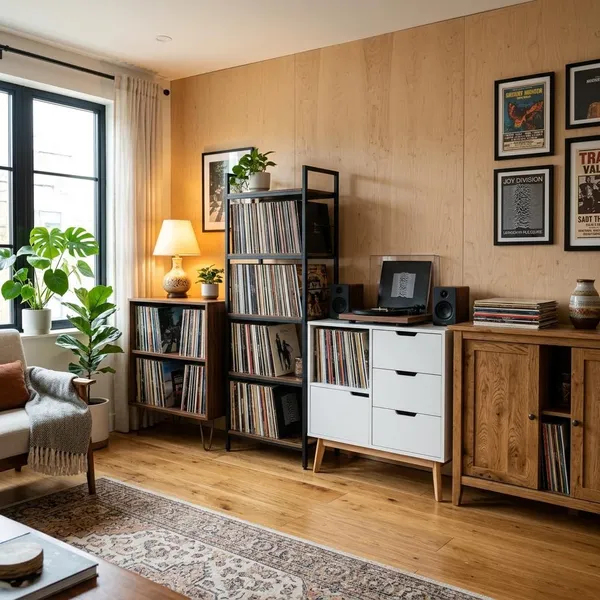
Best Vinyl Record Storage Cabinet Styles
Different cabinet styles solve different problems. Open cubes make browsing easy, consoles look more intentional in shared rooms, enclosed cabinets reduce dust and visual clutter, and modular units help if the collection is still growing. The best style is the one that matches how you actually listen.
Cube storage for flexible setups
Cube storage works well when each compartment is properly sized and strongly built. It is easy to organize by artist, genre, or "recently played," and it suits both small collections and expanding setups. The weak point is usually construction, so avoid flimsy cube units with long unsupported shelves or thin panels.
Console cabinets for living rooms
A console cabinet is a good choice when the record setup is part of the main room rather than a separate hobby corner. It can look like normal furniture while still keeping albums close to the turntable.
The tradeoff is that some consoles are better at looking polished than storing records. Before choosing one, make sure the interior height and depth work for LPs and that the top is practical if you want to place audio gear there.
Enclosed cabinets for dust protection
Enclosed cabinets are useful if you have pets, children, open windows, or a room where dust builds up quickly. Doors also keep the collection visually calmer, which can matter in a shared living space.
Do not choose doors that make browsing frustrating. Wide openings, smooth hinges, and enough room to flip through rows are more important than a perfectly clean exterior.
Modular cabinets for growing collections
Modular storage is usually the safest long-term choice for active collectors. You can start with the capacity you need now and add matching units later instead of replacing one overfilled cabinet. Just make sure each module is sturdy on its own; expansion should not mean stacking weak furniture into a larger weak system.
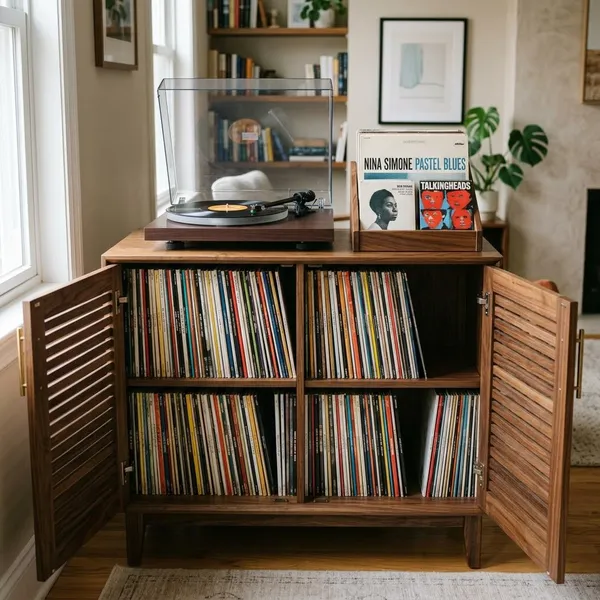
How to Store Vinyl Records Safely in a Cabinet
A strong cabinet helps, but storage habits decide whether records stay in good condition. Keep albums upright, evenly supported, slightly loose, and away from heat or damp areas. The biggest mistakes are flat stacking, sharp leaning, overcrowding, and placing the cabinet in a risky part of the room.
Keep records upright
Store records vertically rather than flat. Flat stacks put pressure on the lower records and sleeves, especially when they sit untouched for a long time. A slight lean in a full row is normal, but a steep angle across an open section needs support.
Support records evenly
Rows should not slump from one side of a compartment to the other. Use dividers, bookends, or smaller cabinet sections to keep partially filled rows upright. This is especially helpful if your collection is still growing and some sections are not full yet.
Avoid overcrowding
Overcrowding is one of the easiest ways to damage sleeves during normal use. If you have to pinch, tug, or bend jackets to remove an album, the section is too full. Move some records to another compartment before the row becomes hard to browse.
Keep heat and moisture away
Place the cabinet away from radiators, heating vents, sunny windows, damp exterior walls, garages, and poorly controlled basements. Heat can encourage warping, while damp conditions can affect jackets and increase the risk of musty odors or mold. A normal indoor room with stable conditions is usually the safer choice.
Use clean inner sleeves
Clean inner sleeves reduce dust, paper debris, and scuffing when records move in and out of jackets. Replacing old, rough, or dirty paper sleeves is a small upgrade that makes sense for records you play often or care about most. It will not save records from bad storage, but it adds useful protection.
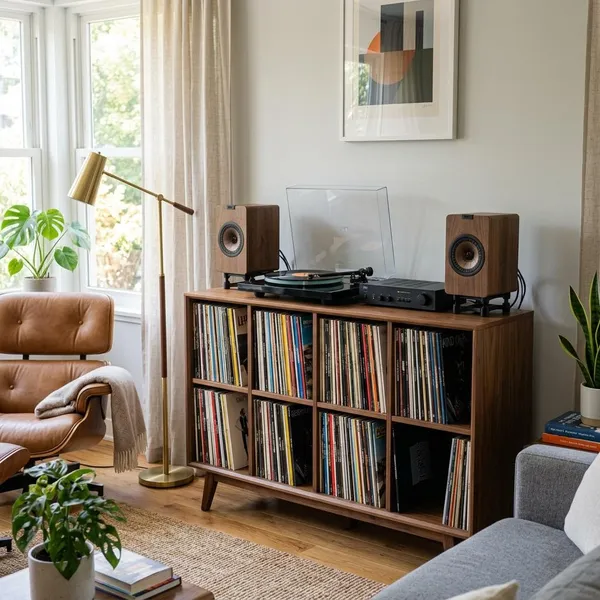
Can a Vinyl Record Cabinet Hold a Turntable?
A record cabinet can hold a turntable if the top is large, strong, stable, and easy to connect. Do not assume every record cabinet is also good playback furniture. Storage weight below and turntable performance above are related, but they are not the same job.
Check the top surface size
Measure the actual turntable, including the dust cover when it opens and the space your hands need for cueing and changing records. If you also want a small preamp, record weight, brush, or "now playing" stand on top, include that in the layout. A cramped top looks fine in photos but feels awkward every time you use it.
Check weight capacity
The top panel should not flex, dip, or feel hollow under normal use. If the manufacturer gives a top weight rating, use it. If not, look at the thickness of the panel, whether it is supported underneath, and whether the cabinet feels rigid when you press lightly near the turntable area.
Check surface stability
Turntables dislike wobble. A short, wide cabinet on a level floor is usually safer than a tall narrow one, especially in rooms with springy floors or frequent foot traffic. If the cabinet moves when someone walks by, it may be fine for storage but poor for playback.
Check cable access
Plan where the power cable, audio cables, and possible ground wire will go before placing the cabinet against the wall. Rear cutouts, open backs, or a small gap behind the unit can prevent bent cables and messy visible wiring. This matters even more in a living room where the setup stays on display.
Check equipment ventilation
A turntable itself usually does not create the same heat problem as an amplifier or receiver, but the cabinet may hold more than one component. If warm audio gear sits inside an enclosed compartment, leave airflow around it and avoid sealing it behind tight doors during long listening sessions.
Conclusion
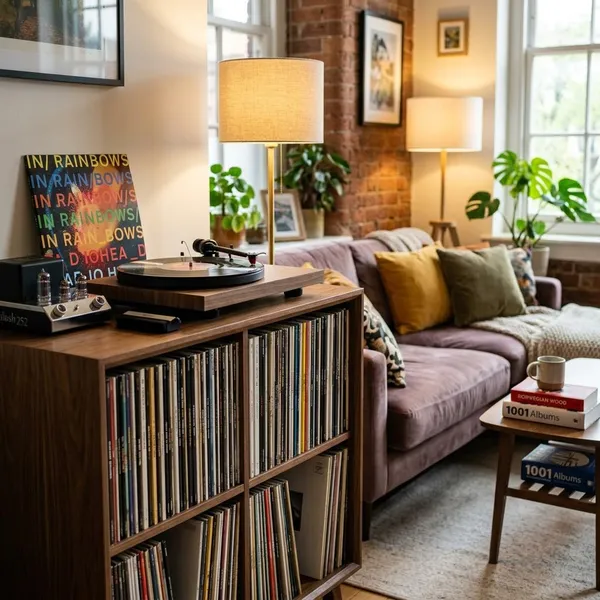
A good record cabinet should pass the boring checks before it wins on looks: strong shelves, comfortable LP clearance, realistic capacity, and a layout that fits your room. If it will also hold a turntable, stability and cable access become part of the buying decision. Choose the cabinet that makes records easy to use and hard to damage, not the one that only looks full and tidy in a product photo.
FAQ
Is it better to store vinyl records upright or flat?
Upright is better. Flat storage puts weight on the records underneath, while upright rows are easier to support and browse safely.
How many records fit in a vinyl record storage cabinet?
It depends on the internal width and how much space you leave for browsing. Treat advertised capacity as a rough maximum, then subtract room for box sets, outer sleeves, and future records.
How deep should a vinyl record cabinet be?
It should be deep enough to fully support 12-inch LP jackets with a little extra room at the front or back. If records stick out or the door presses against sleeves, the cabinet is too shallow.
Is cube storage good for vinyl records?
Yes, if the cubes are properly sized and strong enough. Cube storage is convenient for browsing, but weak units can sag under the weight of a full record collection.
Can you put a turntable on top of a record cabinet?
Yes, as long as the top is large, level, stable, and strong enough. Also make sure cables can exit cleanly and any nearby audio gear has enough airflow.