Which Vinyl Record Player Brands Suit Your Listening Style?
The best brands for vinyl record players depend less on the logo and more on how you want to listen: easy automatic playback, better sound for the money, or a turntable you can upgrade over time. For most beginners, Audio-Technica and Sony are the safest starts; Fluance and U-Turn give stronger value if you want a more serious setup; Pro-Ject, Rega, and Technics make more sense when sound quality and long-term ownership matter most.
Best brands for vinyl record players
A good record player brand should make setup clear, use a cartridge that tracks records safely, and offer replacement parts you can actually find later. The mistake is buying only by appearance or by a feature list. A stylish turntable with a poor stylus or no upgrade path can become frustrating quickly.
Audio-Technica for beginner-friendly value
Audio-Technica is usually the first brand I would check for a beginner because it keeps the scary parts of vinyl manageable. Models such as the AT-LP60X are made for easy playback, while the AT-LP120X gives more control without jumping straight into audiophile pricing.
The practical advantage is setup. Many Audio-Technica turntables include a built-in phono preamp, so you can connect them to powered speakers without buying a separate phono stage. Replacement styli are also easy to find, which matters more than many first-time buyers realize.
Fluance for strong mid-range value
Fluance is a strong choice when you want something that feels like a real long-term turntable but still want to keep the budget sensible. The RT82 and RT85 are common picks because they put more money into the platter, cartridge, plinth, and isolation instead of loading the deck with wireless extras.
This is the brand I would look at if you have decent powered speakers or a basic stereo amplifier and want records to sound cleaner than they would on a starter deck. Most Fluance models are manual, so they are less ideal for someone who wants one-button playback, but that trade-off helps the brand deliver better hardware for the price.
Pro-Ject for hi-fi upgrades
Pro-Ject suits listeners who are ready to treat the turntable as part of a proper hi-fi system. The Debut line, especially models around the Debut Carbon range, is popular because it gives you a better tonearm, better vibration control, and a more upgrade-friendly platform.
Pick Pro-Ject if your priority is hearing more detail and texture from records, not pairing a turntable quickly with Bluetooth speakers.
Rega for simple high-fidelity setups
Rega keeps things stripped back in a way that makes sense for sound-focused listeners. The Planar models avoid unnecessary features and put attention on the tonearm, motor, and low-resonance design.
That simplicity works best in a dedicated listening setup. If you already have a decent amplifier and speakers, a Rega can feel lively and direct without making the turntable complicated to use. If you want automatic stop, Bluetooth, or lots of built-in electronics, Rega is probably not the right fit.
Technics for premium direct-drive turntables
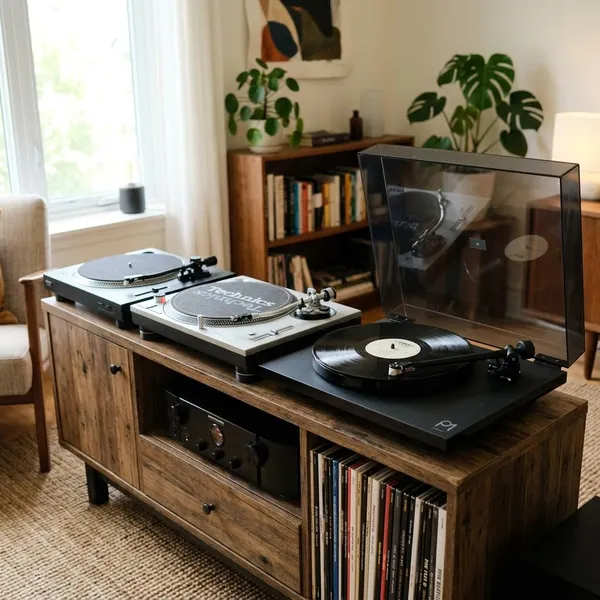
Technics is the brand to consider when you specifically want premium direct-drive performance. Its SL-series reputation comes from speed stability, durable construction, and a confident feel that appeals to both DJs and home listeners.
The higher price only makes sense if you value that engineering. For someone playing records once a month through small desktop speakers, Technics is probably overkill. For a listener who wants a turntable to keep for many years, or someone who likes the speed accuracy and handling of direct drive, it is one of the safest premium names.
Sony for automatic wireless listening
Sony is best when convenience is the point. A model such as the PS-LX310BT makes sense for apartments, shared rooms, or simple setups where you want automatic playback and Bluetooth without learning every part of turntable setup.
The trade-off is limited upgrade potential. You buy Sony because you want records to be easy to play, not because you want to experiment with cartridges and phono stages. For a casual listener who already uses wireless speakers, that can be the right compromise.
U-Turn for simple customizable setups
U-Turn is a good middle ground for buyers who want a clean, simple turntable but still want some choice. The Orbit line lets you choose options such as cartridge level, preamp inclusion, and finish, so you are not paying for the same configuration as everyone else.
That flexibility is useful if your setup is slightly specific. Someone who already owns a phono preamp can skip the built-in one. Someone buying a first serious deck can spend more on the cartridge instead. Just check the exact model options before buying, because convenience features can vary.
Best record player brands by buyer type
The fastest way to choose is to match the brand to your listening habits. A first-time buyer in a small apartment needs a different turntable from someone building a quiet listening corner with separate speakers and an amplifier.
| Buyer situation | Brands to check first | Why they fit |
|---|---|---|
| First turntable, simple speakers | Audio-Technica, Sony | Easy setup, common models, beginner-friendly features |
| Better sound without premium pricing | Fluance, U-Turn | Good value, stronger parts, useful configuration options |
| Dedicated listening setup | Pro-Ject, Rega | Cleaner hi-fi focus and better upgrade potential |
| Premium direct-drive preference | Technics | Excellent speed control, build quality, and long-term reliability |
What to compare between record player brands
Once you have a few brands in mind, compare the parts that affect daily use first. The most important checks are cartridge quality, drive type, manual versus automatic operation, connection options, and whether replacement parts are easy to get.
Do not let Bluetooth or a nice finish distract you from the basics. A turntable should hold speed well, track records safely, connect to your system without surprise costs, and give you a realistic way to replace the stylus later.
Cartridge and stylus quality
The cartridge and stylus are the parts touching the record groove, so they deserve attention before almost anything else. A better stylus can reduce distortion and help vocals, cymbals, and inner tracks sound cleaner.
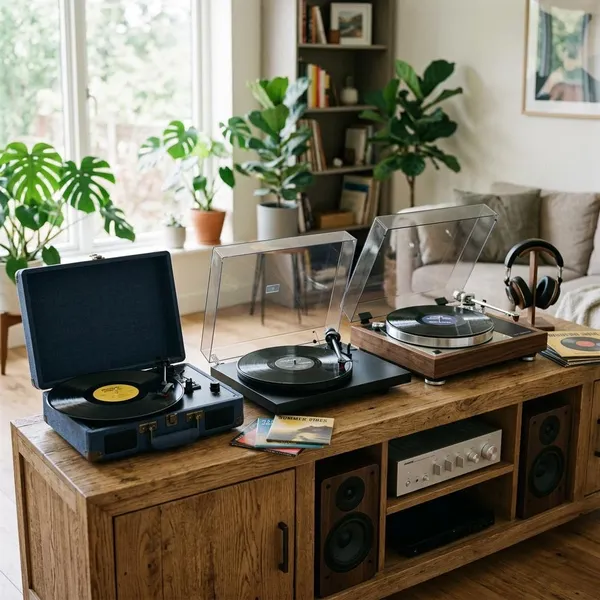
Before buying, search for the exact replacement stylus or cartridge used by the model. If you cannot find it easily, or if the cartridge is fixed and very limited, think twice. This is one reason many buyers move away from very cheap suitcase-style players once they start caring about their records.
Belt drive or direct drive
Belt drive is common in home hi-fi turntables from brands such as Fluance, Pro-Ject, Rega, and U-Turn. It can help separate motor vibration from the platter when the design is done well.
Direct drive, led by Technics in this group, gives quick startup and strong speed control. It is a better fit if you value precision, durability, or DJ-style handling. For normal home listening, either type can be excellent, so judge the whole turntable rather than treating the drive system as a winner-takes-all feature.
Manual or automatic operation
Manual operation gives you more direct control, but you have to place and lift the tonearm yourself. Automatic operation is easier and can be less stressful for beginners or shared household use.
- Choose automatic if convenience and low-risk handling matter most.
- Choose manual if you want more hi-fi options and fewer built-in mechanisms.
- Be honest about habits: the best-sounding deck is not useful if you avoid using it because setup feels annoying.
Built-in preamp and Bluetooth
A built-in phono preamp can save a beginner from buying another component. It lets many turntables connect directly to powered speakers or a standard line input. If a turntable does not include one, confirm that your amplifier, receiver, or speakers have a phono input before ordering.
Bluetooth is useful when cables are awkward, especially in apartments or desk setups. Just treat it as a convenience feature. If your main goal is the best sound from vinyl, cartridge quality, speaker quality, and a proper wired setup usually matter more.
Upgrade and replacement options
Upgrade options decide whether a turntable stays useful as your expectations rise. At minimum, you want a stylus you can replace without hunting through obscure parts listings.
- Check stylus availability. Search the exact replacement part before buying.
- Confirm the cartridge situation. Replaceable cartridges give you more room to improve later.
- Match the preamp to your system. Built-in is easier; separate can be better for upgrades.
- Look for clear support. Manuals, parts, and dealer help make long-term ownership easier.
Conclusion
Start with how you will actually use the turntable: Audio-Technica or Sony for an easy first setup, Fluance or U-Turn for better value and flexibility, Pro-Ject or Rega for a more focused hi-fi system, and Technics if premium direct drive is the point. The best choice is not the most expensive brand; it is the one that fits your speakers, your patience for setup, and whether you want a simple player now or a platform you can keep improving.
FAQ
Is Crosley or Victrola better for beginners?
Neither is my first pick if you care about sound quality and record wear. If you are choosing between them, compare the exact model, avoid very cheap suitcase-style players when possible, and check whether the stylus can be replaced easily.
Are vintage turntable brands worth buying?
Yes, vintage brands can be worth buying when the turntable has been serviced or carefully checked. Budget for possible work such as a new belt, stylus, lubrication, or electrical repair, because a bargain vintage deck can become expensive if it needs immediate restoration.
Is it better to buy a turntable from a hi-fi brand?
Usually, yes, especially if you plan to keep the turntable for years. Hi-fi brands tend to give more attention to tracking, speed stability, cartridges, and replacement parts, while lifestyle-focused players often prioritize appearance and convenience.