Which Songs Define the Twilight Soundtrack?
If you're looking for the twilight album soundtrack, start with the 2008 album: it is the release with Paramore's "Decode," Muse's "Supermassive Black Hole," Iron & Wine's "Flightless Bird, American Mouth," Blue Foundation's "Eyes on Fire," and Carter Burwell's "Bella's Lullaby." The quickest way to find the right music is to decide whether you want the official song album, a scene-specific track, or the instrumental score, because fans often use "soundtrack" for all three.
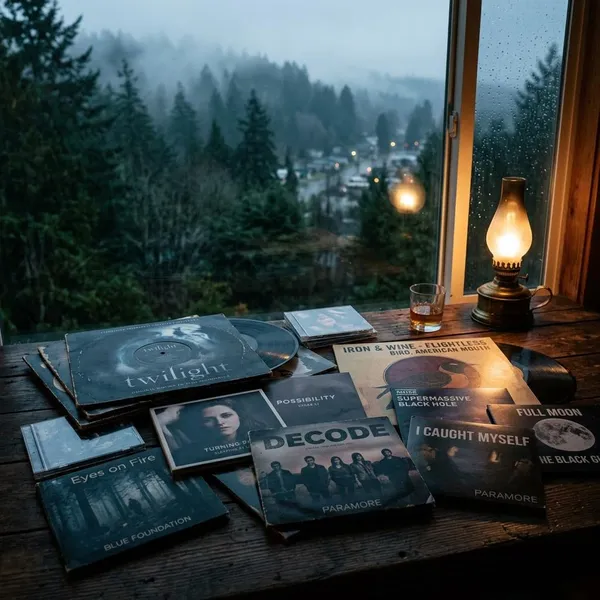
Most Iconic Twilight Soundtrack Songs
The first Twilight album works because the songs do not feel like random tie-ins. They match the film's cold, romantic, slightly uneasy mood, which is why many listeners remember the music almost as clearly as the scenes.
If you are trying to identify a song from memory, check the scene first. The baseball scene, prom, diner mood, and piano moment each point to a different track, and that is usually faster than searching the whole album by lyrics.
Decode by Paramore
"Decode" is the safest answer when someone asks for the signature song from the first Twilight film. Paramore wrote it for the movie, so it feels more closely connected to Bella and Edward's tension than a standard licensed track would.
The song captures confusion, attraction, and distrust without spelling out the plot. That makes it useful for two kinds of listeners: fans revisiting the movie's emotional pull, and Paramore fans who want one of the strongest examples of a band making an original soundtrack song feel essential rather than promotional.
Supermassive Black Hole by Muse
"Supermassive Black Hole" gives the album its biggest jolt of energy. It is theatrical, strange, and confident, which makes it stand apart from the softer romantic tracks.
Its reputation is tied heavily to the baseball scene, but the track also works on its own. If you want the song that best represents the franchise's more playful, supernatural side, this is the one to play first.
Flightless Bird, American Mouth by Iron & Wine
"Flightless Bird, American Mouth" is the album's most delicate romantic moment. It does not push the emotion too hard, which is exactly why it fits the prom scene so well.
For a listener making a nostalgia playlist, this track belongs in the slower, more intimate part of the mix. It has aged well because it sounds less tied to a trend than many late-2000s soundtrack songs.
Eyes on Fire by Blue Foundation
"Eyes on Fire" is less of a big singalong and more of a mood piece. Its smoky, slow-building sound is a good match for Forks, Bella's uncertainty, and the film's colder visual style.
This is the track to choose if you are looking for the darker atmosphere of Twilight rather than the most famous single. It often appeals to listeners who remember the movie as eerie and hypnotic more than purely romantic.
Bella's Lullaby by Carter Burwell
"Bella's Lullaby" is the important exception on the album because it belongs to the film's score, not the pop-song side of the soundtrack. Carter Burwell composed it as an instrumental theme, and fans still group it with the soundtrack because the piano scene made it unforgettable.
If you are searching for piano music from Twilight, use the title "Bella's Lullaby" rather than only searching for soundtrack songs. That small distinction helps avoid confusing it with Paramore, Muse, or the other licensed tracks.
Songs Behind Iconic Twilight Scenes
The soundtrack became memorable because several songs are locked to specific scenes in fans' minds. If your goal is to find "that one Twilight song," the scene is usually the best starting point.
Supermassive Black Hole in the baseball scene
"Supermassive Black Hole" plays during the Cullen family baseball scene, and the choice keeps the sequence from feeling stiff. The beat gives the scene speed and style, while Muse's dramatic sound makes the supernatural athleticism feel fun rather than awkward.
Flightless Bird, American Mouth at prom
The prom scene uses "Flightless Bird, American Mouth" because the moment needs softness, not a huge romantic anthem. Bella and Edward still feel tentative, and the song leaves room for that awkwardness.
If you are rewatching only one scene to understand why the soundtrack matters, prom is a strong choice. The song does not explain the emotion; it lets the small looks and pauses do the work.
Eyes on Fire during the diner scene
"Eyes on Fire" is commonly linked with the diner-era mood of Bella trying to understand Edward and the danger around him. The track works because it does not resolve the tension. It lets the uncertainty linger.
That makes it different from the bigger soundtrack moments. It is not the song most casual viewers shout out first, but it is one of the clearest examples of how the album builds atmosphere.
Bella's Lullaby at the piano
"Bella's Lullaby" matters because the music is part of the scene itself. Edward plays the melody on piano, so the piece feels like character expression rather than background music added after the fact.
Why the Twilight Soundtrack Became So Popular
The album's success was not only a side effect of the movie's popularity. It reached listeners because it had a clear sound, a strong sense of scene placement, and enough original material to feel like a real event.
Strong ties between songs and scenes
The strongest tracks act like memory triggers. "Supermassive Black Hole" brings back baseball almost instantly, while "Flightless Bird, American Mouth" brings back prom.
That scene connection gives the album replay value. A casual listener may hear individual songs; a fan hears the movie's atmosphere returning with them.
A distinctive indie and alternative sound
The soundtrack leaned into alternative rock, indie folk, and moody electronic textures instead of chasing only the biggest pop sound of the moment. That choice gave the film a more specific identity.
- For first-time listeners: start with "Decode," "Supermassive Black Hole," and "Flightless Bird, American Mouth."
- For a moodier listen: add "Eyes on Fire," "Full Moon," and "Never Think."
- For score-focused fans: look for Carter Burwell's work alongside the song album.
Original music from featured artists
Original songs helped the album feel less like a borrowed playlist. Paramore's "Decode" and "I Caught Myself" were connected to the film, which gave fans a reason to treat the soundtrack as part of the Twilight experience rather than just a collection of licensed tracks.
Lasting nostalgia among Twilight fans
The soundtrack still works because it carries both personal nostalgia and genuine replay value. For some fans, it brings back midnight screenings, school-year playlists, or the early online fandom around the movies.
Other Twilight Saga Soundtracks
The later Twilight films kept music as a major part of the franchise, but each soundtrack has a slightly different personality. The first album is the most iconic, while the sequels are useful if you want a fuller sense of how the saga's mood changed.
New Moon
The Twilight Saga: New Moon soundtrack is darker and more withdrawn than the first album. With artists such as Death Cab for Cutie, Thom Yorke, Lykke Li, The Killers, Muse, and Bon Iver with St. Vincent, it leans into absence and emotional isolation.
Choose this one if you want the saddest branch of the franchise's music. It suits listeners who are less interested in the baseball-scene energy and more interested in the lonely, rain-soaked side of the saga.
Eclipse
The Twilight Saga: Eclipse has a bigger, more pressured sound. Its lineup includes Metric, Muse, Florence + the Machine, Sia, Beck, Bat for Lashes, Vampire Weekend, and Cee Lo Green.
The album fits a film with more conflict and motion. It is still romantic, but the music feels less fragile than New Moon and more dramatic than the first soundtrack in places.
Breaking Dawn Part 1
The Twilight Saga: Breaking Dawn - Part 1 is the movie that features Christina Perri's "A Thousand Years." It also includes "It Will Rain" by Bruno Mars, which gives the soundtrack a more mainstream romantic pull than some earlier entries.
Breaking Dawn Part 2
The Twilight Saga: Breaking Dawn - Part 2 closes the series with artists such as Green Day, Ellie Goulding, Feist, St. Vincent, James Vincent McMorrow, and Passion Pit. It also includes "A Thousand Years (Part 2)" by Christina Perri with Steve Kazee.

Where to Listen to the Twilight Soundtrack
The best place to listen depends on what you actually want: quick access, ownership, or a collectible copy. Streaming is easiest, digital buying is safer if you want to keep specific tracks, and physical formats make more sense for fans who care about artwork and memorabilia.
Music streaming services
Streaming is the quickest option for most listeners. Search for the 2008 Twilight soundtrack on services such as Spotify, Apple Music, Amazon Music, or YouTube Music, then check that the album includes "Decode," "Supermassive Black Hole," and "Flightless Bird, American Mouth."
Digital music stores
Digital stores are the better choice if you want to own a few songs without relying on a subscription. Buying individual tracks is practical when you only want "Decode," "Bella's Lullaby," or another favorite rather than the full album.
CD editions
CD editions are still worth considering if you like physical albums or want the version that many fans owned when the movie first came out. A used copy can be enough for everyday listening, while sealed or special-condition copies are more for collectors.
- Check the back cover: confirm the songs match the 2008 track list.
- Look at condition notes: disc scratches matter more than case wear if you plan to play it.
- Compare prices: nostalgia can push listings higher than they need to be.
Vinyl releases
Vinyl is mainly for collectors, not the most convenient way to hear the album. The larger artwork and limited pressings can make it feel like a keepsake, but prices and availability can vary a lot.
Conclusion
The 2008 Twilight soundtrack is still worth revisiting because its best songs do specific jobs: "Decode" defines the franchise's emotional tension, "Supermassive Black Hole" turns one scene into a pop-culture memory, "Flightless Bird, American Mouth" gives the romance restraint, and "Bella's Lullaby" reminds you where the score begins. If you only want the essentials, start with those tracks; if the mood pulls you back in, the full album and sequel soundtracks are still surprisingly easy to explore.
FAQ
What is the most famous song from Twilight?
"Decode" by Paramore is usually the most famous song from the first Twilight movie. "Supermassive Black Hole" by Muse is the other common answer because the baseball scene made it impossible for fans to forget.
Is Robert Pattinson on the Twilight soundtrack?
Yes. Robert Pattinson performs "Never Think" on the original 2008 soundtrack, which is why his music is part of the official album and not just a fan-discovered extra.
Which Twilight movie features A Thousand Years?
"A Thousand Years" is from The Twilight Saga: Breaking Dawn - Part 1. A later version, "A Thousand Years (Part 2)," appears with Steve Kazee on the Breaking Dawn - Part 2 soundtrack.