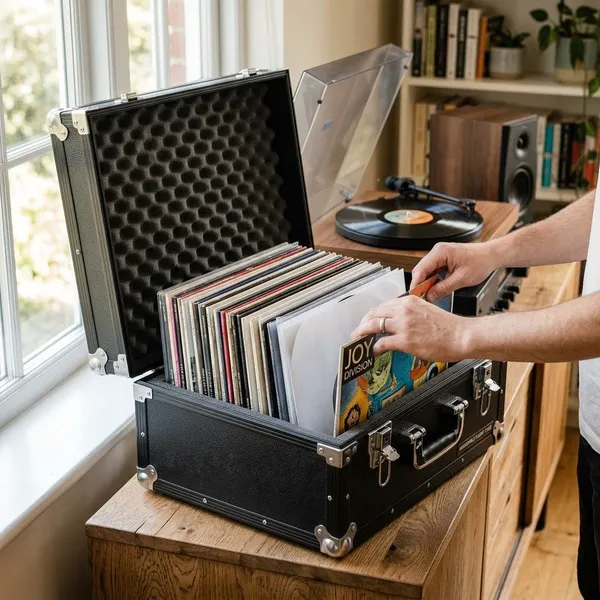
What Should You Check on a Used Vinyl Record?
When you inspect a used vinyl record, look for the problems that affect playback first: deep scratches, warping, groove wear, cracks, and signs of rough handling. Jacket wear matters for value, but the disc itself tells you whether the record is likely to play cleanly, skip, or sound worn out.

How to inspect a used vinyl record
A good inspection does not need to be slow, but it does need a clear order. Start with storage clues, then check the disc shape, then use strong light to judge the playing surface. If you only have a minute in a shop, prioritize warps, feelable scratches, dull groove areas, and cracks before worrying about small sleeve marks.
Check the jacket and inner sleeve
The jacket is not the part that plays, but it can tell you how carefully the record was stored. Ring wear, seam splits, writing, sticker damage, sun fading, water stains, and a musty smell all lower confidence. For a cheap listening copy, a tired jacket may be acceptable; for a collectible pressing, cover condition can affect value almost as much as the vinyl.
The inner sleeve deserves a quick look too. A missing, dirty, or torn sleeve means the disc may have rubbed against cardboard or collected grit. A clean poly-lined sleeve is a better sign, although it still does not guarantee quiet playback.
Hold the record by the edges
Use one hand on the outer edge and the other near the center label. Avoid touching the grooves, even if the record already looks used, because fingerprints attract dust and can add noise later. Good handling also lets you rotate the disc slowly without rushing the inspection.
Check for warping
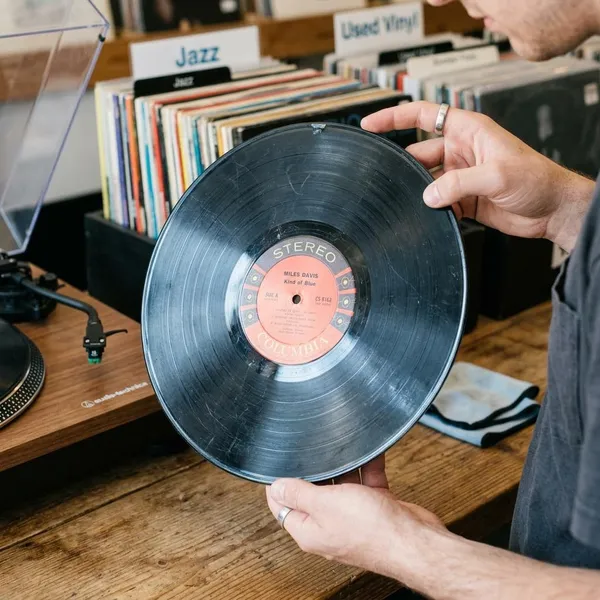
Hold the record at eye level and turn it slowly. Watch the outer edge first, then the area closer to the label. A small edge ripple may still play fine, especially on a stable turntable, but a record that visibly rises and falls can cause the tonearm to move too much.
If you are buying a common album for casual listening, a mild warp might be worth accepting at a lower price. If the record is expensive, rare, or meant for careful headphone listening, be much stricter because warps are not something a normal cleaning can fix.
Tilt the vinyl under bright light
Bright angled light is the easiest way to separate harmless surface marks from more serious damage. Tilt the record instead of staring straight down at it. A healthy playing surface usually reflects evenly, while worn areas may look dull, cloudy, grayish, or patchy.
- Dust or loose paper: usually cleanable.
- Light sleeve scuffs: often cosmetic, but can add faint noise.
- Sharp lines: more likely to be scratches.
- Dull groove bands: possible groove wear, especially on loud or inner tracks.
Inspect scratches and groove wear
Fine hairlines and sleeve scuffs are common on used vinyl. The marks to worry about are sharper scratches that cut across the groove path or can be lightly felt with a fingernail. Do not scrape aggressively; a gentle check is enough. If the mark catches, expect clicks, repeating ticks, distortion, or possible skipping.
Groove wear is harder to see than a scratch. Look for areas that have lost their gloss, especially near the inner grooves or on tracks that were likely played often. If the record also has many spindle marks, treat dull grooves as a stronger warning sign.
Check the label and spindle hole
A few spindle marks are normal on older records, but heavy marks around the center hole suggest frequent or careless play. Also check for staining, bubbling, mold spots, tears, or a center hole that looks widened. These clues do not prove the record will sound bad, but they can confirm suspicion when the playing surface already looks worn.
Which vinyl flaws can affect playback
Not every visible flaw is equally important. A record can look a little scuffed and still sound enjoyable, while a glossy copy can disappoint if it has groove wear or a hidden warp. The practical question is whether the flaw is cosmetic, audible, or likely to make the record unsafe or frustrating to play.
Light scuffs are often cosmetic
Light scuffs usually come from paper sleeves and normal handling. They may look dramatic under a flashlight but often sit on the surface rather than cutting into the groove. For loud rock, pop, or dance records, a few light scuffs may barely matter.
Quiet music is less forgiving. On solo piano, acoustic records, spoken word, or sparse jazz, the same scuffs may be more noticeable during soft passages. That does not always make the record a bad buy, but it should affect the price and your expectations.
Deep scratches can cause clicks or skips
A deep scratch is one of the clearest reasons to hesitate. If it crosses the grooves or catches lightly under a fingernail, it may create a loud click every rotation, a repeating tick, distortion, or a skip. One scratch across a favorite track can matter more than several harmless sleeve marks elsewhere.
Warps can affect tracking
Warps change how the stylus sits in the groove. A slight wobble may be playable, but stronger warps can cause pitch wavering, mistracking, or skipping. The risk is higher on basic turntables with limited adjustment because the tonearm may not handle uneven movement well.
- Mild edge wave: sometimes acceptable if the price is fair.
- Dish warp: riskier because the whole side may sit unevenly.
- Sharp bend: usually not worth buying for playback.
Groove wear can add distortion
Groove wear is permanent damage from repeated play, poor setup, or a worn stylus. It often sounds like harsh vocals, splashy cymbals, fuzzy loud sections, or distortion that gets worse near the label. Cleaning may reduce dirt noise, but it cannot rebuild worn groove walls.
If a shop has a listening station, test a loud vocal section or an inner track rather than only the first thirty seconds. Groove wear often becomes more obvious where tracking is most demanding.
Cracks and chips can make a record unplayable
Cracks and chips are structural damage, not normal wear. A cracked record can get worse, and an edge chip can hit the stylus hard as the record spins. Unless you are buying it only for display, these flaws are usually a clear reason to walk away.
How to inspect used vinyl records online
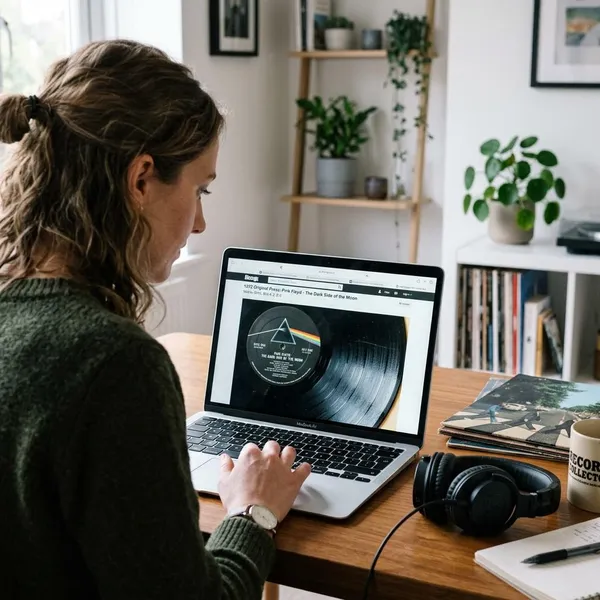
Online buying is really a risk check, because you cannot tilt the record yourself or test playback. Good photos, honest grading, direct seller answers, and a fair return policy matter more than a short condition label. Be especially cautious when the price is high or the listing claims Near Mint without showing enough proof.
Check clear photos of both sides
Look for photos of both record sides, both labels, the front and back jacket, the spine, and any inner sleeve or insert. Angled light photos are more useful than flat overhead photos because they show gloss, scuffs, scratches, and cloudy wear more clearly.
If the record is expensive, ask for close-ups of suspicious areas. Blurry or dark photos are not proof of a bad record, but they do make overgrading easier to miss.
Look closely at the grading
Vinyl grading terms are helpful, but sellers do not always use them the same way. A visual grade tells you how the record looks; a play grade tells you how it actually sounds. That difference matters most with records that look clean but may have groove wear.
- NM: should be very clean; be cautious with casual "mint" claims on old used records.
- VG+: often the best balance for listeners, if the seller describes the flaws clearly.
- VG: may be fine for budget listening, but expect some noise or visible wear.
- G/G+: often heavily worn despite the name; buy only with low expectations.
Ask about scratches, warping, and playback
Ask specific questions instead of asking whether the record is "good." Useful questions include: Are there any feelable scratches? Does the record lie flat? Has it been play-tested? Are there skips, repeating ticks, distortion, or heavy surface noise?
A seller who answers with details is usually safer than one who only repeats the grade. For a rare record, also ask where the main flaw appears, because damage on a quiet intro or favorite track may bother you more than wear between songs.
Check the seller's return policy
A return policy is part of the condition check when buying online. Even careful sellers miss flaws, and records can be damaged in shipping. Look for clear terms on overgrading, playback problems, cracked records, and shipping damage.
Seller feedback is worth reading for patterns, not just the star rating. Repeated complaints about weak packaging, seam splits, cracked vinyl, or optimistic grading are warning signs. If the photos are poor, the description is vague, and returns are not accepted, waiting for another copy is usually the smarter move.
Conclusion
The safest way to buy used vinyl is to treat the inspection as a quick filter: pass on cracks, chips, severe warps, feelable scratches, and obvious groove wear; negotiate on cosmetic sleeve wear and light scuffs. If the record is cheap and casual, you can accept more flaws, but for a favorite album or collectible copy, patience usually costs less than bringing home a record you do not enjoy playing.
FAQ
Can cleaning fix a noisy used vinyl record?
Sometimes. Cleaning can remove dust, fingerprints, residue, and grime, but it will not repair groove wear, deep scratches, cracks, or pressing defects.
Does a damaged jacket lower a record's value?
Yes, especially for collectible records. For a listening copy, jacket damage may matter less, but water stains, mold, or a missing sleeve should make you inspect the vinyl more carefully.
Is a slightly warped vinyl record still playable?
Often, yes. A mild warp may play fine, but if the tonearm moves dramatically or the edge rises sharply, the risk of tracking problems is much higher.