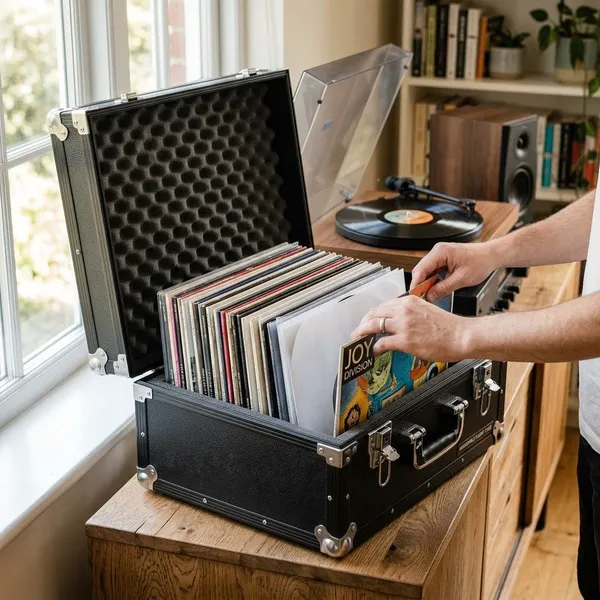
How Do You Display Vinyl Records in Style?
Choose a vinyl record display shelf by checking three things first: will it keep LPs upright, will 12-inch jackets fit comfortably, and can the shelf handle the weight when it is full? Style matters, but a good-looking shelf that is too shallow or weak quickly becomes annoying to use. For a small rotation, a wall shelf or rack may be enough; for a growing collection, start with capacity and support before thinking about decor.
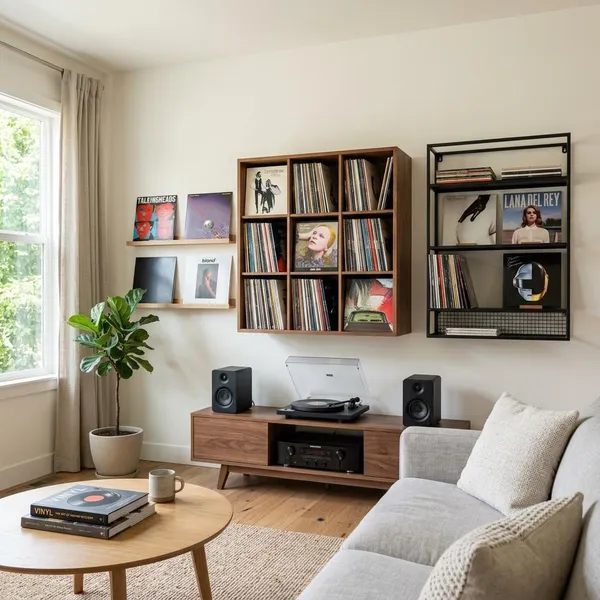
Best vinyl record display shelf styles
The best style depends on whether you want to show a few favorite covers, browse records often, or store a larger collection properly. A display shelf for five albums is a very different purchase from furniture meant to hold 150 LPs, so it helps to choose the format around your actual listening habits.
Wall shelves for showing album art
Wall shelves are best when the goal is to display album covers like artwork. Picture-ledge styles with a front lip work well for a small row of jackets, especially above a turntable, desk, sofa, or listening corner.
Freestanding racks for easy browsing
A freestanding rack is the most comfortable option if you play records often and like flipping through covers from the front. It gives more of a record-shop feel than a standard bookshelf and works nicely beside a chair, speaker stand, or turntable unit.
- Good for: 20 to 60 frequently played albums.
- Watch out for: open sides that let records lean or slide.
- Best use: an active rotation, not necessarily the whole collection.
Cube shelves for larger collections
Cube shelves make the most sense once your collection is too large for a small rack. The divided compartments help keep records upright, and they make it easier to organize by artist, genre, label, or whatever system you actually maintain.
Turntable stands for all-in-one setups
Turntable stands are useful when you want one compact listening station: turntable on top, records below, and maybe space for a small amp, preamp, or accessories. They are especially practical in bedrooms, apartments, and rooms where separate furniture would feel cluttered.
Prioritize stability over decorative details. A light, wobbly stand can make record playback more frustrating, especially on uneven floors or near foot traffic. If audio gear will sit inside the stand, also check that cables can run neatly and that enclosed sections do not trap too much heat.
Now-playing shelves for one featured record
A now-playing shelf is a small add-on for the jacket of the record currently on the turntable. It will not solve storage, but it keeps the cover visible and off chairs, speakers, or the floor.
This is one of those small upgrades that makes a listening area feel more intentional. It is best paired with real storage nearby, so the featured jacket has a temporary place while the rest of the collection stays upright and protected.
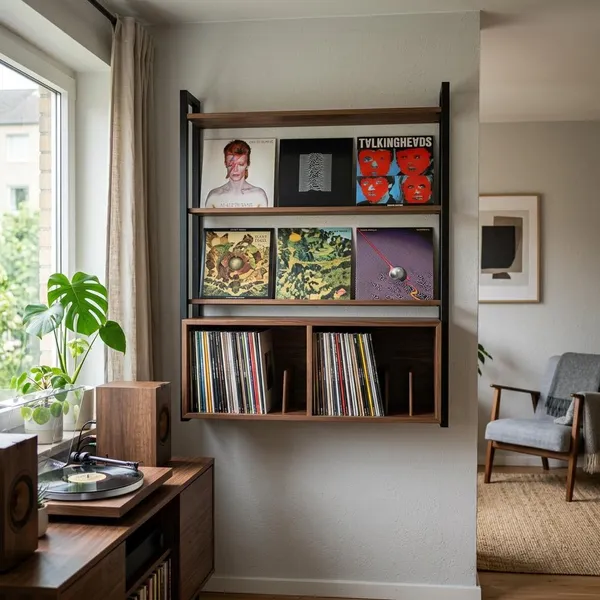
What to look for in a vinyl record display shelf
Once you know the style, judge the shelf like furniture that has to carry dense, awkward items every day. The most important checks are support, interior depth, weight capacity, access, and spare room. If one of those fails, the shelf may look fine in photos but feel wrong once records are on it.
Upright support for stored records
Records should stand upright with enough side support to stop them from slumping. Side panels, cube walls, dividers, or sturdy end stops all help. What you want to avoid is a half-empty section where albums lean sharply for weeks, because that can bend sleeves and make browsing messier.
Enough depth for 12-inch LPs
Check the interior depth, not only the product's overall depth. A standard LP jacket is roughly 12 inches square, and protective outer sleeves, gatefolds, and thicker reissues need a little more breathing room.
Strong weight support
Vinyl gets heavy faster than many people expect. A small display row is one thing; a full cube or long shelf section is another. Look for solid panels, strong joints, reliable wall hardware, and a load rating that makes sense for records rather than light decor.
Be cautious with thin decorative shelves that are marketed for photos, plants, or paperbacks. They may hold a few album covers for display, but that does not mean they are suitable for a packed row of LPs over time.
Easy access without tight packing
A shelf is only useful if you can remove and return records without fighting it. Leave enough space to flip through jackets and pull one album out without pinching corners or dragging several sleeves with it.
- Too tight: albums scrape, corners bend, and browsing becomes irritating.
- Too loose: records may lean unless there are dividers or end supports.
- Comfortable: records stand straight but still move easily by hand.
Extra capacity for future records
Most vinyl collections grow in small, steady jumps: a few used finds, a reissue, a gift, then another record-store visit. Buying a shelf that fits only today's exact count usually leads to overcrowding.
Leaving roughly 15% to 25% free space is a sensible target for many home collections. If you only buy a few albums a year, a smaller buffer may be fine. If you collect every month, choose a shelf that still works after the next several purchases, not just the day you assemble it.
How to choose the right shelf size
Sizing is where many people make the wrong compromise. A shelf can fit the room but not the records, or fit the records but make the room awkward. Measure the space, count the collection realistically, and then check depth and weight before you buy.
Measure the available wall or floor space
Measure the exact area where the shelf will sit, including clearance in front of it. For wall shelves, check width, height, projection from the wall, and nearby doors or seating. For floor shelves, check the footprint and whether you can stand comfortably in front of the records.
Painter's tape is useful here. Mark the shelf size on the wall or floor and live with it visually for a moment. This often catches problems product photos hide, such as a rack blocking an outlet or a cube unit making a narrow walkway feel cramped.
Count how many records you need to store
Count the records that will actually live on this shelf. Include double LPs, gatefolds, box sets, and albums in outer sleeves because they take more space than thin single jackets.
A small rack might be enough for an active 30-record rotation near the turntable. A collection of 100 or more LPs usually needs cube storage, a larger stand, or a split setup where favorites stay close and the archive sits elsewhere.
Leave room for your collection to grow
Do not size the shelf to the last available inch. Once every section is full, the next purchase usually ends up stacked flat somewhere or forced into a tight gap.
Check shelf depth and weight limits
Before buying, compare the shelf's usable dimensions with your records and your likely load. If the seller gives only outside measurements, look for interior measurements in the listing, assembly diagram, reviews, or customer photos.
- Measure your bulkiest LP first. Use an album in an outer sleeve or a thick gatefold as the test piece.
- Estimate comfortable capacity. Do not rely on the maximum number a product photo suggests.
- Check the load guidance. Records are dense, so weak shelves can sag over time.
- Think about access. You need space to browse, not just a place where records technically fit.
If any of those checks feel uncertain, choose the sturdier or roomier option. It is usually cheaper than replacing a shelf after it starts bowing or becomes too cramped to enjoy.
Conclusion
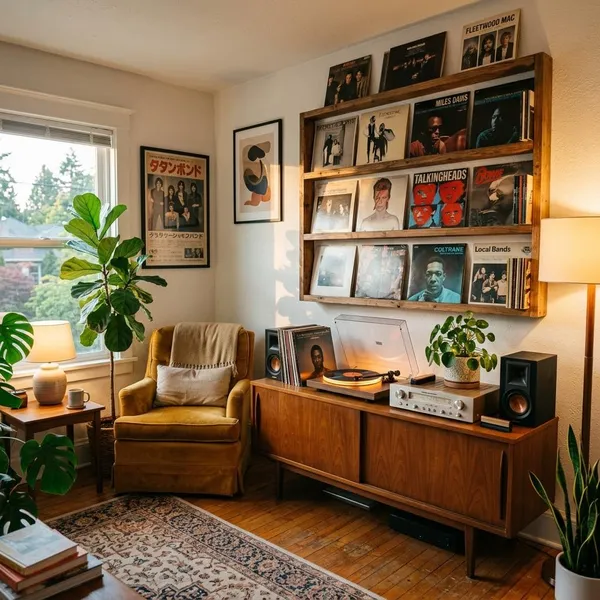
The right shelf is the one that matches how you actually use your records: a wall ledge for favorite covers, a rack for daily browsing, cube storage for a growing library, or a turntable stand for a compact setup. Start with upright support, usable depth, and weight strength, then choose the style that fits your room. If the shelf protects the records and makes you want to play them more often, it is doing its job.
FAQ
Can vinyl records be displayed on a wall safely?
Yes, if the shelf is securely mounted and used within a sensible weight limit. Keep wall displays away from direct sun, heaters, and damp exterior walls.
How deep should a vinyl record display shelf be?
It should be deep enough for a 12-inch jacket plus a little extra space for sleeves or thicker albums. Always compare the shelf's interior depth with your largest record jacket.
How many records can a display shelf hold?
It depends on the shelf width, support, and album thickness. Plan for comfortable browsing capacity, not the tightest possible fit.