Which Vinyl Record Case Is Best for Storage and Travel?
The right vinyl record case is the one that fits your record size, holds your collection without squeezing it, and matches how often you move your albums. For most home listeners, sizing and upright support matter more than heavy-duty travel features. If your records leave the house often, handle strength, latches, and impact protection become much more important.
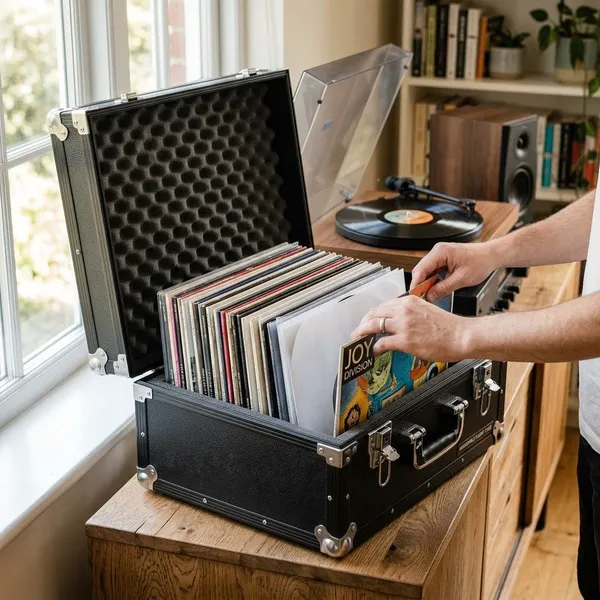
What to look for in a vinyl record case
Start with the checks that affect record safety every day: internal size, usable capacity, construction, handles, and where the case will sit or travel. Style can matter, but a good-looking case is not very useful if the records are hard to remove or the handle feels weak when loaded.
- Check fit first: records should stand upright without being forced in.
- Estimate real capacity: sleeves, gatefolds, and dividers reduce the advertised number.
- Match the protection level: home storage needs less armor than DJ travel.
- Test the handling: a full case can be much heavier than expected.
- Allow controlled growth: leave space, but not so much that records slump.
The right size for your records
Match the case to the format you actually own. Most LP collectors need a case for 12-inch records, while 7-inch singles and 10-inch records are better kept in cases made for those sizes. A loose fit lets records lean and slide; a tight fit can catch sleeve corners and make browsing rough.
If the product page only says "record case" without clear internal measurements, be careful. The inside dimensions matter more than the name, especially if you use outer sleeves or own thicker reissues.
Enough capacity without overpacking
Advertised capacity is usually a best-case estimate. A case listed for 50 LPs may feel comfortable with fewer records once you add gatefold jackets, plastic outer sleeves, and dividers.
Strong protection for your needs
Protection should follow risk. A case that stays in a quiet living room mainly needs rigid sides, a stable base, and dust coverage. A case that goes into cars, record fairs, parties, or venues needs tougher corners, stronger panels, and hardware that will not pop open easily.
For valuable pressings or records you cannot easily replace, choose more protection than the minimum. For a small home rotation of everyday records, good fit and stable upright storage may matter more than buying the heaviest case available.
Secure handles and hardware
Handles, hinges, latches, and rivets are small details until they fail. Lift the case empty if possible and imagine it with records inside: it should feel balanced, not twisted or flimsy. Metal hardware, firm latch tension, reinforced corners, and stable feet are worth checking before appearance details.
Room for your collection to grow
Some extra space is useful, especially if you buy records regularly, but too much empty room can make albums lean. For a growing collection, a better setup is often one case that is comfortably filled now plus room for a small expansion, rather than one oversized case that is awkward to lift and browse.
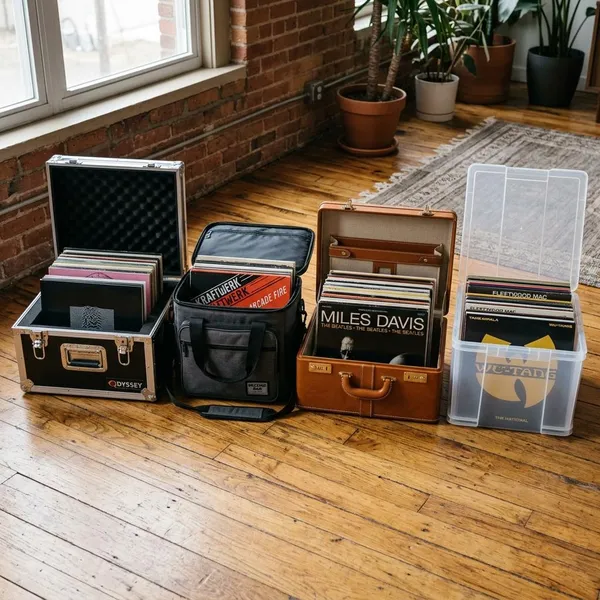
Vinyl record case types and best uses
Different case styles solve different problems. The best choice depends less on the label and more on where the records spend most of their time: parked beside a turntable, carried once in a while, moved every week, or displayed as part of the room.
Storage cases for home collections
Home storage cases are best when your main goal is neat, upright organization. They work well beside a turntable, under a shelf, or in a listening corner where you want albums protected from dust and casual bumps but still easy to reach.
Compared with an open crate, a case usually gives a tidier look and better cover from dust. A crate can be quicker for flipping, though, so the better option depends on whether access or protection matters more in your space.
Carrying cases for occasional transport
A carrying case suits light transport: visiting a friend, taking a small stack to a listening night, or bringing records home from a fair. Look for a comfortable handle, secure latches, and walls that do not flex too much when lifted.
This is the middle ground. It should be easier to move than a flight case but safer than using a tote bag or random cardboard box.
Flight cases for DJs and frequent travel
Choose a flight case if your records travel often or may be handled in busy places. DJs, sellers, and frequent event-goers usually need reinforced corners, tougher shells, and hardware built for repeated loading and lifting.
- Worth it: weekly transport, valuable working records, venues, shared equipment areas.
- Probably excessive: a small home collection that rarely leaves one room.
The downside is bulk. A flight case can protect well but feel inconvenient in a small apartment or casual listening setup.
Display cases for visible storage
Display cases are for records you want to see as much as store. They are useful for current favorites, album artwork you enjoy, or a small "now playing" section near your setup.
They are usually not the best choice for rough transport or large overflow storage. Treat them as visible, indoor storage rather than heavy protection.
How to choose the right vinyl record case size
Size is where many bad purchases happen. A case can look sturdy and still be wrong if the records scrape on the way in, the lid cannot close comfortably, or the loaded case no longer fits where you planned to keep it.
Match the case to your record size
Use the record format as the first filter. A 12-inch LP case should support LP jackets upright with enough clearance for outer sleeves. For 7-inch singles or 10-inch records, a smaller dedicated case usually keeps them better supported and easier to sort.
Count the records you need to store
Count the records you plan to keep in the case, then adjust for real-world thickness. Gatefold albums, double LPs, box-like packaging, and protective sleeves all take more space than a standard single jacket.
Leave room for easy removal
The case is too full if you have to pinch, bend, or tug hard to remove an album. You should be able to move records slightly with your fingers and pull one out without scraping the corners.
- Good fit: upright records, light browsing space, no forced removal.
- Too tight: sleeves rub heavily or the lid presses against the jackets.
- Too loose: records fall to one side unless you add a divider.
Check the case footprint before buying
Measure the spot where the case will live before ordering. Check width, depth, height, and whether the lid can open fully. This matters in small rooms, under shelves, beside furniture, or in a car trunk.
For a case that stays at home, footprint can be just as important as capacity. For a case you carry, also think about doorways, stairs, parking distance, and whether you can lift it comfortably when full.
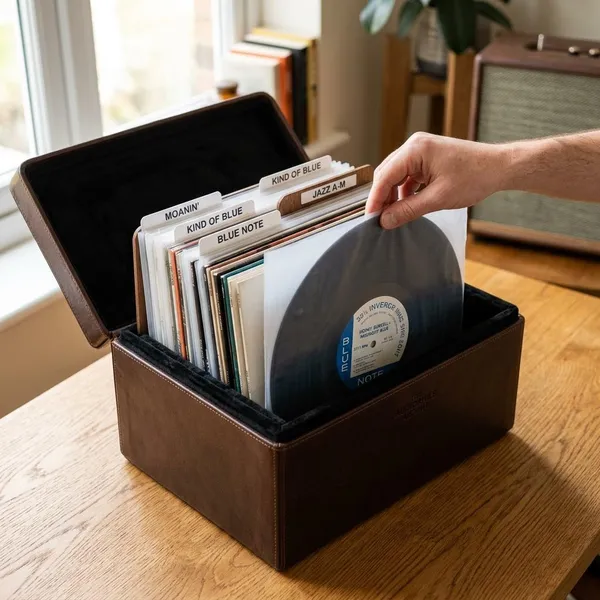
How to protect records inside a case
A good case helps, but the way you load and store records still matters. Most preventable damage comes from pressure, heat, moisture, rough removal, or letting records lean for long periods.
Store records upright
Records should stand upright, not stacked flat in a pile. Flat stacking creates pressure, and pressure is one of the easiest ways to damage vinyl and jackets over time. If the case is partly filled, use a divider or firm support so the records do not collapse to one side.
Avoid packing them too tightly
Snug is good; compressed is not. Tight packing makes albums harder to remove and increases friction on sleeves, corners, and seams.
Use protective sleeves
Outer sleeves help protect jackets from scuffs, dust, and rubbing inside the case. Better inner sleeves can also reduce contact between the vinyl and rough or aging paper sleeves.
Sleeves are especially useful for records you handle often or transport outside the house. Just remember that they add thickness, so they reduce the number of records a case can comfortably hold.
Keep the case away from heat and moisture
Do not rely on the case to solve a bad storage location. Avoid hot cars, sunny windows, heaters, damp basements, sheds, and places with big temperature swings. A cool, dry indoor spot is usually the safer choice for long-term storage.
For occasional transport, the biggest risk is often leaving records in a parked car. Even a sturdy case cannot make that a good storage environment for long.
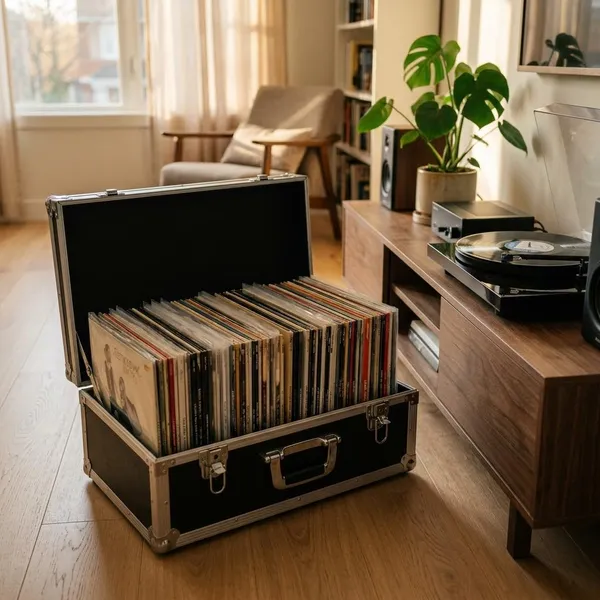
Conclusion
Choose the case around your real routine: home storage, occasional carrying, or frequent travel. Fit and comfortable access should come before looks, and protection should increase as the records become more valuable or travel more often. A case that is easy to use correctly will protect your collection better than one that only looks impressive when empty.
FAQ
Is a hard or soft vinyl record case better?
A hard case is usually better if protection matters. A soft case can be fine for light, short trips, but it offers less structure against pressure and bending.
Can a vinyl record case be used for long-term storage?
Yes, if the records stay upright, have light browsing space, and are kept in a dry indoor location. For long-term storage, avoid cases that make records lean or press tightly together.
Should a vinyl record case be airtight?
No. Airtight storage is not necessary and can trap moisture if conditions are poor. Dust protection and a stable, dry environment are more useful.