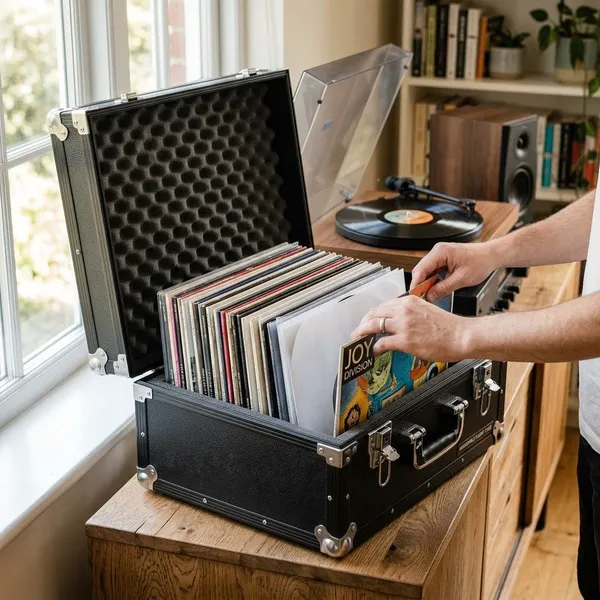
Which Record Player Stand Best Fits Your Vinyl Collection?
Choose a record player stand with vinyl storage by checking stability, record fit, weight support, and room size before you look at color or style. If the top wobbles, the shelves make records lean, or there is no space for cables, the stand will feel annoying no matter how good it looks.
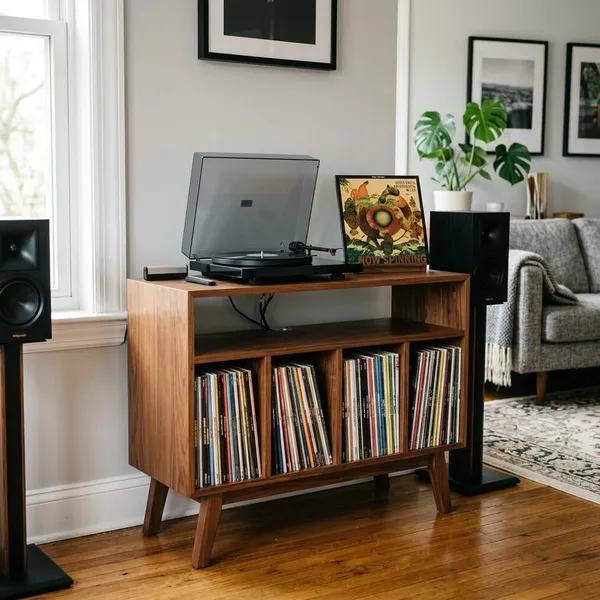
What to look for in a record player stand with vinyl storage
Start with the parts that affect daily use: a level top for the turntable, upright record storage, enough load capacity, and space behind the gear. Style matters, but it should come after the stand can safely handle your equipment and the way you actually listen.
A stable surface for your turntable
The top surface should feel rigid and level, not springy or easy to shake. Turntables do not like vibration, so avoid lightweight stands that wobble when you touch the side or walk past them.
- Check the top panel: it should not bow under the turntable.
- Check the legs: wide, secure contact with the floor is better than thin unstable feet.
- Check the room: rugs, old floors, and uneven corners make stability more important.
Upright storage for your records
Records should sit upright with enough side support to stop heavy leaning. Flat stacks are a poor long-term habit because the bottom records carry the pressure, and tightly packed shelves make sleeves harder to pull out without rubbing the edges.
Enough weight capacity
Do not judge capacity by the turntable alone. Vinyl gets heavy fast, especially when several shelves are full, so look for weight limits for the top and for each shelf if the seller provides them.
If you cannot find a clear weight rating, inspect the construction instead: thicker shelves, center supports, reinforced corners, and solid hardware are safer signs than a nice product photo. For long-term collecting, avoid thin unsupported shelves that already look slightly bowed before they are loaded.
Space for cables and airflow
Leave room for power cords, RCA cables, speaker wire, and the rear hinges of the dust cover. A stand with cable cutouts or an open back is much easier to live with than a closed unit that forces every wire into a tight corner.
Receivers and amplifiers also need breathing room. If your setup includes gear that gets warm during long listening sessions, open shelving or ventilated cabinets are usually the safer choice than a sealed compartment.
Extra room for your collection to grow
Buy for the collection you are likely to have soon, not only the records you own today. If you buy albums every month, one nearly full shelf will become a problem quickly.

Which type of record player stand fits your setup
The right layout depends on your room, your listening habits, and how much gear you want nearby. A casual listener in a bedroom needs a different stand from someone building a living-room stereo system with a receiver, speakers, accessories, and several cubes of records.
| Setup situation | Stand type that usually fits best | Main tradeoff |
|---|---|---|
| Daily record browsing | Open shelves | Easy access, but more visible clutter |
| Shared living room | Cabinet | Cleaner look, but ventilation must be checked |
| Larger stereo system | Console | More space, but needs more floor area |
| Small apartment or bedroom | Compact stand | Saves space, but fills up faster |
| Growing collection | Modular stand | Flexible, but only useful if the modules stay stable |
How to size a record player stand
Measure before buying, even if the stand looks roomy in photos. Most sizing mistakes come from forgetting the dust cover, underestimating record space, or choosing a stand that technically fits the gear but feels cramped in the room.
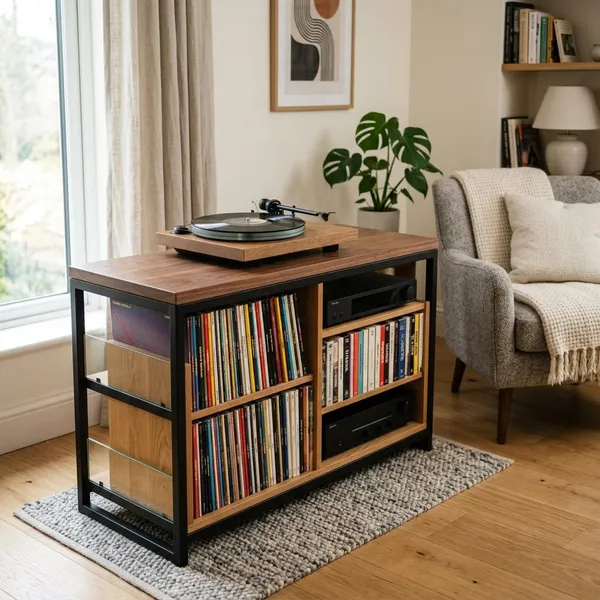
Measure your turntable footprint
Measure the full width and depth of the turntable, including feet, knobs, hinges, and rear cable connections. Then choose a top surface with some extra room around it so you can cue records, lift the tonearm, and clean the deck without working right at the edge.
Check dust cover clearance
Open the dust cover and measure the space it needs above and behind the turntable. This small step prevents a common annoyance: placing the stand against a wall or under a shelf, then realizing the lid cannot open properly.
If the turntable will sit below wall art, cabinets, or a window ledge, test that clearance before committing to the stand height and placement.
Estimate your vinyl storage needs
Count your current records, then add space for realistic near-term growth. A stand that is full on day one is already too small if you buy records regularly.
Also think about how you browse. A collector who alphabetizes and flips through albums often needs looser storage than someone who owns a small favorite stack and rarely rearranges it.
Allow space for other audio gear
Measure every component that will share the stand, not just the turntable. Receivers, amplifiers, preamps, headphones, cleaning kits, and small accessory boxes all take up usable space.
- Leave rear clearance for cable bends and plugs.
- Leave side or top clearance for gear that runs warm.
- Keep controls reachable so you are not sliding equipment forward every time you use it.
Measure the available floor space
Measure the maximum width and depth your room can handle, then check how the stand affects movement around chairs, doors, radiators, and walkways. A stand can fit the wall and still feel too bulky in the room.
Best materials for record player stands
Material affects price, weight, durability, and how well the stand holds up under a dense record collection. The label matters less than the build: thick panels, firm joints, stable legs, and good shelf support usually tell you more than whether a product simply says wood or metal.
Solid wood for strength and durability
Solid wood is a strong long-term choice when you want furniture that feels substantial and can handle regular use. It often adds helpful weight to the setup, which can make the turntable feel more planted.
The tradeoff is cost and portability. If you move often or are furnishing a temporary space, a heavy solid wood stand may be less practical than a lighter mixed-material option.
Engineered wood for a lower price
Engineered wood can be perfectly usable for a basic setup, but quality varies a lot. Look for thicker shelves, secure fasteners, and center support under wider spans.
Be cautious with very cheap particleboard units if you plan to fill the shelves with records. They may work for light use, but long-term heavy storage is where weak shelves tend to show sagging.
Metal frames for strong support
Metal frames are useful when you want rigid support without a bulky cabinet. They often pair well with wood or engineered shelves and can keep wider stands from feeling flimsy.
Check the feet and joints before choosing one. A strong-looking frame can still rock on uneven floors if the legs are narrow or there are no leveling feet.
Mixed materials for a balance of both
Mixed-material stands are often the practical middle ground: metal for structure, wood or engineered shelves for storage and appearance. They can suit a modern room without becoming too expensive or too heavy.
- Choose mixed materials if you want strength at a moderate price.
- Choose solid wood if durability and furniture feel matter most.
- Choose engineered wood carefully if budget is the main concern.
Conclusion
The best choice is the stand that makes listening easier without creating new problems: a steady top, upright record storage, enough shelf strength, and room for cables and growth. If you are choosing between two similar models, pick the one that fits your real routine better, not the one with the prettiest product photo.
FAQ
Can a bookshelf work as a record player stand?
Yes, if it is stable, deep enough, and strong enough for the load. Treat it as a temporary or budget solution unless the shelves stay level when filled and the turntable has enough room on top.
Should vinyl records be stored upright or flat?
Store vinyl records upright. Flat storage may seem harmless for a few records, but it is not a good habit for a growing collection because weight builds up on the lower albums.
How much space should you leave between vinyl records?
Leave enough space to flip through records without forcing them, while still keeping them supported. If albums lean sharply, add a divider; if you have to push hard to remove one, the shelf is too full.