How Do You Play the Lemmings Video Game?
The lemmings video game is a 1991 puzzle-strategy classic where you do not control one hero directly; you manage a crowd that keeps walking into danger unless you give a few of them the right jobs at the right time. If you are deciding whether it is still worth trying today, the appeal is simple: the rules are easy to grasp, but the solutions demand planning, timing, and a little patience.
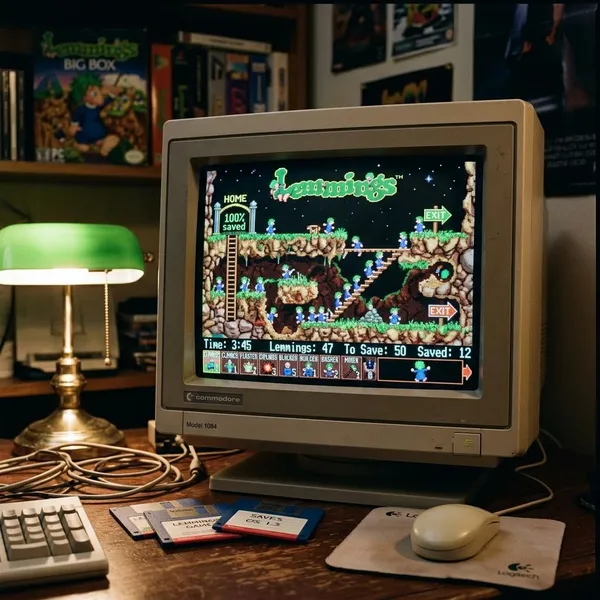
What is the Lemmings video game?
Lemmings is a real-time rescue puzzle game about guiding small green-haired characters from an entrance to an exit. They walk on their own, turn around at walls, and show no sense of danger, so your job is to shape the route before too many of them fall, drown, burn, or hit a trap.
A 1991 puzzle-strategy game
Released in 1991, Lemmings sits between puzzle and strategy. The puzzle side is the level layout: exits, walls, drops, traps, and destructible terrain. The strategy side is deciding when to spend limited skills, because one wasted Builder or badly placed Blocker can make a level impossible.
A rescue game about guiding lemmings
The rescue goal gives the game its personality. You are trying to save enough lemmings to meet the level target, not simply reach the exit once. A messy solution that saves a few may look successful for a moment, but the game only rewards plans that get the required number home.
A real-time challenge built around limited skills
The pressure comes from motion. Lemmings keep walking while you think, so the useful habit is to look for the first urgent problem: a cliff, a trap, a wall, or a crowd that needs to be held back. Once that is controlled, you can plan the longer route.

How does Lemmings gameplay work?
Lemmings gameplay starts with a hatch releasing a stream of lemmings into a hazardous stage. You scan the terrain, assign skills to individual lemmings, and try to create a safe path before the crowd reaches trouble. The most important check is not "Where is the exit?" but "What will kill them first?"
A good beginner approach is simple:
- Pause mentally before clicking: watch the first few seconds and spot the entrance, exit, drops, traps, and steel areas.
- Control the crowd early: stop mass losses before building the final route.
- Choose one or two workers: let selected lemmings build, dig, or tunnel while the rest wait safely.
- Check the save target: a route is only good if enough lemmings survive before time runs out.
Guide the lemmings to the exit
The exit is the visible destination, but the route usually has to be built or carved. A staircase can cross a gap, a tunnel can cut through a wall, and a well-timed dig can open a lower path. One small placement mistake can send the whole crowd somewhere unsafe, which is why the game rewards careful setup more than fast reactions alone.
Save the required number
Each level sets a required number or percentage of lemmings to save. This turns the game from a simple pathfinding challenge into an efficiency puzzle: losing one worker may be acceptable, but losing half the crowd usually is not.
Work around traps and terrain
Terrain is not just background decoration. Steel usually cannot be dug through, long drops can be fatal, and traps often punish a route that looks safe at first glance. Before using a digging skill, check where the tunnel will break out; before building, check whether the stairs will actually meet the next ledge.
Use skills before time runs out
Most levels add a timer, so a correct idea still needs clean execution. Assign a Floater before the fall, start a Builder early enough to reach the platform, and place a Blocker before the crowd walks past the safe holding area.

What are the eight Lemmings skills?
The eight lemmings skills are the tools used to control movement, shape terrain, and manage the crowd. They are easy to remember, but the game becomes interesting when you combine them: one Climber may prepare a route, one Blocker may hold back the crowd, and one Builder may turn that preparation into a safe path.
| Skill type | Skills | Best use |
|---|---|---|
| Movement | Climber, Floater | Send a worker somewhere the crowd cannot safely go yet. |
| Terrain shaping | Builder, Basher, Miner, Digger | Create bridges, tunnels, slopes, or shafts. |
| Crowd control | Blocker, Bomber | Hold, redirect, release, or sacrifice when the trade is worth it. |
Climber for scaling walls
Climber lets one lemming scale vertical walls. It is usually best for a lead worker who needs to reach a higher area and prepare the path from there. Giving Climber to too many lemmings can create chaos, because the crowd may split across places you are not ready to manage.
Floater for surviving falls
Floater gives a lemming an umbrella so it can survive a long drop. Use it before the fall becomes deadly, especially on a worker who must reach a lower area first. If the whole crowd must descend, check whether one Floater is enough to build or dig a safer route for everyone else.
Bomber for blasting obstacles
Bomber makes a lemming explode after a countdown, removing nearby destructible terrain and costing that lemming's life. It is useful for opening a wall, breaking a floor, or removing a Blocker, but it should be a planned trade rather than a panic button.
Blocker for turning lemmings back
Blocker turns one lemming into a barrier that makes others turn around. This is one of the safest ways to buy time while a worker builds or digs ahead.
Builder for making stairs
Builder creates an upward staircase and is often the most important skill in the game. It can cross gaps, climb toward platforms, and steer the crowd away from danger. Placement matters: starting a few steps too early or too late may leave the stairs short of the target.
Basher for tunneling sideways
Basher digs horizontally through destructible terrain. It is the clean choice for a wall directly in the path, but it stops at steel or open air. Use it when you want to keep the crowd at roughly the same height instead of dropping them into unknown space.
Miner for digging diagonally
Miner cuts a diagonal downward tunnel, which is useful when the group needs to descend while still moving forward. It can create a safer slope than a straight drop, but the angle determines where the crowd emerges, so the starting point matters.
Digger for digging down
Digger sends a lemming straight downward through destructible ground. It is efficient for reaching a lower area or separating one worker from the crowd, but it can also create a deadly shaft if you have not checked what is below.

Why did Lemmings become a classic?
Lemmings became a classic because it made a strange idea instantly readable. Anyone could understand the goal after watching a few lemmings march toward danger, but the later levels demanded planning, timing, and efficient use of tools.
It also reached different kinds of players. Someone who liked cute, oddball computer games could enjoy the presentation, while puzzle fans could dig into the strict logic underneath. That mix helped it travel beyond a narrow niche.
Simple rules made it easy to learn
The rules are almost visual: lemmings walk, hazards kill them, skills change what happens next. That clarity means the game teaches itself quickly. New players can learn by trying a skill and watching the result, rather than reading a long explanation first.
Clever puzzles rewarded planning
The better levels are not solved by using every tool as soon as it appears. They reward noticing small terrain details, saving scarce skills, and setting up the crowd before the danger arrives.
This is where the game holds up for returning players. Even if the graphics feel old, the "one more attempt" puzzle loop still feels sharp when a failed route reveals exactly what you should change.
Cute characters gave it personality
The lemmings are tiny, silly, and strangely memorable. Their cheerful walk into disaster makes failure funny rather than purely frustrating, while saving a crowd feels more satisfying than the simple graphics suggest.
Wide ports brought it to more players
Lemmings appeared on many computers, consoles, and handheld systems, including Amiga, DOS, Atari ST, Mac, SNES, Genesis, and Game Boy versions. That mattered in the early 1990s because players were split across very different hardware. The core idea survived those differences well, so more people could share the same basic experience.
How did the Lemmings series begin?
Lemmings history begins with DMA Design in Dundee, Scotland, and publisher Psygnosis, which released the original game in 1991. The first version is closely associated with the Amiga, and its success quickly led to ports, sequels, and later adaptations.
DMA Design created the original game
DMA Design created the first Lemmings before becoming much better known later as Rockstar North. That contrast is part of the game's charm historically: a studio now associated with huge open-world games first made a major mark with a compact puzzle idea built around tiny walking characters.
Psygnosis released it in 1991
Psygnosis published Lemmings in 1991 and helped give it the visibility it needed. A clever concept still needs distribution, presentation, and platform support, and Psygnosis was well placed in the European computer-game scene to push it beyond a small curiosity.
The Amiga version led the early launch
The Amiga version is often treated as the original reference point. It showed the game's colorful look, animation, sound, and mouse-driven control style in a form that suited the design well. If you are comparing versions today, the Amiga release is the one many retro players still think of first.
Ports and sequels expanded the series
Ports took Lemmings to a wide range of systems, while sequels and spin-offs added new levels, new ideas, or updated presentation. Not every later release had the same impact as the first, but the original formula was strong enough that the name stayed recognizable for decades.
For modern players, that means there are two different ways to approach the series: try an original-style version to understand the classic design, or look for later adaptations if you want something easier to access on newer hardware.
Conclusion
Lemmings works because it turns a simple rescue idea into a surprisingly tense planning game. If you like puzzles that make you observe first and act carefully, the original is still worth your time; if you prefer direct control and fast action, its stop-start trial-and-error rhythm may feel old-fashioned. Either way, its mix of limited skills, crowd management, and odd little characters explains why it remains one of the most distinctive puzzle games of the 1990s.
FAQ
Can you play the original Lemmings on PC today?
Yes, but availability depends on licensing and platform. Modern players usually look for official re-releases where available, older PC versions, collections, or preservation-focused options, while making sure they are comfortable with the legal and technical setup.
Did Lemmings originally come out on the Amiga?
Yes. The Amiga version led the original 1991 launch and is still the version most strongly linked with the game's early reputation.
Does the original Lemmings have multiplayer?
The main game is remembered as a single-player puzzle campaign. Some versions included two-player modes, but multiplayer was not the core reason the original became famous.
Who owns the Lemmings video game series?
The Lemmings series is associated with Sony Interactive Entertainment through Psygnosis, which became part of Sony. That is why modern official use of the brand is generally tied to Sony rather than DMA Design.