What Makes the Fable Series Worth Revisiting?
If you are trying to work out whether the fable video game series is worth starting now, the short answer is yes—but you do not need to play the old games before the new one. The classic titles explain why fans care about Albion, choices, humor, and reputation, while Playground Games' reboot is meant to be a fresh entry point rather than homework for newcomers.
What is the Fable video game series?
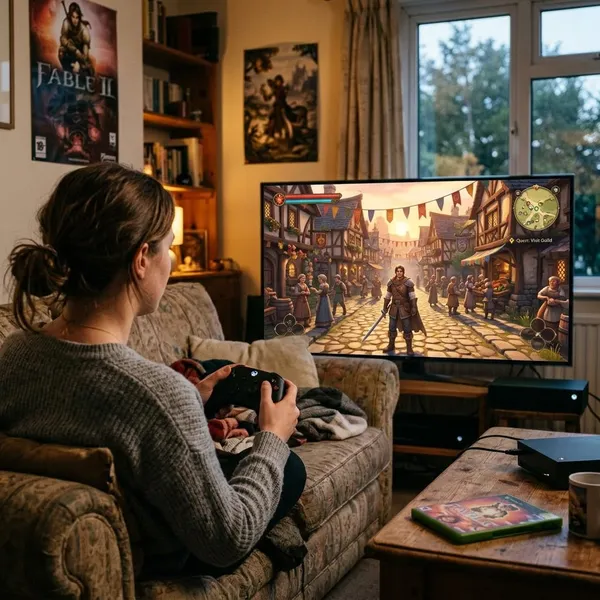
The Fable series is a fantasy action RPG franchise set in Albion, a storybook-style world where being a hero is only part of the experience. You fight monsters, complete quests, explore towns, and make decisions that affect how people see you.
What makes Fable different from a more standard fantasy RPG is the way it treats your character's public identity. A generous hero, a selfish troublemaker, and a feared villain can all move through Albion differently because townspeople react to your behavior, reputation, and sometimes even your appearance.
A fantasy action RPG franchise
Fable is built around real-time action rather than slow, menu-heavy combat. You control a hero directly, use weapons and magic, take quests, gain strength, and move through a fantasy world that is meant to be easy to understand without losing its RPG identity.
That makes it a good fit for players who like role-playing choices but do not want to spend hours comparing tiny stat bonuses before every fight. If you enjoy fantasy adventures with clear feedback and a lighter tone, Fable is easier to approach than many denser RPG series.
A series built around choice and consequence
Choice is the main reason Fable is still remembered. The games often let you decide whether to help, exploit, charm, scare, or ignore people, and those decisions can affect your reputation across Albion.
- Good choices usually make you more admired and welcomed.
- Cruel choices can make people fear or avoid you.
- Self-serving choices may give short-term rewards but change how your hero is perceived.
The important part is not just that a morality system exists. Fable works best when the world makes your choices feel visible instead of hiding them in a menu.
A world known for British humor and fairytale fantasy
Albion mixes forests, monsters, magic, heroic legends, odd villagers, social satire, and dry British humor. One quest might feel like a fairytale problem, while the next undercuts the drama with a ridiculous local argument.
That tone matters. Players who want grim fantasy may find Fable lighter than expected, but players who like strange side characters, playful writing, and a world that does not take itself too seriously usually understand the appeal quickly.
Main Fable games before the reboot
The three main games to know before the reboot are Fable, Fable II, and Fable III. They are not required reading for the new game, but they show what fans mean when they talk about "classic Fable."

Fable and Fable Anniversary
The first Fable introduced Albion, the Hero's journey, moral choices, and the idea that your character could visibly change based on how you played. Some systems feel simple by current standards, but the basic identity of the franchise is already there.
Fable Anniversary is the updated version of the original game, so it is the cleaner choice if you want to see the starting point without going all the way back to the 2004 release. It is best for curious players who care about context more than modern polish.
Fable II
Fable II is often the easiest classic recommendation because it gives Albion more warmth and everyday life. You can own property, build relationships, earn money, and feel more connected to towns instead of simply passing through them between quests.
For a newcomer with limited time, this is the old entry that most clearly shows why people miss Fable. It balances combat, humor, social systems, and reputation without becoming overly complicated.
Fable III
Fable III pushes the series toward rebellion, leadership, and larger political choices. Instead of only asking what kind of hero you want to be, it asks what kind of ruler you would become when promises start costing something.
It is more divisive than Fable II because some players felt it streamlined too much, but it still matters because it shows the series trying to make consequences bigger than one village or one quest. Play it if you want to see how far the old formula stretched before the reboot era.
Is the new Fable a reboot?
Yes, the new Fable from Playground Games is best understood as a reboot. It is not being presented as a scene-for-scene remake of the original game, and it does not appear to continue the old trilogy in a way that requires detailed lore knowledge.
That is useful for two very different players. Returning fans can look for familiar Fable ingredients in a modern version of Albion, while new players can start fresh without worrying that they have missed three games of required backstory.
It starts a new Fable timeline
The reboot gives Playground Games room to rebuild Fable without being trapped by every old event, ruler, and timeline detail. That is the right move for a series that has been away for a long time: too much continuity would make the first hour feel like a lore test.
It brings back a reimagined Albion
Albion is returning, but the point is not to copy every old area exactly. A reimagined Albion can keep the fairytale villages, strange dangers, and social humor while giving the world the scale and detail players expect from a modern RPG.
The key thing to watch is not just map size. Fable needs towns that feel reactive, side quests with personality, and small moments that make Albion feel lived in. A huge but bland world would miss what made the series special.
It keeps the series' humor and choices
The reboot needs humor and choice to feel like Fable in more than name. Combat can be modernized and the world can be redesigned, but the series loses its identity if Albion stops being funny, strange, and reactive.
- For old fans: the test is whether decisions change how the world treats the player.
- For new players: the appeal is a fantasy RPG with more personality than a straight heroic adventure.
It does not require the older games
You should not need the older games to understand the reboot. Playing them may help you catch references, tone, and design echoes, but the new game is being positioned as a clean starting point.
If you only have time for one path, choose based on patience. Play the classics if you enjoy older RPG design and want context; wait for the reboot if you want the smoothest modern entry into Albion.
How does Fable gameplay work?
Fable gameplay usually combines action combat, exploration, reputation, relationships, and everyday life systems. The priority is not mastering a huge build spreadsheet; it is shaping the kind of hero Albion believes you are.
| Player situation | Best starting choice |
|---|---|
| You want modern visuals and no old-game homework | Start with the reboot |
| You want to understand why fans care | Try Fable II or Fable Anniversary |
| You dislike dated controls or older pacing | Wait for the new game |
| You enjoy classic Xbox-era RPGs | Play the main trilogy first |
Fight with melee, ranged, and magic
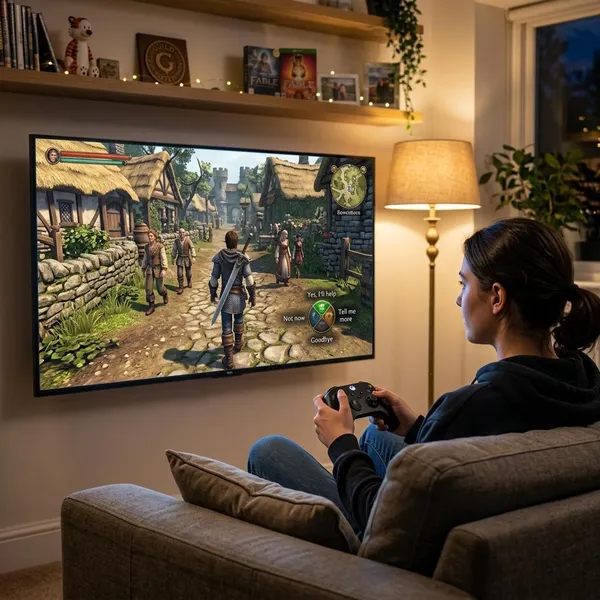
Combat in Fable traditionally gives you three readable options: fight up close, attack from range, or use magic. The attraction is flexibility rather than extreme complexity, so you can settle into a simple style or mix tools depending on the situation.
A casual player might lean on straightforward melee because it is easy to read. Someone who likes experimenting may combine spells, ranged attacks, and weapons to make the hero feel more personal. Neither approach is "wrong" as long as the combat supports the role you want to play.
Explore towns and the wider world
Exploration in Fable is split between dangerous spaces and social spaces. Roads, forests, ruins, and enemy areas give you adventure; towns give your choices a place to land.
Do not treat towns as simple shopping hubs. In the classic games, talking to people, buying homes, taking local quests, and seeing how villagers react are part of the role-playing. If the reboot gets that balance right, wandering through Albion should feel useful even when you are not chasing the main quest marker.
Make choices that shape your reputation
Reputation is where Fable turns small decisions into a larger identity. The best choices are not always about picking the "good" option; they are about deciding what kind of legend you want people to tell about your hero.
- Check the consequence: does the choice affect only a reward, or also how people see you?
- Watch the reaction: villagers cheering, fearing, mocking, or avoiding you is part of the feedback.
- Avoid rushing moral choices: Fable is more interesting when you role-play the decision instead of treating it like a points system.
Build relationships and a life in Albion
Fable often lets your hero do more than fight. Owning property, forming relationships, earning money, and becoming known in a community help Albion feel like a place you live in rather than a backdrop for combat.
This is especially appealing if you like RPG downtime. A player who only wants boss fights may see these systems as extra flavor, but someone who enjoys town life and character identity will probably find them central to the charm.
Conclusion
Fable is worth knowing because it is not just another fantasy RPG about saving the world. Its best moments come from the mix of action, odd humor, public reputation, and small life-in-Albion choices that make your hero feel noticed. If you want the cleanest route, wait for the reboot; if you want to understand the affection behind the name, try one classic game first—preferably Fable II or Fable Anniversary.
FAQ
Is Fable 2027 a remake?
No. If you see people refer to "Fable 2027," they usually mean the new reboot, not a remake of the 2004 game. Release timing can change, so check the latest Xbox or Playground Games announcement for the confirmed date.
Is the new Fable coming to PS5?
There has not been a clear official PS5 confirmation in the material provided here. Treat Xbox Series X/S and PC as the safe confirmed platforms unless Microsoft or Playground Games announces otherwise.
Is Fable coming to Game Pass?
Yes, the new Fable is expected to be part of Xbox Game Pass as an Xbox first-party release. If you plan to subscribe only for this game, wait until closer to launch so the date and access details are final.
Do you need to play the Fable games in order?
No. The reboot should work without the older games, and even the classic titles can be approached flexibly. For context, start with Fable Anniversary; for the strongest classic recommendation, start with Fable II.