How Did Angry Birds Become a Global Gaming Phenomenon?
The angry birds video game became huge because it made one action feel instantly understandable: pull back, launch, watch the tower fall, then try to do it better. If you want to revisit it now, the first thing to check is not just "Is Angry Birds available?" but which version matches what you remember: the classic puzzle feel, a modern subscription version, or a social computer-based game.
How does Angry Birds gameplay work?
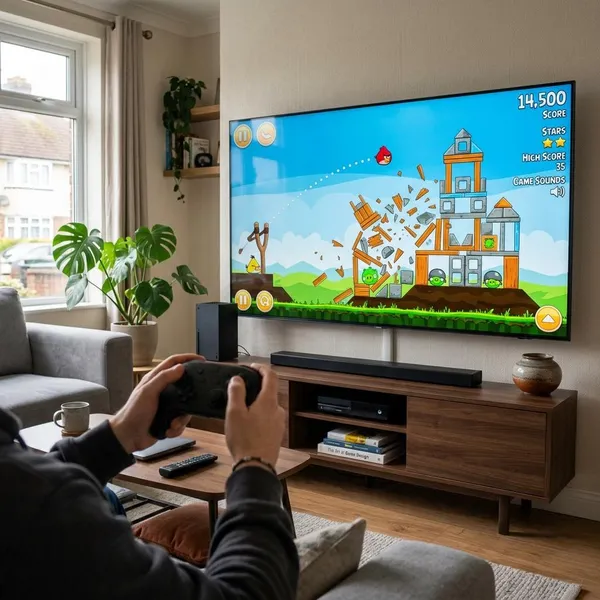
Angry Birds is built around short physics puzzles. You launch birds from a slingshot, damage structures, and try to clear the pigs with as few shots as possible. The simple part is learning the control; the clever part is spotting the weak point before wasting birds.
For a new player, the best habit is to pause for a second before shooting. Look for the material, the lowest support, and where the pigs are actually protected. Most failed attempts come from aiming at the pig directly when the better shot is the beam holding the whole structure up.
Aim the slingshot
The slingshot controls both angle and force. Pulling farther back gives more power, while the release angle decides whether the bird flies low and fast or drops in from above.
A low shot usually works when a tower has a weak base. A high arc is better when pigs are tucked behind walls or when the level is asking you to drop onto a roof instead of smash through the front.
Launch birds with different abilities
Each bird changes the puzzle. Some hit harder, some split apart, some speed up, and some are better against particular materials. The mistake beginners often make is using a special ability as soon as the bird leaves the slingshot; in many levels, the right moment is just before impact or when the bird is lined up with the weakest section.
Break structures to reach the pigs
The pigs are the target, but the structure is usually the solution. Wood, glass, and stone react differently, so a useful first check is: "What is holding this level together?" A single cracked support can do more than three direct hits if it starts a collapse.
- Wide structure: look for a weak side or a chain reaction.
- Tall tower: attack the base or a key middle joint.
- Protected pig: use falling debris instead of aiming straight at it.
Use fewer birds for higher scores
Clearing the level is only the first goal. Unused birds add bonus points, which is why many players replay stages for three stars. If you enjoy quick wins, finishing the level is enough; if you like score chasing, the real puzzle is finding the cleanest one- or two-bird solution.

How did Angry Birds get started?
Angry Birds came from Rovio Entertainment, a Finnish studio that had already spent years making games before this one broke through. Its success was not just luck; it landed at the right moment, when app stores were growing and phone games needed to be quick, visual, and easy to explain.
Rovio built it as its 52nd game
Rovio is widely reported to have made Angry Birds as its 52nd game, which is an important detail because it shows how much trial and error came before the hit. The studio had experience, but it still needed a concept that looked distinctive on a small screen and played well with touch controls.
The round bird designs helped. They were simple enough to recognize instantly, but expressive enough to feel like characters rather than plain puzzle pieces. Pairing them with green pigs gave the game a conflict players could understand without a long story.
It launched in December 2009
The original Angry Birds launched in December 2009. That timing mattered because smartphones were becoming normal gaming devices, but many mobile games still felt clumsy or shallow.
Angry Birds fit everyday phone use unusually well. A commuter could play one level while waiting for a train, while a family could pass the phone around and understand the rules in seconds. It did not ask for a controller, a long session, or gaming experience.
Early success drove rapid global growth
Once the game started climbing app-store charts, word of mouth did a lot of the work. It was easy to recommend because the pitch was almost visual: pull back the bird and knock down the pigs.
- Fast to learn: no complicated menu or tutorial barrier.
- Easy to show: one quick demonstration could create a new player.
- Strong icon appeal: the birds and pigs stood out in crowded stores.
- Broad age range: kids enjoyed the chaos; adults enjoyed the puzzle-solving.
Why did Angry Birds become so popular?
Angry Birds became popular because it removed nearly every barrier between the player and the fun. The goal was obvious, the controls felt natural, and each crash gave quick feedback. It was casual enough for short breaks but smart enough to make players retry a level "just once more."
The stronger answer is that Angry Birds matched mobile habits better than many games of its time. It did not try to copy console controls onto a phone. It used the touchscreen for something that felt physical.
Simple touch controls
The slingshot was the perfect mobile control idea: touch, drag, release. There were no virtual buttons to learn and no awkward on-screen joystick. That made it approachable for people who did not think of themselves as gamers.
Satisfying physics
The physics made every shot feel like it had consequences. Towers leaned, glass cracked, wood shifted, and debris sometimes finished the job in a way that felt both planned and surprising.
That balance is important. If the physics had felt random, players would have blamed the game. If it had felt too predictable, it would have become dull. Angry Birds sat in the useful middle: understandable enough to learn, messy enough to stay entertaining.
Short replayable levels
Short levels made the game easy to fit into real life. Someone playing for two minutes could still make progress, while a more dedicated player could spend longer chasing better scores.
This split helped the game reach different audiences. A casual player could stop after clearing a few stages; a perfectionist could replay the same level until every unused bird counted.
Memorable birds and pigs
The birds and pigs gave the game a face. Red, Bomb, Chuck, and the green pigs were simple enough to remember after one session, and their expressions made the conflict funny rather than serious.
- Clear silhouettes: each bird was easy to identify on a small screen.
- Visual personality: the characters worked without much dialogue.
- Family-friendly conflict: the egg-stealing pigs made the setup playful.
How did Angry Birds grow into a global franchise?
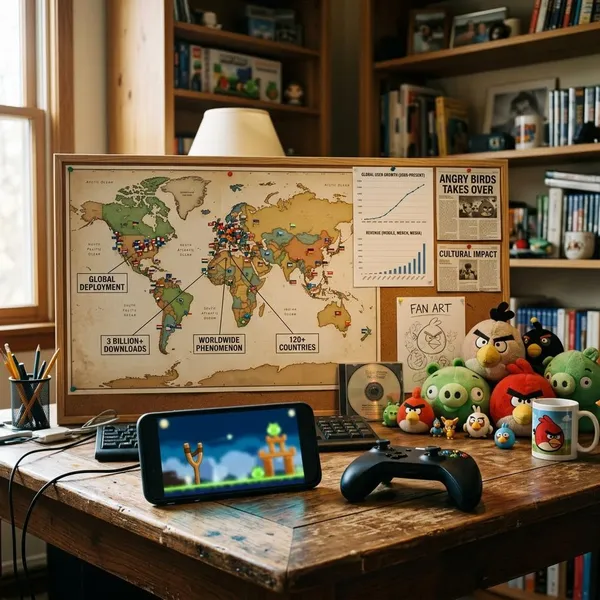
Angry Birds grew because Rovio had more than a popular mechanic. It had characters that could move into other games, cartoons, films, and merchandise without needing much explanation. That is what separated it from many mobile hits that were popular for a season and then disappeared.
Sequels and spin-off games
Sequels and spin-offs kept the brand active after the original became familiar. Some games stayed close to the slingshot formula, while others experimented with racing, role-playing, matching, or event-based play.
This is where player preference matters. If you want the clean puzzle feel, later entries can feel busier. If you enjoy progression systems, challenges, and changing content, the newer games may be more appealing than the original.
New platforms and game formats
Angry Birds moved beyond phones onto computers, browsers, consoles, and subscription services. That helped the series reach people who did not only play on a mobile device.
| Player situation | Better fit |
|---|---|
| You want quick touch-based puzzles | A mobile or tablet version |
| You prefer a bigger screen | A computer-based version such as Angry Birds Friends |
| You already use a subscription library | A service version such as Angry Birds Reloaded on Apple Arcade |
Animated series and movies
Animation was a natural next step because the characters were already expressive. The birds could look angry, proud, confused, or determined without needing complicated dialogue.
The movies and animated shorts also reached people who had never played the game. For younger viewers, the characters could become familiar through cartoons first; for older fans, the screen adaptations kept the brand visible after the app-store rush had slowed down.
Toys and licensed products
Merchandise turned Angry Birds into something people saw outside a screen. Plush toys, figures, clothing, school items, and other licensed products kept the birds and pigs visible in everyday places.
That worked because the designs translated well. A red bird plush or a green pig figure still looked instantly recognizable, which is not true for every mobile game character. The simpler the design, the easier it was to sell, collect, and remember.

Where can you play Angry Birds today?
You can still play Angry Birds today, but the best option depends on what you mean by "Angry Birds." The original 2009 app has not always stayed available in the same form, so it is worth checking the current official store listings before assuming a specific version can still be downloaded.
Rovio Classics for the rebuilt classic game
Rovio Classics was created to bring back the feel of the original game on modern devices. It is the version to look for if your main priority is the early slingshot puzzle style rather than newer events or expanded systems.
Availability may change by platform or region, so the practical check is simple: search the official app store on your device and confirm the publisher before downloading anything that claims to be the classic game.
Angry Birds Reloaded on Apple Arcade
Angry Birds Reloaded is a good fit if you already use Apple Arcade or prefer playing through a subscription library. It keeps the recognizable bird-versus-pig puzzle setup but is packaged for the modern Apple ecosystem.
Angry Birds Friends on computer
Angry Birds Friends is one of the clearer options for people who want to play on a computer. It focuses more on scores, social competition, and recurring challenges than on recreating the exact original 2009 experience.
If you want a quiet nostalgia session, Friends may feel more competitive than expected. If you like leaderboards and regular events, that difference is the point rather than a drawback.
Conclusion
Angry Birds worked because it made mobile play feel immediate, physical, and worth replaying. For history, the 2009 launch shows how perfectly it matched the rise of smartphones; for playing today, the smartest choice is to decide whether you want the classic puzzle feel, a modern subscription version, or a more social computer-based experience.
FAQ
Is the original Angry Birds game still available?
Not always in its original 2009 form. Check the current official Rovio or app-store listing for your device, because availability has changed over time and can differ by region.
Why were older Angry Birds games removed?
Older games were removed for a mix of business, maintenance, and platform-support reasons. Keeping older apps working on modern devices can require updates that are not always practical for every title.
Is Angry Birds available on PC?
Yes, but usually through specific versions rather than the exact original mobile app. Angry Birds Friends is one of the better-known computer options, especially if you like score competition.
Is Angry Birds 2 the same as the original game?
No. Angry Birds 2 keeps the bird-launching idea but adds newer progression, presentation, and systems, so players looking for the simplest classic feel may prefer a rebuilt classic-style version.