Image Album vs Soundtrack Meaning and Differences
If you are choosing between an image album and a soundtrack, start with one question: do you want the music as it appeared in the finished film, or music that explores the film's ideas before the final score was locked? A soundtrack is usually the safer pick for scene recognition, while an image album is better if you want concept-driven themes, mood pieces, and a glimpse of the creative process behind the music.
Image Album vs Soundtrack at a Glance
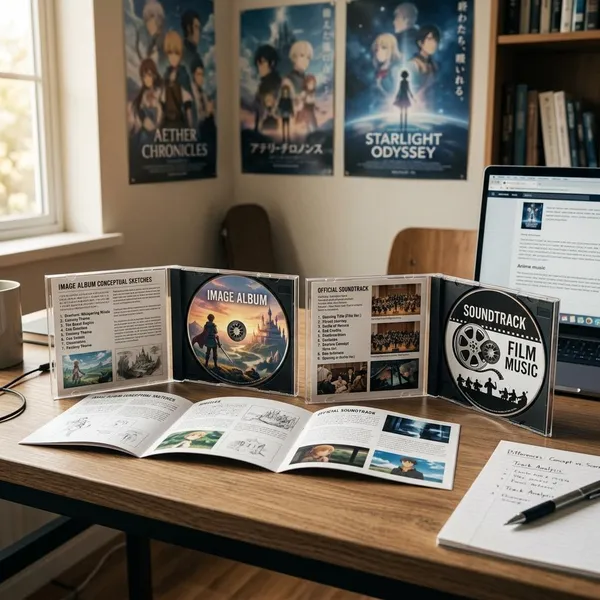
The quickest way to separate the two is to look at purpose. An image album is built around the film's concept, characters, setting, or emotional direction. A soundtrack is tied to the finished version of the film and the music that supports its scenes.
| Release type | What it usually gives you | Best choice when you want |
|---|---|---|
| Image album | Early or concept-based music inspired by the project | Atmosphere, themes, and a more standalone listening experience |
| Soundtrack | Score cues and songs used in the completed film | The music you remember from specific scenes |
If you are buying only one album for nostalgia, choose the soundtrack first. If you already know the film well and want to hear how its musical world was imagined before the final cut, the image album is often the more interesting second purchase.
Image album for concept-driven music
An image album is usually written from early creative material: story ideas, artwork, character notes, mood descriptions, or rough plans for the film. Because the music is not locked to final editing, the tracks can breathe more like complete pieces rather than short scene cues.
That makes image albums useful for listeners who enjoy world-building. For example, if you like putting on anime music while reading, sketching, or working, an image album may feel smoother than an OST because it is often less tied to abrupt cuts and scene changes.
Soundtrack for music used in the finished film
A soundtrack is the better choice when you want the music that actually belongs to the finished movie. It may include background score, character themes, action cues, ending songs, or other music placed around the final edit.
- Choose it for scene memory: you want the cue from a flight scene, reunion, chase, or ending.
- Choose it as a gift: casual fans usually expect the recognizable movie music.
- Choose it first for a favorite film: it gives the clearest link back to what you watched.
Main difference is concept vs final screen use
The main difference is not quality; it is function. An image album captures musical ideas around the film, while a soundtrack documents music shaped for the completed screen version.
This also explains why the two albums can share melodies without being duplicates. A theme may appear first as a broad, lyrical piece on an image album, then return later as a shorter or more dramatic cue in the soundtrack. When comparing releases, check the album label and track notes rather than assuming two covers from the same film contain the same music.
Key Differences Between Image Albums and Soundtracks
The difference becomes clearer once you think about how the music is made and how you plan to listen. Image albums tend to be broader and more interpretive. Soundtracks tend to be more specific, because they must work with timing, dialogue, cuts, and dramatic movement.
A practical check before buying is simple: look for words such as image album, image song collection, original soundtrack, sound book, or symphonic. These labels are not decoration; they usually point to different listening experiences.
Concept music vs finished-film music
Concept music starts with interpretation. A composer might be asked to express a ruined landscape, childhood wonder, a mysterious forest, or a character's loneliness before the final scene even exists. Finished-film music has a narrower job: it must support what is already on screen.
That is why image album tracks can feel more complete on their own, while soundtrack cues may begin suddenly, change direction quickly, or end exactly when a scene needs them to stop.
Early creative stage vs final production
Image albums usually belong closer to the early creative stage. They can help the director, producer, or animation team hear the emotional direction of the film before every scene is finished.
Soundtracks come later, when the production needs precision. A cue may have to rise under dialogue, hit a cut, avoid covering sound effects, or shift with action. If you enjoy behind-the-scenes process, hearing both versions can be rewarding because the image album shows possibility and the soundtrack shows final decision-making.
Inspired themes vs scene-matched cues
An image album may give you a full theme for a place or character even if the final film only uses part of that idea. A soundtrack is more likely to give you the exact version shaped around a scene.
For a casual listener, this matters most when searching for a favorite moment. If you want "that exact piece from the movie," start with the OST or soundtrack track list. If you want a fuller expression of the same emotional idea, the image album may be more satisfying.
Standalone flow vs film-driven sequencing
Image albums often work better as regular albums because the sequencing is not forced to follow the movie's final pacing. They can move from theme to theme in a way that feels natural for home listening.
Soundtracks often follow the emotional path of the film. That can be wonderful if you want to relive the story, but it may feel more fragmented if the score contains many short cues.
- For background listening: an image album often feels smoother.
- For reliving the film: the soundtrack is usually stronger.
- For collecting: owning both can show how a theme changed from idea to final scene.
Why Some Anime Films Have Image Albums
Anime is especially suited to image albums because music can enter the creative process before the finished film exists. Animation often develops through artwork, storyboards, setting design, and mood planning over a long period, so a composer can help shape the emotional identity early.
That does not mean every anime image album is essential, and it does not mean every track later appears in the film. The value is different: it can show what the story sounded like while it was still being imagined.
Shape the musical mood early
Early music can act like a tone test. If a fantasy film needs to feel open, strange, ancient, playful, or melancholy, an image album can help the team hear that direction before the final score is assembled.
For the listener, this is the reason an image album may feel less like "unused music" and more like a mood map. It can be especially appealing for films where atmosphere matters as much as plot.
Explore characters and settings
A finished film may only have a few seconds to suggest a character's inner world or the history of a place. An image album has more room. It can spend several minutes on the feeling of a forest, a sky city, a child's point of view, or a heroine's courage.
Develop themes before the final score
Many listeners enjoy image albums because they reveal musical seeds. A melody may appear in a broad, standalone form first, then return in the soundtrack with different pacing, orchestration, or emotional weight.
A useful listening exercise is to play the image album version of a theme, then compare it with the soundtrack version. You do not need music theory to notice whether the final cue became faster, darker, shorter, more dramatic, or more closely tied to action.
- Start with your goal. Scene memory points to the soundtrack; creative process points to the image album.
- Check the release label. OST, sound book, symphonic album, and image album are not interchangeable.
- Compare recurring themes. Shared melodies often reveal how early ideas became final cues.
Studio Ghibli Image Album and Soundtrack Examples
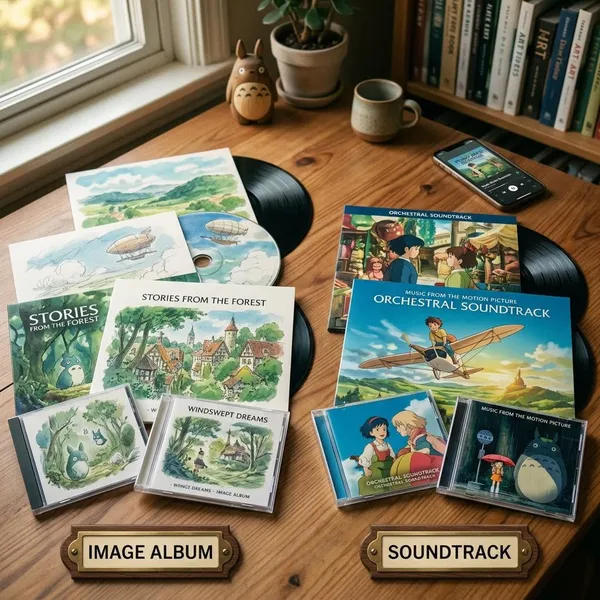
Studio Ghibli releases are some of the easiest examples to study because many films have several related albums. Joe Hisaishi's music often appears in formats such as image albums, original soundtracks, sound books, and symphonic arrangements.
The important point for buyers is that these releases may sit next to each other in a shop but serve different purposes. A soundtrack usually gives the clearest connection to the finished film. An image album gives more discovery value when you want to hear early mood and thematic development.
Nausicaä of the Valley of the Wind
Nausicaä of the Valley of the Wind is a strong example because its image album is closely tied to the early musical identity of the project. It gives a conceptual sense of Nausicaä's world: the toxic jungle, the wide landscapes, the danger, and the strange beauty around the story.
The soundtrack, by comparison, is tied to the completed film and its dramatic needs. If you are interested in how a musical world begins, the image album is fascinating. If you want the version connected to the movie's final scenes, the soundtrack is the more direct purchase.
Castle in the Sky
Castle in the Sky shows the same split in a more adventure-driven setting. The image album leans into the dream of the floating world, youth, mystery, and discovery. The soundtrack has to carry chases, revelations, quiet moments, and the film's final emotional shape.
Collectors should also watch for symphonic versions connected to this title. A symphonic album is not simply the OST with a different cover; it usually presents arranged material in a more concert-like form.
My Neighbor Totoro
My Neighbor Totoro can confuse buyers because several releases sound related at first glance. The soundtrack is the clearest route to the music associated with the finished film, including familiar songs and scene-based cues.
Image-oriented or song-based releases connected to Totoro are better treated as companion listening. They expand the feeling of childhood, rural life, and Totoro's world rather than simply replaying the film in order.
- First-time Ghibli buyer: start with the soundtrack for the most recognizable experience.
- Longtime fan: try the image album to hear early atmosphere and theme ideas.
- Vinyl or CD collector: read the release type carefully before assuming two albums contain the same material.
Conclusion
If you only remember one rule, make it this: buy the soundtrack when you want the music from the finished film, and choose the image album when you want the film's musical imagination before it fully became screen music. For most casual fans, the OST is the best first step; for collectors, composers, and anyone who enjoys hearing ideas evolve, the image album is where the more surprising discoveries often are.
FAQ
Are image album tracks used in the movie?
Sometimes. A melody or theme from an image album may be adapted into the final score, but the exact album track is not guaranteed to appear in the film.
Is an image album the same as an OST?
No. An OST is tied to the finished work, while an image album is usually concept-based music created around the project's mood, characters, or setting.
Does a soundtrack count as an album?
Yes. A soundtrack is an album release, usually collecting score cues, songs, or other music connected to a film, series, or game.
Should I buy the image album or soundtrack first?
Buy the soundtrack first if you want familiar movie music. Pick the image album first only if you care more about atmosphere, early themes, or collecting different versions of the same musical world.