How Did Disney Bring Fix-It Felix Jr to Arcades?
If you are trying to figure out whether the fix it felix video game was a real arcade title, the clean answer is: not originally. Fix-It Felix Jr. was invented for Wreck-It Ralph, then Disney turned it into playable cabinets and promotional versions, which is why it feels half fictional and half real.
Is Fix-It Felix Jr. a real video game?
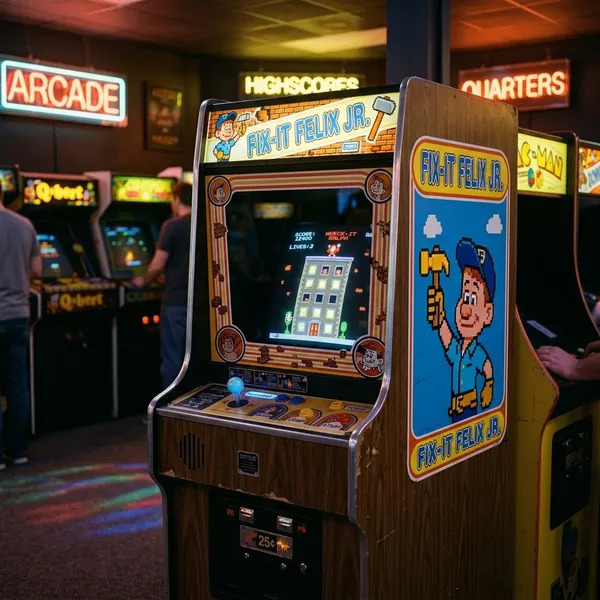
Fix-It Felix Jr. is real in the sense that playable versions exist, but it was not a normal arcade release from the early 1980s. Disney created the game as part of the world of Wreck-It Ralph, then built working versions so fans could actually play what they saw on screen.
It began as a fictional arcade game
Inside Wreck-It Ralph, Fix-It Felix Jr. is treated like an old cabinet from a company called TobiKomi. Ralph smashes the apartment building, Felix repairs the damage, and the residents cheer for Felix while Ralph is stuck being the villain.
Disney later built playable arcade cabinets
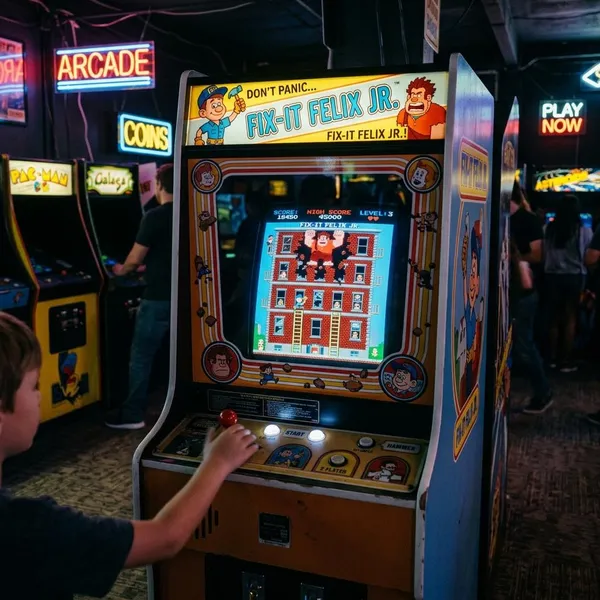
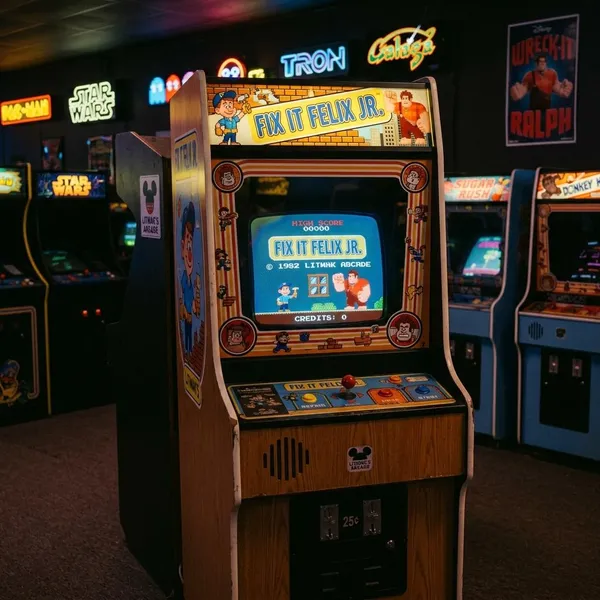
Disney later produced working arcade cabinets for promotion, not just decorative props. These machines appeared at selected events, Disney-related locations, and public displays tied to the movie.
- They were playable: visitors could control Felix and repair the windows.
- They looked authentic: the cabinet art and controls helped sell the 1980s illusion.
- They were limited: they were not mass-produced for regular arcade distribution.
Where did Fix-It Felix Jr. come from?
Fix-It Felix Jr. came from Disney's 2012 film Wreck-It Ralph. The movie needed a believable arcade game that could explain Ralph's frustration, Felix's hero role, and the social rules of the arcade world.
Disney did not just invent a title and a few sprites. The game was given a fake release year, cabinet art, simple arcade logic, and a visual style that made it feel like a lost machine from the golden age of arcades.
Wreck-It Ralph introduced the game
The movie introduces Fix-It Felix Jr. as Ralph's home game. Ralph is the destructive character, Felix is the repairman, and the apartment residents reward Felix after the building is fixed.
That makes the game more than background decoration. It explains why Ralph feels ignored and why Felix is treated as the hero, which gives the fictional cabinet a real purpose in the story.
The fictional game was set in 1982
Disney framed the game as a 1982 arcade release because that date immediately suggests simple mechanics, bright pixel art, high-score chasing, and quick restarts. It also places the fake cabinet near the era of climbing and construction-themed arcade games.
A modern-looking game would have weakened the joke. By making it feel slightly limited, repetitive, and readable at a glance, Disney made the fake history more convincing.
Disney recreated it for the movie promotion
The promotional version gave fans a direct way to test the illusion. Instead of only seeing characters talk about an old arcade game, players could stand at a cabinet or try a digital version and understand the loop for themselves.
How does Fix-It Felix Jr. gameplay work?
The gameplay is built around one job: climb the apartment building and repair the windows Ralph breaks. The challenge comes from doing that while avoiding hazards and choosing a smart route instead of simply rushing upward.
Repair Ralph's broken windows
Repairing windows is the main objective. Each broken window is a visible task, so the player always knows what still needs to be fixed before the stage can end.
The small decision is whether to fix nearby windows first or climb toward harder sections before the screen gets busier. For a casual player, staying safe usually matters more than clearing the building perfectly.
Climb through the apartment building
Felix moves across the outside of the apartment building, using the floors and ledges to reach damaged windows. The building is not just scenery; it decides where you can move, where you can pause, and where you might get trapped.
- Lower floors are easier to recover from if you make a mistake.
- Higher floors usually feel riskier because hazards leave less room to react.
- Backtracking wastes time and can make simple repairs more dangerous.
Dodge falling bricks and ducks
Bricks and ducks keep the game from becoming a simple repair checklist. You have to watch more than Felix's current position, because a safe-looking route can change quickly once hazards start moving.
This is where the game feels closest to a classic arcade cabinet. The controls are simple, but the pressure comes from timing, screen awareness, and not panicking when the building gets crowded.
Grab pies for temporary power-ups
Pies give Felix a short-lived advantage, depending on the version being played. The useful habit is to treat them as a timing tool, not something to chase blindly.
If a pie appears near a dangerous upper section, it can help you finish repairs quickly. If it appears far away while several windows remain open, chasing it may create more risk than reward.
What versions of Fix-It Felix Jr. exist?
The confusing part is that there is no single "main" consumer release. Fix-It Felix Jr. exists as promotional arcade hardware, limited official digital versions, a licensed mini arcade product, and fan-made recreations.
Your best choice depends on what you want. Someone who wants the most authentic movie-style experience is looking for a cabinet. Someone who just wants to play at home should usually look at the mini arcade or a recreation instead.
| Version | Best for | Main catch |
|---|---|---|
| Disney promotional cabinet | Authentic arcade experience | Rare and hard to buy |
| Official digital version | Trying the concept quickly | May no longer be available |
| Basic Fun mini arcade | Home display and casual play | Small controls and screen |
| Fan recreation | Easy access when official options are gone | Accuracy depends on the project |
Where can you play Fix-It Felix Jr. today?
You can still play Fix-It Felix Jr., but the realistic path depends on whether you care more about authenticity or convenience. A full Disney cabinet is the dream version; a mini arcade or fan recreation is the practical version.
Rare Disney arcade cabinets
Official Disney cabinets may appear at museums, pop culture exhibits, Disney-related displays, or retro gaming events. Public access is unpredictable, so sightings are often shared by arcade fans rather than listed like a normal attraction.
If your goal is to play the most authentic version, watch event calendars and collector communities. If your goal is to buy one, be cautious with listings that do not show clear photos, working proof, or credible ownership history.
Secondhand Basic Fun mini arcades
Secondhand Basic Fun units are usually the easiest physical option to look for. Check resale marketplaces, toy collectors, and retro gaming groups, then compare condition before paying a collector-level price.
- Ask for a working test: buttons, sound, and screen should be shown clearly.
- Check the battery area: corrosion can turn a cheap listing into a repair job.
- Decide boxed vs loose: boxed units are nicer for collectors, but loose units may be better for casual play.
- Avoid vague "arcade machine" listings: some sellers mix up mini units, replicas, and fan builds.
Conclusion
Fix-It Felix Jr. is best understood as a fictional arcade game that became playable after the fact. If you want the real movie-style experience, look for rare cabinet appearances; if you simply want to play or own a small version, a secondhand mini arcade or careful fan recreation is usually the more sensible path.
FAQ
Can you buy a Fix-It Felix Jr. arcade machine?
Possibly, but an official full-size Disney cabinet is rare and unlikely to be an easy purchase. For most buyers, a Basic Fun mini arcade or a clearly described replica is far more realistic.
Was Fix-It Felix Jr. released on home consoles?
No, it did not receive a broad standard home console release. Some fan ports exist, but those should not be confused with a major official console version.
Is Fix-It Felix Jr. from a real 1982 arcade game?
No. The 1982 backstory was created for Wreck-It Ralph, and the playable versions came later as part of Disney's promotion and licensing around the film.