What Are Rust Wipes, and Is the Game Worth Playing?
Rust is worth trying if you want a survival game where other players are the real danger, not just the weather or hunger bar. The rust video game is tense, unfair at times, and very rewarding when your small decisions start paying off. If you only want relaxed base building with no risk of losing progress, it may feel more stressful than fun.
What is the Rust video game?
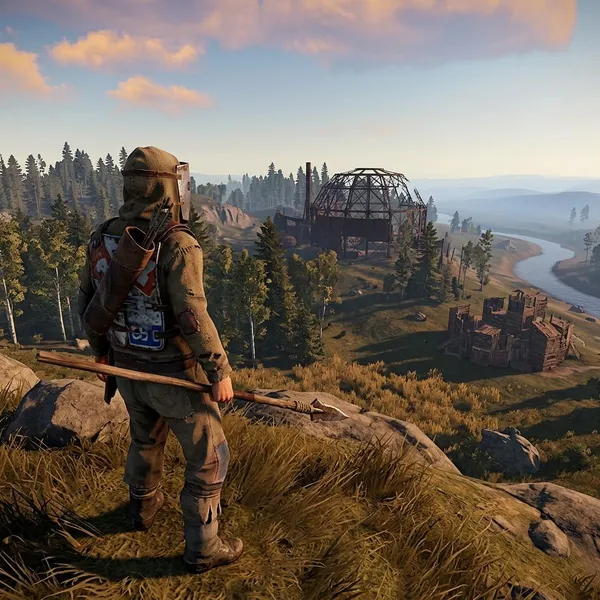
Rust is an online multiplayer survival sandbox. You start with almost nothing, gather resources, build somewhere to live, and try to survive on a map filled with other players who may help you, ignore you, or take everything you are carrying.
A multiplayer survival game
Rust is multiplayer first. Food, cold, animals, and radiation matter, but the biggest threat is usually another player making a better decision faster than you did.
A sandbox built around risk and competition
There is no single correct way to play Rust. You can build quietly in the woods, fight around monuments, trade with neighbors, farm for raids, or join a group that tries to control part of the map.
- Low-risk style: build small, avoid busy areas, and focus on learning the basics.
- High-risk style: contest monuments, carry better gear, and accept more frequent losses.
- Social style: talk, trade, and form temporary alliances, while remembering trust is never guaranteed.
The game keeps pushing you to decide how much risk is worth taking. More loot usually means more travel, more noise, or more attention.
A mix of crafting, building, and PvP
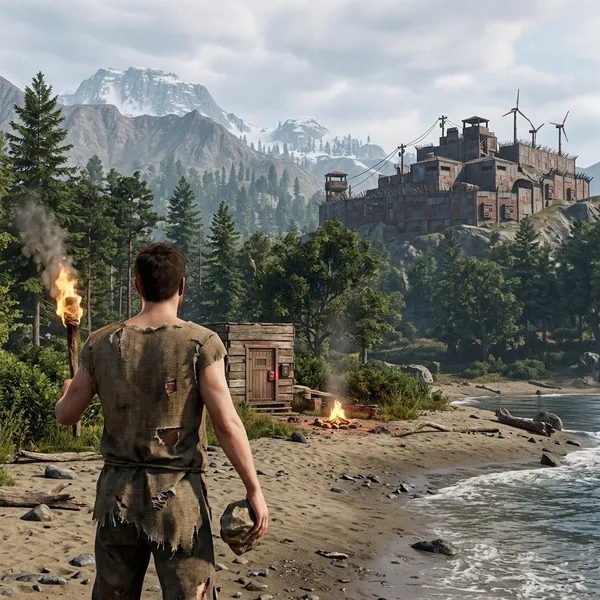
Rust works because crafting, building, and PvP are tied together. You gather wood, stone, metal, cloth, sulfur, scrap, and components, then turn them into tools, weapons, armor, doors, furnaces, medical items, and eventually explosives.
Base building gives your loot a place to exist. PvP gives that loot value because someone else can take it. Crafting connects the two by turning a risky trip outside into something that might make your next fight, defense, or raid easier.
How does Rust gameplay work?
The Rust gameplay loop is simple to describe: collect resources, make tools, build a base, improve your gear, and decide when to fight or avoid other players. The hard part is that every step happens in a shared world where someone can interrupt you.
A new player should think in priorities rather than trying to do everything at once. First, get a respawn point. Next, secure a tiny base. After that, worry about better gear, monuments, raids, and long-term goals.
Start with basic resources
Your first useful targets are wood, stone, cloth, and food. Wood and stone help with tools and building, cloth can become a sleeping bag, and food keeps you from wasting time dying to basic survival needs.
Craft tools and gather materials
Basic tools reduce the time you spend exposed. A simple hatchet or pickaxe makes each trip more efficient, and efficiency matters because standing outside farming is one of the easiest ways to get killed.
Once you have a safe place to store items, start collecting scrap and components from roads, barrels, crates, or monuments. Do not carry more than you are willing to lose. If a run feels "too good to risk," go home and bank it.
Build and protect a base
A small, well-planned base is usually better than a large, messy one. Early protection comes from practical details: a lockable door, an airlock, upgraded walls, a tool cupboard, and enough storage to recover after a bad fight.
- Build small first: a compact starter base is faster to secure.
- Add an airlock: it helps stop one open door from exposing everything.
- Upgrade weak parts: obvious weak spots invite cheap raids.
- Do not show off early: a base that looks rich may attract attention.
Upgrade weapons and gear
Progression usually moves from primitive tools and bows toward firearms, armor, medical supplies, and better ammunition. Better gear lets you challenge stronger areas of the map, but it also makes each death more painful.
This is where casual and competitive players often split. If you only play for short sessions, taking every full kit into risky fights may drain your progress quickly. If you enjoy PvP practice, losing gear is part of the learning cost.
Raid and defend against other players
Raiding is one of Rust's defining systems. Players break into bases with tools, fire, or explosives to steal loot, while defenders rely on stronger materials, better layouts, traps, positioning, and teammates.
Wipes are important because they reset that arms race. Most servers regularly wipe the map, removing bases and stored loot; some also wipe blueprints, depending on the server rules. Joining soon after a wipe can be easier for beginners because fewer groups have built huge compounds or stockpiled late-game weapons yet.
How can you play Rust?
How you play Rust changes the entire experience. Solo Rust, duo Rust, clan Rust, and modded-server Rust can feel like different games even though the basic mechanics are the same.
If you are new, the best first decision is not which weapon to chase. It is choosing a server and group size that match your patience level. A harsh official server can make the game feel impossible before you have learned the basics.
Play solo
Solo Rust is possible, but it is the least forgiving way to play. You gather, build, scout, fight, defend, and recover alone, so every mistake costs more.
Solo works best if you enjoy quiet decision-making: building compact bases, avoiding bad fights, moving at off-peak times, and banking loot often. A lower-population or solo-only server is a much better starting point than a crowded server full of organized groups.
Team up as a duo or small group
A duo or trio is often the most comfortable way to learn Rust. One person can watch while another farms, someone can bring tools back after a death, and base work does not all fall on one player.
This setup suits players who want the real Rust experience without turning every session into a full clan operation. It still has tension, but losses are easier to recover from when someone else can keep the base running.
Join a larger clan
A larger clan gives you scale: faster farming, bigger bases, stronger defenses, and more people for raids. It also changes your role. You may spend less time making personal choices and more time following group plans.
Clan play is a good fit if you want large raids, organized fights, and a sense of being part of a bigger machine. It is less ideal if your favorite part of survival games is personal freedom, experimenting with builds, or setting your own pace.
Choose between different server styles
Server choice can make Rust feel brutal, manageable, casual, or chaotic. Before joining, check the population, team limits, wipe schedule, gather rates, and whether the server is official, community, or modded.
| Server style | Best fit | Watch out for |
|---|---|---|
| Official | Players who want the standard, competitive experience | Often punishing for beginners and solos |
| Community | Newer players who want rules, moderation, or team limits | Quality depends heavily on the server |
| Modded | Casual players with limited time | Faster progress may not teach standard Rust pacing |
Conclusion
Rust is a strong choice if you like survival games where progress feels fragile, player decisions matter, and losing gear is part of the story rather than a rare accident. It is not the best pick for someone who wants a calm, protected building game, but with the right server and realistic expectations, it can be one of the most memorable multiplayer survival games to learn.
FAQ
Is Rust free to play?
No. Rust is a paid game, and the price depends on platform, edition, and sales. PC players usually buy it through Steam, while console versions are sold separately.
Does Rust have a single-player mode?
Rust does not have a normal single-player campaign. You can play alone on quiet or private servers, but the game is designed around multiplayer pressure.
Is Rust more of a survival game or a shooter?
Rust is both, but survival is the wider framework. Shooting matters a lot, especially later in a wipe, yet base planning, resource management, positioning, and knowing when not to fight are just as important.