What Makes Myst a Timeless Puzzle Adventure?
The myst video game is still worth playing if you enjoy quiet exploration, logic puzzles, and stories that ask you to pay attention instead of following quest markers. The main decision is which version to play: choose a modern remake if you want comfort, or an original-style version if you care about the 1993 experience. Either way, Myst works best when you treat it like an investigation, not a game you rush through.
How does Myst gameplay work?
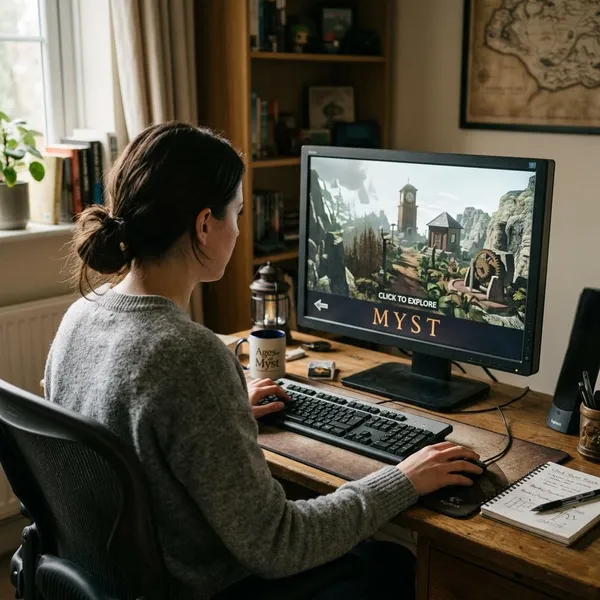
Myst is a first-person puzzle adventure built around observation. You move through Myst Island and several connected worlds, look closely at objects, read journals, operate strange machines, and slowly work out how one clue relates to another.
The first thing to check is your own patience for note-taking and backtracking. If you like games that tell you exactly where to go next, Myst can feel stubborn. If you enjoy escape rooms, mystery boxes, or detective-style thinking, its slow pace becomes the point.
- Explore first: do not try to solve every device the moment you see it.
- Write things down: numbers, symbols, sounds, colors, directions, and odd room details can matter later.
- Revisit places: a clue that seems useless early on may become obvious after another Age gives it context.
- Avoid random clicking: guessing usually wastes more time than stepping back and reading the environment.
Explore each Age for clues
Each Age in Myst has its own mood, machinery, and internal logic. Your job is not just to "clear" an area, but to understand what that place is trying to tell you through its layout, objects, journals, and repeated visual details.
Solve interconnected logic puzzles
Myst's puzzles are usually tied to systems rather than inventory tricks. A switch, sound pattern, map, code, or diagram often belongs to a larger chain of logic, so the solution feels less like a riddle and more like understanding how a place works.
Use linking books to reach new worlds
Linking books are the bridge between Myst Island and the other Ages. They are not simple level-select screens; they are part of the story, the lore, and the reason the game feels so strange. Touching one and entering a new world is one of Myst's defining ideas.
For a new player, the practical point is simple: every Age is both a puzzle space and a piece of evidence. Look for what the world reveals about the people connected to it, not just the mechanism that gets you out.
Take notes and connect hidden details
Myst was designed for players who keep track of information outside their own memory. A small notebook or notes app can make the difference between satisfying difficulty and complete frustration.
- Record exact details: symbols, numbers, sounds, page colors, and switch positions.
- Add locations: "gear room symbol" is more useful than a symbol with no context.
- Mark open questions: who said what, which book matters, and which machine still has no explanation.
If you only play in short sessions, notes matter even more. Myst is much easier when you can return after a few days and immediately see what you were testing.
What is the story of Myst?
The story begins with you arriving alone on Myst Island, surrounded by strange buildings, books, and machines with no friendly explanation. Instead of delivering a long opening scene, the game lets you piece together a family conflict through journals, messages, damaged books, and the condition of the Ages themselves.
You arrive alone on Myst Island
Myst Island works because it feels abandoned but deliberate. There are no enemies chasing you and no companion telling you what to do, so even a library, tower, dock, or hidden mechanism can feel important.
This is where the game divides players quickly. If you want immediate plot and constant dialogue, the opening may feel empty. If you like atmosphere and quiet clues, the island becomes a strong hook because every small discovery feels earned.
Sirrus and Achenar ask for your help
Sirrus and Achenar appear through special books and both claim they need your help. Each brother warns you about the other, which turns the game from a simple puzzle hunt into a judgment call.
The smart move is not to trust whoever sounds calmer or more desperate. Compare what they say with what you find in the Ages. Their rooms, possessions, and records tell you more than their pleas do.
Missing pages reveal conflicting stories
The red and blue pages are not just collectibles. Returning pages lets Sirrus and Achenar communicate more clearly, but each new message also gives you more reason to question what you are being told.
This is one of Myst's better tricks: the item hunt has narrative weight. You are gathering evidence, not simply filling a progress bar.
Atrus holds the key to the mystery
Atrus is the figure who makes the larger story click into place. Understanding his role explains why the linking books matter, why the Ages exist, and why the conflict is bigger than two trapped brothers asking for help.
By the end, the strongest choice comes from evidence gathered across the whole game. Myst does not reward blind obedience; it rewards noticing patterns in behavior, spaces, and consequences.
Why did Myst become a gaming classic?
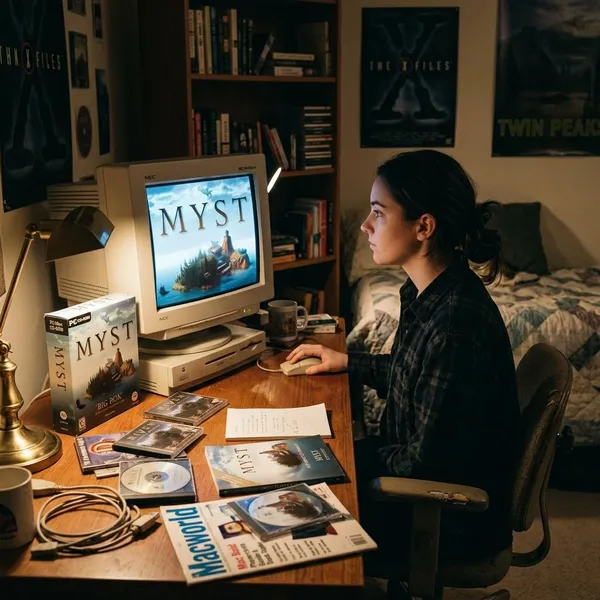
Myst became a classic because it arrived at the right moment with a very clear identity. In 1993, its pre-rendered visuals and CD-ROM presentation felt unusually polished, but the lasting appeal came from how confidently it built a whole game around silence, observation, and atmosphere.
Its visuals showcased CD-ROM gaming
The original Myst looked impressive because its static, pre-rendered scenes were detailed and carefully composed. At a time when CD-ROM drives were becoming a major selling point for home computers, Myst felt like proof that games could look and sound more cinematic without becoming action movies.
Modern players should not expect the 1993 visuals to feel technically advanced now. The better reason to revisit them is art direction: the scenes are clean, moody, and designed to make you study the frame.
Its worlds made exploration feel immersive
Myst's spaces feel immersive because they seem built around a purpose. Machines, pathways, libraries, towers, and rooms are arranged like parts of a believable place, not just puzzle screens placed one after another.
That restraint still matters. The quiet gives your own curiosity room to work, which is why Myst can feel memorable even without combat, loot, or constant dialogue.
Its puzzles rewarded careful observation
The best Myst puzzles make you feel as if the answer was always there, waiting for you to notice it. That is different from a puzzle that depends on guessing a developer's strange logic or trying every item on every object.
For puzzle fans, this is the main reason the game still holds up. The reward is not speed; it is the moment when a diagram, sound, number, and machine finally connect in your head.
Its storytelling influenced later adventure games
Myst helped popularize the idea that a game world could tell a story through place, fragments, journals, and player interpretation. You uncover the narrative by exploring, not by stopping every few minutes for a cutscene.
That influence is easy to see in later adventure and exploration games that use abandoned spaces, environmental clues, and unreliable information. Myst was not the only game to do this, but it showed how powerful the approach could be when the whole experience was built around it.
Is Myst still worth playing?
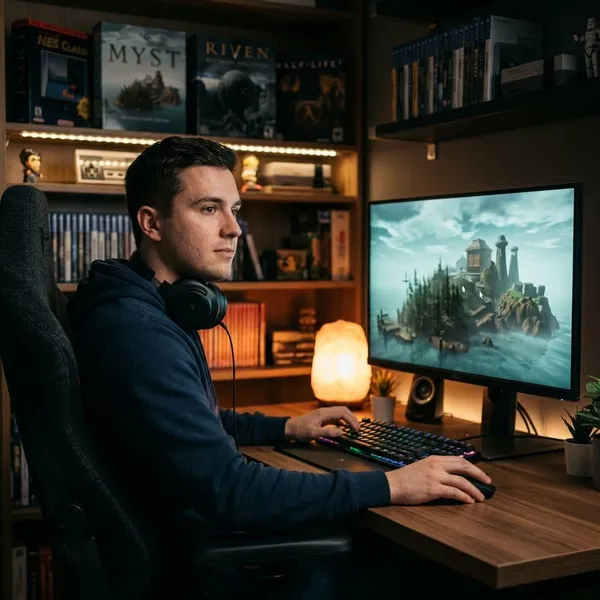
Myst is still worth playing, but not for every mood or every player. It is strongest when you want a quiet puzzle mystery and weakest when you want constant direction, action, or fast rewards.
The version you choose can shape your first impression. A modern remake is usually the friendliest choice for new players because movement and presentation feel more familiar. An original-style release is better if you want to understand why Myst mattered in its own era.
| Player situation | Best fit | Why it makes sense |
|---|---|---|
| First-time player who dislikes old interfaces | Modern remake | Smoother movement and updated visuals make the puzzles easier to focus on. |
| Gaming history fan | Original-style version | The older presentation shows why Myst stood out in the CD-ROM era. |
| VR player who wants stronger presence | VR-supported version | The lonely spaces can feel more physical, though puzzle patience still matters. |
A strong fit for puzzle fans
If you enjoy logic puzzles, escape rooms, or clue-heavy mystery games, Myst remains a strong recommendation. Its best challenges ask you to observe carefully, compare notes, and understand systems instead of relying on quick reflexes.
The main warning is that Myst does not always protect you from feeling lost. For a weekend puzzle session, that can be satisfying. For someone tired after work who wants obvious progress every ten minutes, it may feel more like homework than fun.
A strong fit for atmospheric exploration
Myst is also a good fit if you play games for mood. The empty island, ambient sound, strange buildings, and sudden shift into new Ages create a kind of solitude that still feels distinctive.
A strong fit for gaming history fans
For gaming history fans, Myst is almost essential context. It shows what early CD-ROM gaming could promise: detailed presentation, multimedia ambition, and a slower kind of adventure that appealed beyond the usual action-game audience.
It is also useful to compare the older and newer versions. The original shows the historical impact; the remake shows how the same design can be made more approachable without turning it into a completely different game.
Conclusion
Myst is easiest to recommend to players who like thinking slowly, noticing details, and letting atmosphere do some of the work. Pick a modern version if you want the smoothest first playthrough, or choose an original-style version if the historical texture matters to you. If that quiet, notebook-friendly rhythm sounds appealing, Myst still has a rare kind of pull.
FAQ
Do you need to play Myst before Riven?
No, but it is better if you can. Riven stands on its own, yet Myst gives useful context for Atrus, linking books, and why the sequel's world matters.
Does Myst have multiple endings?
Yes. Your final choice can lead to different outcomes, so it is worth paying attention to evidence instead of trusting the first convincing voice.
Does Myst have combat?
No. Myst has no fighting or enemy encounters; the pressure comes from uncertainty, puzzles, and deciding whom to believe.
Is Myst difficult for beginners?
It can be, especially if you are used to objective markers and hint systems. Beginners should take notes, avoid guessing blindly, and leave a puzzle temporarily when the missing clue clearly has not appeared yet.