Pocket Monsters Anime Collection Cards for Collectors
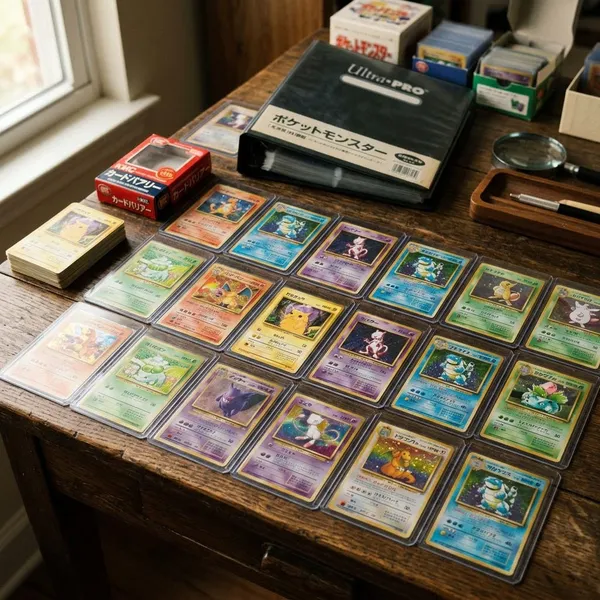
If you have pocket monsters anime collection cards in a binder or a mixed vintage Pokémon lot, do not price them like normal TCG cards right away. First confirm whether they are Bandai Carddass anime-scene cards, then check the number, finish, prism type, and condition. Those small details decide whether you are looking at a common side collectible, a harder variant, or a card worth grading.
What Are Pocket Monsters Anime Collection Cards?
Pocket Monsters Anime Collection cards are vintage Japanese Pokémon collectibles made by Bandai under the Carddass family. They are built around moments from the early Pokémon anime, so they feel more like small pieces of TV memorabilia than game cards.
Bandai Carddass collectibles
Bandai Carddass cards were commonly sold through vending-style systems and related Japanese retail channels. That matters because many copies were handled casually, stored loose, or mixed with stickers and other vending items. If you find clean examples today, especially prism versions, condition can be a real part of the appeal.
Based on scenes from the Pokémon anime
The artwork is usually the quickest clue. Instead of a single Pokémon portrait or a game layout, many cards show anime scenes with Ash, Pikachu, Misty, Brock, Team Rocket, or episode-style moments. A collector who loved the early show may value a memorable scene more than a technically rarer but less recognizable card.
Released across multiple anime sets
These cards were not one neat, single checklist that every seller labels the same way. Related anime sets, variants, and finishes can be grouped together in listings, sometimes too loosely. When buying, treat the exact card number and release style as part of the identity, not as optional details.
- Buying one card: match the number and image before judging the price.
- Sorting a childhood binder: separate anime-scene Bandai cards from stickers, TCG cards, and other Carddass issues first.
- Building a set: use a specific checklist for the exact release you are chasing.
Separate from the Pokémon TCG
Pocket Monsters Anime Collection cards were not made for standard Pokémon gameplay. They do not have HP, attacks, energy costs, weakness, resistance, or trainer effects. If a seller describes one mainly as a "rare Pokémon card" without mentioning Bandai, Carddass, the number, or the finish, ask for clearer photos before treating the listing as accurate.
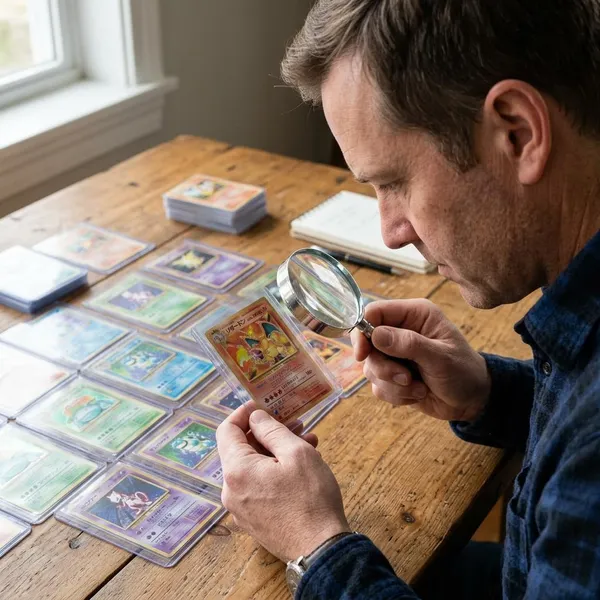
How to Identify Authentic Pocket Monsters Anime Collection Cards
The safest way to identify one is to work from the outside in: manufacturer markings first, then the number and artwork, then copyright details, then the prism surface if it has one. Do not rely on the character alone. Pikachu on the front does not prove the card belongs to the correct set.
Check Bandai and Carddass markings
Authentic examples should show Bandai and Carddass-related markings in the expected places for that release. Blurry logos, odd spacing, missing marks, or a layout that looks "almost right" should slow you down. Wear is normal on old cards; incorrect branding is not.
Match the card number and artwork
The card number and scene need to agree with trusted references. A common mistake is checking only the featured character and ignoring the crop, borders, text placement, or reverse design. Counterfeits and misidentified cards often fall apart when you compare the full layout instead of just the picture.
If you are pricing a single card for sale, include the number in the listing title or description. It helps serious buyers verify the card quickly and avoids the vague "vintage Japanese Pokémon" label that often leads to weak offers.
Check copyright and print details
Copyright and print details help place the card in the correct era and product line. Look at the formatting, font weight, ink clarity, and whether the text sits where it should. A card can be old and still fake, so yellowed stock or scratched surfaces should not be treated as proof of authenticity.
Verify the correct prism pattern
Prism cards need extra attention because the foil is one of the easiest places for a reproduction to look wrong. Tilt the card under light and compare the pattern with confirmed copies. If the shine looks too modern, too flat, or unlike known Bandai prism stock, do not assume it is only a lighting issue.
Hidden prism cards are trickier because peeled and unpeeled copies can look different. For an unpeeled card, check that the top layer is intact and not lifting. For a peeled one, inspect whether the exposed surface is clean or damaged, because that affects both display value and buyer confidence.
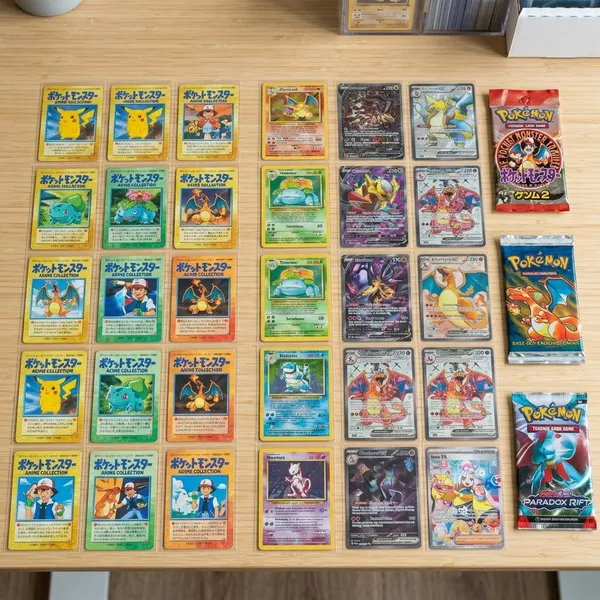
Pocket Monsters Anime Collection Cards vs Other Pokémon Cards
These cards are easy to confuse with other vintage Japanese Pokémon items because many came from a similar era and may appear together in old collections. The practical difference is purpose: TCG cards were made for play, earlier Carddass cards often focus on character-style presentation, and vending stickers may not be cards at all.
Pokémon TCG cards
Pokémon TCG cards have game structure. If you see HP, attack names, energy symbols, weakness, resistance, or retreat cost, you are in TCG territory. Anime Collection cards are collected for the image and release history, not for deck play.
This difference matters when checking sold prices. A rare TCG card and a rare Bandai anime card may both be vintage Pokémon items, but their buyer pools do not behave the same way.
Earlier Pokémon Carddass cards
Earlier Pokémon Carddass cards are still Bandai products, so beginners often group them with Anime Collection cards. Many earlier issues lean more toward individual Pokémon portraits or index-style layouts rather than episode scenes. The word "Carddass" alone is not enough to identify the exact card.
Other vintage vending cards and stickers
Old Japanese Pokémon binders often contain cards, stickers, peelable items, magazine extras, and other vending pieces side by side. Before buying a "rare card," check whether it is actually a sticker or another product type. Stickers can still be collectible, but they should be priced and described accurately.
What Makes Pocket Monsters Anime Collection Cards Rare?
Rarity is not only about age. A card can be hard to find because the version appears less often, because prism surfaces were damaged over time, or because collectors hold onto popular scenes. Think in layers: exact card, exact finish, condition, and demand.
Hard-to-find cards and variants
Some cards simply do not appear often in public sales. Since official print data is not always easy to confirm for niche vintage releases, collectors often judge scarcity by repeated market observation: how often the card appears, how quickly it sells, and whether the same few copies keep circulating.
- Standard copy: usually easier to locate if the scene is not heavily chased.
- Variant or alternate finish: may be much harder even when the image looks familiar.
- Clean copy: can be scarce even if worn examples are available.
Prism and hidden prism cards
Prism cards usually attract more attention because they display well and are often less common than standard cards. Hidden prism cards add another layer because the peelable or covered prism feature affected how owners handled them. Many were peeled, scratched, or stored poorly.
For a display collector, a peeled hidden prism card may still look great. For a condition-focused collector, an unpeeled copy with clean edges may be the stronger target. Those are different buying goals, and they should not be priced as if they are the same card in the same state.
High-grade condition
High-grade condition is its own kind of rarity. Corners, edges, surface scratches, dents, warping, and peeling all matter. Prism surfaces are especially unforgiving because small marks become obvious when the card is tilted under light.
If you are deciding whether to grade, inspect the card outside the sleeve under angled light first. A card that looks mint in a binder pocket may show pressure marks or foil scratches once you check it properly.
Popular characters and scenes
Demand can make a card feel rarer than its supply suggests. Pikachu, Team Rocket, main cast scenes, and memorable anime moments often draw more competition. A quieter scene may be harder to find on paper, but still sell slower if fewer collectors are chasing it.
What Affects Pocket Monsters Anime Collection Card Value?
Value starts with accurate identification. After that, the biggest factors are version, prism type, condition, current demand, and whether the card is graded. Because sales data can be thin, one random active listing is not a reliable price guide.
Card number and version
The card number and version are the base of any valuation. Without them, you may compare your card to the wrong release or finish. This is especially risky in mixed lots where sellers use broad titles like "Japanese vintage Pokémon Carddass."
Prism type
Prism type can create a large value gap. Standard, prism, and hidden prism versions should be treated separately when you check prices. A shiny surface is not automatically the valuable version; it must be the correct prism style for that card.
Condition
Condition affects every copy, but the important flaws are not always obvious. Check the front, back, corners, edges, and surface under light. On hidden prism cards, also check for lifting, uneven peeling, or damage left from being peeled.
Collector demand
Collector demand is the reason some prices look uneven. A popular scene in average supply can outperform a scarcer card that few people recognize. Demand can also rise when vintage Bandai side sets get attention in collector communities or auctions.
For a quick sale, price with recent demand in mind. For a rare variant, patience may matter more than matching the lowest old sale, especially if comparable copies rarely appear.
Graded or raw status
Grading can help when the card is valuable enough, clean enough, or difficult enough to authenticate that a third-party opinion adds confidence. It is usually more sensible for strong-condition prism cards, hidden prism cards, and popular scenes than for low-value worn copies.
Raw cards are still perfectly collectible. If you mainly want a binder set, raw may be the better route. If you plan to sell a high-end card to buyers who are cautious about fakes or condition, grading may make the card easier to place.
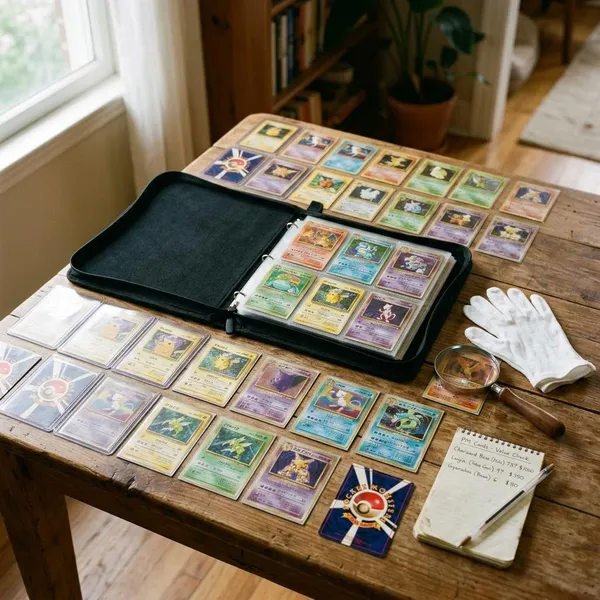
Conclusion
The smart way to handle Pocket Monsters Anime Collection cards is to identify first and value second. Once the Bandai/Carddass markings, card number, finish, prism pattern, and condition all line up, the market becomes much easier to read. If one of those details is unclear, slow down before buying, selling, or grading, because small differences can change the card from a nice binder piece into a much more serious collectible.
FAQ
Can Pocket Monsters Anime Collection cards be graded?
Yes, if the grading company recognizes the issue and can label it correctly. Grading makes the most sense when the card is clean, scarce, prism-related, or valuable enough to justify the fees.
What are hidden prism cards?
Hidden prism cards have a covered or peel-related prism feature. Collectors pay close attention to whether the card is still unpeeled and whether the surface underneath or around the peel area is damaged.
Are peeled hidden prism cards still collectible?
Yes, peeled copies can still be collectible, especially for display or set completion. They usually need clearer condition photos because peeling quality can vary a lot from one card to another.
How many Pocket Monsters Anime Collection cards are there?
The number depends on which related Bandai anime sets and variants you include. Use a checklist for the specific release instead of relying on one universal total from a marketplace title.
Why are some cards harder to price than others?
Some cards have few public sales, and sellers often mix up versions or finishes. When comps are thin, the best price estimate comes from matching the exact number, prism type, condition, and recent buyer interest rather than copying the nearest similar listing.