What Stories Shape the Junji Ito Collection Characters?
If you are looking up junji ito collection anime characters, the quickest answer is that the anime does not have one central hero. It works like a horror anthology, so the names worth knowing are the characters tied to the most memorable stories: Tomie, Souichi, Fuchi, Tooru Oshikiri, the Handsome Boy at the Crossroads, and Yuko.
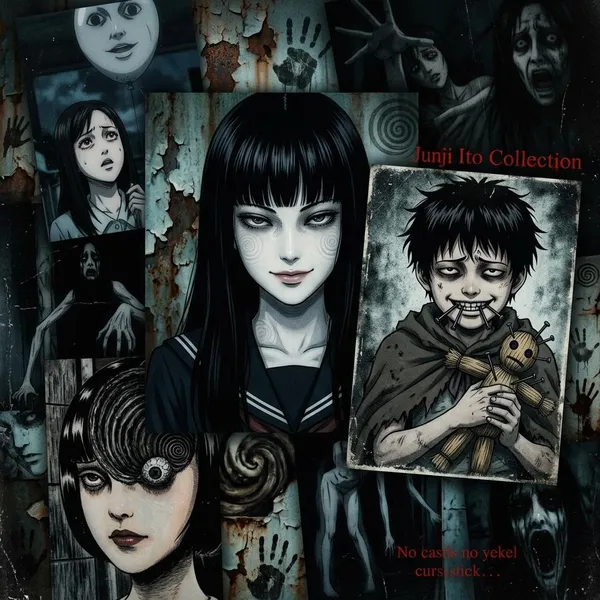
Who are the main characters in Junji Ito Collection?
The main characters in Junji Ito Collection are better understood as standout figures rather than regular cast members. If you are new to the anime, start by matching each character to the kind of horror you want: Tomie for obsession, Souichi for curses and dark humor, Fuchi for body horror, Oshikiri for unstable reality, the Handsome Boy for supernatural dread, and Yuko for grotesque transformation.
| Character | Best remembered for | Japanese / English voice actor |
|---|---|---|
| Tomie | Beauty, obsession, regeneration | Rie Suegara / Monica Rial |
| Souichi Tsujii | Curses, childish malice, dark comedy | Yuuji Mitsuya / Austin Tindle |
| Fuchi | Grotesque fashion-world body horror | Mami Koyama / Terri Doty |
| Tooru Oshikiri | Psychological and dimensional horror | Hiro Shimono / Micah Solusod |
| Handsome Boy at the Crossroads | Rumors, love fortunes, ghostly dread | Hikaru Midorikawa / Daman Mills |
| Yuko | Transformation and humiliation in "Slug Girl" | Kaori Nazuka / Kristen McGuire |
Tomie
Tomie is the closest thing Junji Ito has to a horror icon. She appears as a beautiful young woman who draws people into obsession, jealousy, and violence, but the real horror is that killing her never solves the problem. Her ability to return, regenerate, or multiply makes her feel less like a person and more like a curse wearing a human face.
In Junji Ito Collection, she appears in "Painter" and receives extra attention through the Tomie OVA episodes. If you only want to sample one character before deciding whether the anime's tone works for you, Tomie is the safest first pick because she shows Ito's mix of desire, revulsion, and supernatural punishment very clearly.
Souichi Tsujii
Souichi Tsujii is memorable because he is creepy in a deliberately awkward way. He is a boy obsessed with curses, nails, grudges, and theatrical threats, and his stories often feel half funny until his spite starts causing real harm.
- Best fit for: viewers who like horror with a mean, strange sense of humor.
- Less ideal for: someone who wants only elegant, serious, or visually shocking horror.
- Why he matters: he shows that Junji Ito's fear can come from petty behavior, not just monsters.
Fuchi
Fuchi is one of the easiest characters to remember after a single appearance. She enters through the world of modeling, where beauty and image should be the focus, but her body, face, and predatory presence make the whole setting feel wrong almost immediately.
Tooru Oshikiri
Tooru Oshikiri belongs to the more psychological side of the anime. His fear comes from isolation, strange sounds, impossible events, and the sense that his home is connected to something reality cannot explain.
That makes him useful for a different kind of viewer. If you are not mainly looking for gore or grotesque design, Oshikiri's story is a better example of how Junji Ito builds dread from space, uncertainty, and the feeling that the rules have changed without warning.
Handsome Boy at the Crossroads
The Handsome Boy at the Crossroads is less of a normal character and more of a haunting presence. He is tied to The Lovesick Dead, where rumors, fortune-telling, and romantic desperation turn a quiet crossroads into a place of danger.
His calm appearance is what makes him unsettling. People come to him looking for certainty about love, and that emotional weakness gives the story its dread. This is the character to look for if you prefer ghostly atmosphere over obvious body horror.
Yuko
Yuko is remembered for "Slug Girl," one of the anime's bluntest body horror stories. Her horror is not about a villain attacking from outside; it is about the body becoming the source of fear, shame, and panic.
Her story is a good test case for whether Junji Ito's more grotesque ideas work for you in animated form. Some viewers find it unforgettable, while others may find it too direct or uncomfortable compared with the more atmospheric stories.
Why does Junji Ito Collection have no single main character?
Junji Ito Collection has no single main character because it adapts separate horror stories rather than one continuous plot. That can feel unusual if you expect a standard anime with a main protagonist, a fixed group of friends, and a season-long conflict. Here, the better way to watch is to treat each episode or segment as its own nightmare.
Each episode adapts separate horror stories
Each episode or segment pulls from different Junji Ito manga stories, so the cast changes with the premise. A school rumor, a strange family situation, a cursed encounter, or a disturbing physical change may each get its own set of characters.
Most characters appear in only one story
Most characters appear once because their job is to carry one complete horror idea. That is not a flaw in the cast; it is how anthology horror keeps each story sharp.
A few iconic characters return
A small number of characters return because their concepts can support more than one nightmare. Tomie can keep reappearing because obsession and regeneration can be explored from different angles. Souichi also works in multiple setups because his curses are tied to everyday grudges and family tension.
- Recurring does not mean protagonist. These characters are important, but they do not turn the anime into a single storyline.
- Fame can be misleading. Tomie is the best-known name, yet she is not the lead of every episode.
- One-off characters still matter. Fuchi and Yuko are memorable precisely because their stories are focused and intense.
Tomie gets two additional OVA episodes
Tomie gets two additional OVA episodes, which is why many viewers treat her as the face of Junji Ito Collection. She receives more attention than most characters, and her wider reputation in Junji Ito's work makes her feel larger than the anime itself.
That extra presence is helpful if you are choosing what to watch first. If your main interest is the most recognizable Junji Ito character, prioritize "Painter" and the Tomie OVAs before moving into the one-off stories.
Which stories feature the best-known characters?
The best-known characters are tied to specific stories, so it helps to think of this anime as a character-based watchlist rather than a single plot you have to follow from start to finish. If you are watching casually, pick the story that matches the fear you want. If you are trying to understand Junji Ito's range, move between different character types instead of watching only the most famous name.
Here is the simplest route:
- Start with Tomie for the franchise's most iconic obsession-driven horror.
- Watch Fuchi or Yuko if you want the anime's more physical, grotesque side.
- Choose Oshikiri or the Handsome Boy if you prefer atmosphere, mystery, and dread.
- Try Souichi when you want something stranger, nastier, and more darkly comic.
Tomie in Painter and the Tomie OVAs
Tomie is featured in "Painter" and in the Tomie OVA episodes. "Painter" is especially useful because it shows how her beauty becomes a trap for the people around her, turning admiration into possession and violence.
The OVAs give her more room than most anthology characters receive. Watch these if your main question is why Tomie is so often treated as Junji Ito's signature character.
Souichi in Souichi's Convenient Curses and Rumors
Souichi's main anime material includes "Souichi's Convenient Curses" and related rumor-centered stories. These episodes are not frightening in the same way as "Fashion Model" or "Slug Girl"; they rely more on spite, awkwardness, and the uncomfortable feeling of a child taking revenge fantasies too far.
Fuchi in Fashion Model
Fuchi is best known from "Fashion Model," and that is the essential episode for her. It is one of the clearer beginner choices because the premise is easy to grasp: a glamorous setting is invaded by a figure who makes beauty feel unsafe.
If you are watching with someone who wants a fast, memorable example of Junji Ito's visual horror, this is more direct than a slow-burn story like Oshikiri's.
Oshikiri in The Ongoing Tale of Oshikiri
Oshikiri's key story is "The Ongoing Tale of Oshikiri." The fear comes from a house, strange events, and the suspicion that something impossible is pressing against ordinary life.
Handsome Boy in The Lovesick Dead
The Handsome Boy at the Crossroads appears in The Lovesick Dead. His story is built around crossroads fortune-telling, rumors, and people who are desperate to hear the answer they want.
That setup gives the storyline a tragic edge. The horror is not just that something supernatural may be happening; it is that vulnerable people keep walking toward it.
Yuko in Slug Girl
Yuko's best-known appearance is "Slug Girl." It is one of the easiest stories to describe and one of the hardest to forget, because the horror is tied directly to transformation, embarrassment, and loss of control over the body.
This is not the most subtle entry point, but it is a useful one if you want to see how far the anime leans into physical disgust.
Why do these Junji Ito characters stand out?
These characters stand out because each one gives a clear shape to a different fear. They are not memorable only because of plot twists or strange designs. They work because you can quickly attach each character to a specific nightmare: wanting someone too much, being cursed by someone petty, seeing beauty turn predatory, losing trust in reality, asking the wrong supernatural question, or becoming trapped in your own body.
Tomie embodies beauty and obsession
Tomie stands out because she makes beauty feel dangerous rather than comforting. People do not simply admire her; they lose perspective around her, and that loss of judgment is where the horror begins.
Her regeneration adds the supernatural hook, but the human reaction to her is just as important. Tomie stories are disturbing because they show desire turning into ownership, jealousy, and violence.
Souichi brings curses and dark comedy
Souichi brings a different flavor of horror: petty, childish, and weirdly funny until it becomes cruel. He is not elegant like Tomie or visually overwhelming like Fuchi, which is exactly why he feels distinct.
- His fear is small-scale. Grudges, teasing, and family tension become supernatural harassment.
- His comedy is uncomfortable. The silliness does not cancel the malice behind it.
- His episodes break the rhythm. They keep the anthology from feeling like one type of horror repeated.
Fuchi turns fashion into body horror
Fuchi is effective because she corrupts a world built around appearance. A model should belong in a fashion setting, yet her presence makes the whole environment feel predatory and unnatural.
That contrast is the point. Her design would be memorable anywhere, but placing her inside an image-obsessed space makes the horror sharper.
Oshikiri brings psychological and dimensional horror
Oshikiri's stories stand out because the threat is not always something you can point to. The fear is in the possibility that a familiar place may not follow familiar rules anymore.
For viewers who like atmosphere, this can be more effective than a monster reveal. Once space, sound, and cause-and-effect feel unreliable, there is no simple way for the character to protect himself.
Handsome Boy creates supernatural dread
The Handsome Boy creates dread through calmness, rumor, and emotional need. He does not need a grotesque design to feel dangerous; the people who approach him are already vulnerable.
That makes him one of the more haunting figures in the anime. His horror sits in the pause before an answer, the wish to know the future, and the possibility that asking the question was the mistake.
Conclusion
The best way to approach Junji Ito Collection is not to hunt for one main protagonist, but to choose the character whose kind of horror interests you most. Tomie is the obvious starting point for iconic Junji Ito, Fuchi and Yuko are stronger picks for body horror, Oshikiri and the Handsome Boy suit slower dread, and Souichi is there when you want something nastier and more absurd.
FAQ
Who is the most iconic Junji Ito character?
Tomie is the most iconic Junji Ito character. She is widely recognized beyond Junji Ito Collection because her stories combine beauty, obsession, violence, and supernatural return in one unforgettable figure.
Is Tomie in Junji Ito Collection?
Yes, Tomie is in Junji Ito Collection. Her main anime material includes "Painter" and the additional Tomie OVA episodes.
Does Junji Ito Collection have a main protagonist?
No, Junji Ito Collection does not have a traditional main protagonist. It is an anthology, so most episodes focus on different characters and separate horror ideas.
Is Junji Ito Collection connected to Junji Ito Maniac?
Yes, they are connected through Junji Ito's manga and anthology format, but they are separate anime adaptations. They adapt different selections of stories and should not be treated as one continuous series.