How Scary Is the Junji Ito Collection Anime?
Junji Ito Collection is worth watching as a quick sampler of Ito's ideas, but it is not the version I would choose if you want his horror at full strength. The anime keeps many of the story beats, yet the simplified visuals and uneven pacing make it feel more like a preview of the manga than a truly frightening adaptation.
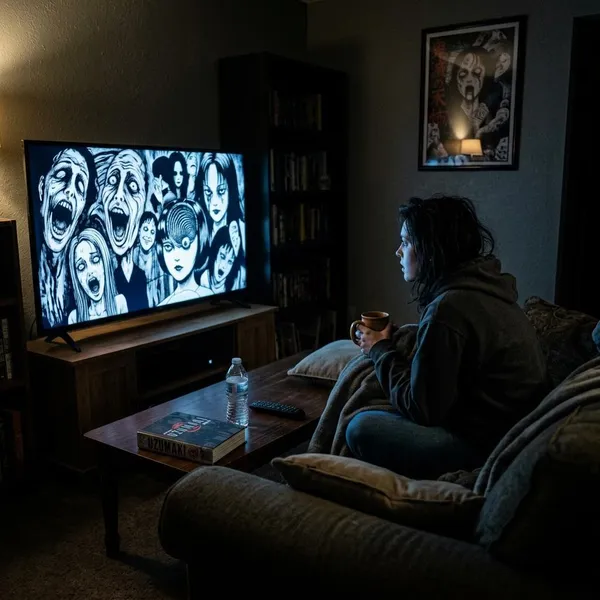
What does Junji Ito Collection do well?
The anime works best when you treat it as a low-commitment introduction. If you have never read Junji Ito and want to know whether his mix of body horror, obsession, grotesque comedy, and supernatural dread appeals to you, the anthology format makes that easy.
Its main value is convenience. You can sample several stories without committing to a long series or hunting down different manga volumes first. For a casual viewer, that is a real advantage. For a manga fan expecting the same level of dread, it is where disappointment usually begins.
Faithful story beats
The series is often faithful at the plot level. Many episodes keep the same premise, escalation, and ending as the original manga, so you are not watching a heavily rewritten version of Ito's work.
Strong horror concepts
Junji Ito's ideas are strong enough that several stories remain interesting even when the production is limited. Dreams that stretch beyond human sanity, bodies changing in impossible ways, beauty turning grotesque, and ordinary people accepting obviously wrong situations still have power.
If you mostly enjoy horror for strange premises, the anime has enough to keep you watching. If you need the image itself to disturb you, the manga is much harder to beat.
Wide variety of short stories
The range is one of the anime's better qualities. Some segments lean into body horror, others are more psychological, absurd, tragic, or socially uncomfortable. That variety gives newcomers a useful map of Ito's style instead of reducing him to one kind of scare.
- Curious newcomer: watch a few episodes to see which type of Ito story interests you.
- Horror fan looking for intensity: use the anime carefully, because the scariest manga moments are often softened.
- Existing manga reader: expect recognition more than surprise.
Easy anthology format
The short-story structure makes the series easy to dip into. A weak segment does not trap you for long, and a stronger one can still make the episode worthwhile.
That makes it better for occasional viewing than for a serious late-night horror marathon. Watching one or two segments casually works; expecting every episode to build a deep, sustained mood is where the format and production limits start to show.
Where does the anime fall short?
The biggest problem is that Junji Ito's horror depends on visual pressure. His manga scares you through detail, contrast, page turns, and the feeling that one drawing is becoming worse the longer you stare at it. The anime often delivers the same event without the same physical unease.
Simplified artwork
The simplified art is the adaptation's most obvious weakness. Faces, bodies, shadows, and grotesque details often look cleaner and less oppressive than they do on the page.
Stiff animation
Limited movement makes several scenes feel less threatening than they should. Horror animation needs weight: a slow turn, an unnatural pause, a body moving in a way that feels wrong. Too often, the show looks static without gaining the controlled stillness that the manga already had.
Uneven pacing
Some stories move too quickly through the setup, while others linger without adding dread. Short horror needs careful timing because there is little room to recover once the mood slips.
Weaker visual horror
The anime is usually creepy rather than truly scary. It keeps the strange ideas, but the images rarely burn into your memory the way Ito's manga panels do.
- Worth trying: you want bizarre horror concepts in a quick format.
- Less recommended: you want the most disturbing version of Ito's body horror.
- Best avoided as a first impression: you are judging whether Ito's reputation for visual horror is deserved.
Why does the manga feel scarier?
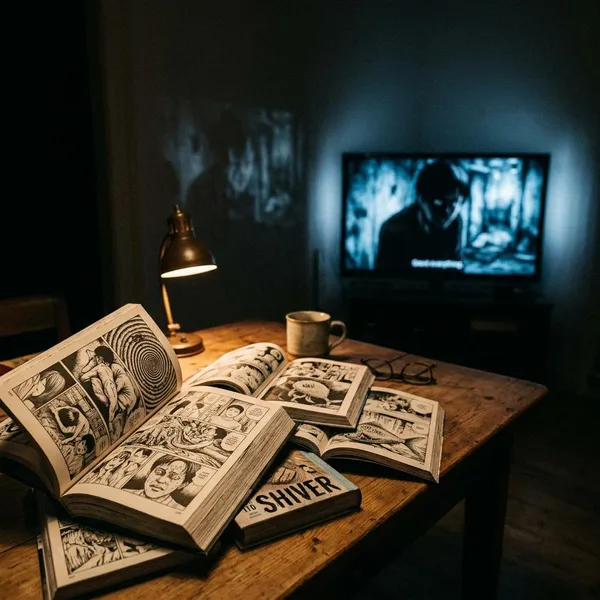
The manga feels scarier because the horror was built for the page. Ito controls what you see, when you see it, and how long the image sits in front of you. The anime can add voices, color, and sound, but those additions do not fully replace the tension of a page turn or the density of his line work.
More intricate black-and-white detail
Ito's black-and-white art gives his horror a harsh, almost clinical intensity. Skin, hair, eyes, wounds, shadows, and empty spaces all carry texture. The longer you look, the more wrong the image feels.
Color animation can make those same moments feel more ordinary. It is not that color is automatically bad for horror, but this adaptation often loses the oppressive detail that makes the manga feel so invasive.
Stronger reveal timing
The manga has better control over reveals because the reader participates in the timing. You turn the page, stop on a panel, notice a small abnormal detail, then realize the full shape of the horror.
The anime has to choose that timing for you. When a cut comes too soon or a shot does not linger long enough, the reveal becomes information instead of shock.
More striking body horror
Body horror hits harder in the manga because Ito makes physical corruption feel textured and specific. Flesh looks swollen, stretched, oily, brittle, infected, or impossibly rearranged. The anime shows the same kinds of changes, but they often feel smoother and less painful.
If body horror is the main reason you are interested in Junji Ito, start with the manga. The anime can be gross, but the manga is far better at making the body feel unsafe.
Heavier atmosphere
The manga has a heavier atmosphere because silence does part of the work. There is no background score telling you how to react, and no fixed pace pushing you forward. You sit with the wrongness until you decide to move on.
The anime has moments where sound and voice acting help, but the mood is inconsistent. Plain backgrounds, stiff reactions, and softened designs often interrupt the dread before it fully settles.
Which stories work best in the anime?
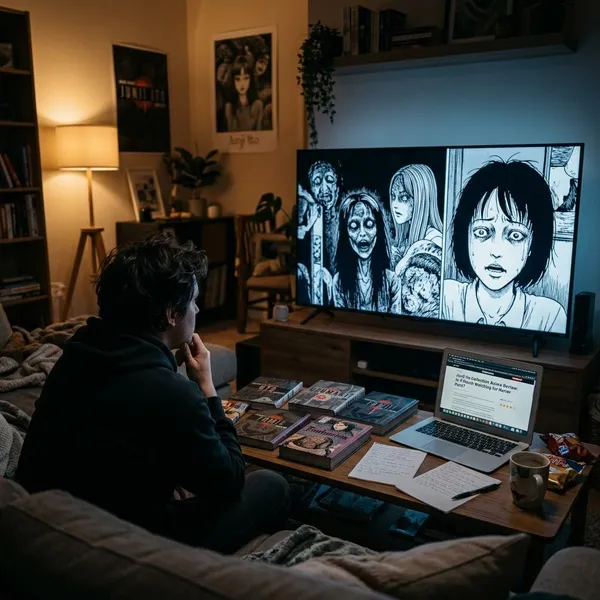
The best segments are the ones that do not rely only on one perfectly drawn nightmare image. Stories with a clean premise, steady escalation, or an already uncomfortable social setup survive the adaptation better.
If you only want to test the anime, I would not start randomly. Pick one or two of the stronger stories first, then decide whether the show's style works for you.
The Long Dream
The Long Dream is one of the strongest choices because the premise is horrifying before the visuals even arrive: sleep becomes a prison, and each dream feels longer than the last.
The anime communicates that existential dread clearly enough to work. It does not fully match the manga's disturbing imagery, but the idea of a mind being stretched across impossible time still lands.
Shiver
Shiver works because it escalates from a small abnormal detail into something much more invasive. The gradual progression gives the anime something reliable to build on, even when the visuals are less sharp than the manga.
Greased
Greased is memorable because its disgust factor survives the adaptation. Oil, grime, sweat, and bodily discomfort are so central to the story that even a less elegant production can still make the episode unpleasant in the right way.
This is not the episode I would use for someone who dislikes gross-out horror. For viewers who want to test the nastier side of Ito's work, it is one of the clearer examples.
Fashion Model
Fashion Model remains effective because the central figure is disturbing even without perfect animation. The horror comes from her presence, the reactions around her, and the way everyone tries to treat something deeply wrong as if it belongs in a normal professional setting.
For a first-time viewer, this is one of the easiest segments to recommend. It is simple, memorable, and strange enough to show the appeal of Ito's ideas while also showing the anime's limits.
Conclusion
The practical verdict is simple: watch Junji Ito Collection if you want a convenient taste of the stories, but read the manga if you want to understand why they are considered frightening. The anime is not worthless, and a few segments work well enough, yet its best use is as a doorway into Ito's work rather than the destination.
FAQ
Is Junji Ito Collection faithful to the manga?
Mostly, yes. It often follows the same story beats and endings, but it is less faithful to the mood, visual density, and reveal timing that make the manga effective.
Is Junji Ito Collection actually scary?
Sometimes, but not consistently. It is more successful as weird, unsettling horror than as a genuinely terrifying adaptation.
Should you watch the anime or read the manga first?
Read the manga first if you want the strongest experience. Watch the anime first only if you prefer a quick sample before deciding which stories to read.
Is Junji Ito Collection the same as Junji Ito Maniac?
No. Junji Ito Collection is the 2018 anthology series, while Junji Ito Maniac: Japanese Tales of the Macabre is a separate later adaptation with a different production and story selection.