What Made Bungie's 1994 Marathon So Memorable?
If you are trying to understand the original marathon video game, the simplest answer is this: it was Bungie's 1994 Macintosh first-person shooter, and it mattered because it mixed fast combat with unusually serious sci-fi storytelling. It is not just "old Halo before Halo," but it does show several habits Bungie would keep returning to: mysterious AI characters, layered lore, and worlds that feel bigger than the mission in front of you. For a modern player, the main thing to know is that Marathon is worth approaching as both a retro shooter and a story-driven experiment from a very specific moment in FPS history.
What is the Marathon video game?
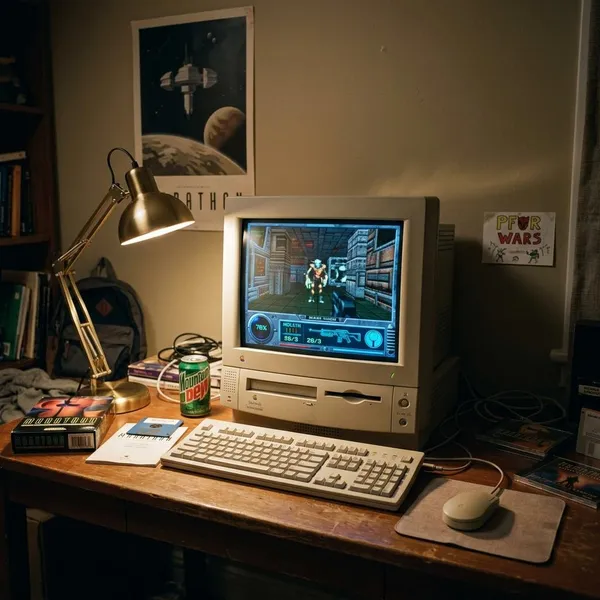
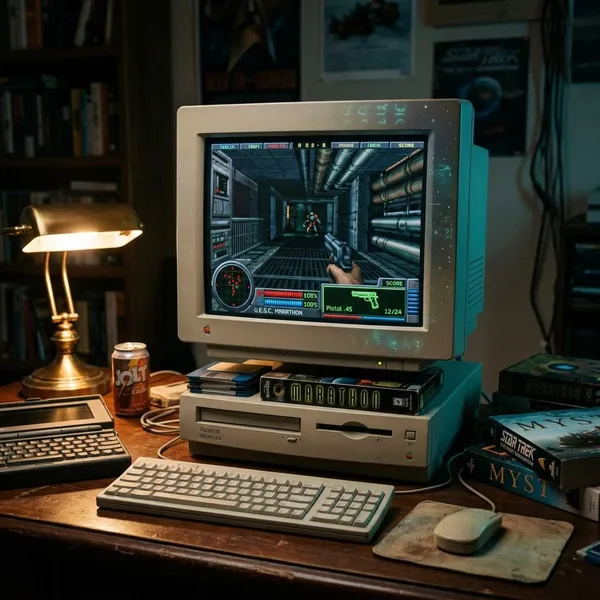
Marathon is a science-fiction FPS developed by Bungie and released for the Apple Macintosh in 1994. It puts you aboard the UESC Marathon, a huge colony ship under attack, and asks you to fight through the crisis while reading computer terminals that reveal objectives, lore, and shifting AI agendas.
Bungie's 1994 Macintosh FPS
Marathon was originally a Macintosh game, which was a big part of its identity. In the mid-1990s, many headline FPS releases were associated with DOS and PC gaming, so a polished Mac-first shooter stood out immediately to players on Apple hardware.
It also felt ambitious for its time. Marathon offered fast movement, flexible aiming options, network play, and a more deliberate mission structure than many players expected from a Doom-era shooter. If you are used to modern FPS design, the controls and level flow may take adjustment, but the confidence of the design is still easy to notice.
The first game in the Marathon trilogy
The original Marathon is the first game in a three-part series, followed by Marathon 2: Durandal and Marathon Infinity. The first game is the best starting point if you want the setting and characters to make sense, because it introduces the ship, the Pfhor, Leela, Durandal, and the terminal-driven storytelling style.
- Start with Marathon if you care about the story foundation.
- Move to Marathon 2 if you want the series at a more expanded scale.
- Try Marathon Infinity when you are ready for the stranger, more experimental side of the trilogy.
A sci-fi shooter set aboard the UESC Marathon
The UESC Marathon is not just a convenient spaceship backdrop. It is a colony ship created from Mars' moon Deimos and sent toward Tau Ceti, which gives the levels a stronger sense of place than a simple chain of abstract corridors.
That setting changes how the game feels. A new player looking for pure action may notice the maze-like layouts first, while a lore-focused player will probably pay more attention to terminals, ship systems, and the sense that the vessel has a history before the shooting begins.
What is Marathon about?
Marathon begins with a clear crisis: the colony ship is attacked by the Pfhor, an alien empire, and the player is pulled into the defense of the vessel. The story becomes more interesting when the ship's artificial intelligences stop feeling like simple mission-givers and start acting like characters with their own priorities.
The Pfhor attack the colony ship
The Pfhor are the main external enemy in the original game. Their invasion turns the Marathon from a colony vessel into a war zone, giving the player's missions a reason beyond simply reaching the next exit. They also suggest a much larger universe, because the attack is tied to conquest, slavery, and power rather than random alien violence.
Leela guides the player through the invasion
Leela is one of the shipboard AIs and the clearest source of order early on. Through terminals, she gives the player objectives, explains the immediate danger, and helps make the early missions feel grounded.
- For first-time players: Leela's messages are the practical route through the opening chaos.
- For story-focused players: her calm tone makes the later AI conflict feel sharper.
- For players replaying the game: her instructions also show how much the situation changes once Durandal takes a larger role.
Durandal becomes central to the conflict
Durandal is the AI most people remember from Marathon. He is powerful, unstable, manipulative, and far less interested in simply helping the ship survive. As his influence grows, the game shifts from a straightforward invasion story into something stranger.
His importance is not only that he gives orders. Durandal makes the player question who is really directing events, what an AI wants, and whether survival is the only goal on the table. That is a large part of why Marathon's story still feels more distinctive than many other shooters from the same period.
How does Marathon play?
Marathon plays like a fast FPS with a slower thinking layer built around navigation and terminals. You fight enemies, search complex spaces, activate switches, follow mission instructions, and sometimes work out where the level wants you to go without the kind of modern waypoint support players now expect.
Fast first-person combat
Combat is quick, mobile, and more tactical than it may look at first. Enemies can pressure you in tight areas, and weapons often reward choosing the right tool instead of firing whatever is currently equipped.
- Keep moving rather than trading damage from one spot.
- Save explosive firepower for groups or dangerous spaces.
- Use range carefully because some fights become harder in cramped corridors.
Exploration across complex levels
Exploration is one of Marathon's biggest strengths and one of the places where new players can bounce off. Levels can be layered, looping, and sometimes confusing, with doors, lifts, switches, and backtracking that matter to mission progress.
If you enjoy mapping spaces in your head, this design gives the Marathon a real physical presence. If you mainly want a quick retro shooter session, it is better to play in shorter stretches and stop after a completed mission rather than pushing through when you are already lost or tired.
Missions guided by computer terminals
Computer terminals are the game's mission briefings, story delivery system, and mood-setter all at once. They tell you what to do, but they also reveal the personalities behind those instructions, especially as Leela and Durandal begin to pull the player in different directions.
Multiplayer and co-op modes
Marathon also supported network multiplayer and cooperative play, which was a major part of its appeal on Macintosh systems. Deathmatch gave the weapons and movement more life outside the campaign, while co-op let players take on the story missions together.
- Solo play is the best choice for understanding the terminals and story.
- Co-op works better if you already know the maps or do not mind a messier pace.
- Multiplayer shows why Marathon mattered socially to Mac players, not just technically.
Why was Marathon important for Bungie?
Marathon mattered for Bungie because it proved the studio could make a shooter with identity. It was not only technically impressive for its platform; it also showed Bungie's interest in mysterious science fiction, memorable AI characters, and stories that ask players to piece things together.
That makes Marathon especially useful if you are looking at Bungie's history. It does not need to be treated as a direct draft of Halo, but it clearly shows the studio learning how to blend action, atmosphere, and lore into a world players wanted to discuss after the credits.
It established Bungie as an FPS developer
Marathon gave Bungie a serious place in the FPS conversation. The game was polished enough to stand apart from simple genre imitation, and it showed that Bungie could build shooters with mechanical speed, technical confidence, and a recognizable creative voice.
It expanded Bungie's sci-fi worldbuilding
The game also widened Bungie's sense of scale. The Pfhor, the colony ship, the AIs, and the fragments of background lore all point beyond the immediate mission, which makes the world feel larger than what the player directly sees.
Conclusion
Marathon is still most interesting when you judge it by what it was trying to do in 1994: give Mac players a fast FPS that also cared about setting, AI characters, and a story hidden inside mission text. It can feel old-fashioned if you expect modern signposting, but that is also part of its character. For anyone curious about Bungie's roots or story-heavy retro shooters, the original is worth approaching patiently rather than treating it as a simple museum piece.
FAQ
Was Marathon originally a Mac game?
Yes. Marathon was first released for the Apple Macintosh in 1994, which helped make it a standout title for Mac players during an era when many major FPS games were associated with PC gaming.
How many games are in the original Marathon series?
There are three original Marathon games: Marathon, Marathon 2: Durandal, and Marathon Infinity. Play them in release order if you want the story and AI threads to build naturally.
Who is Durandal in Marathon?
Durandal is one of the UESC Marathon's artificial intelligences. He becomes central because his ambition and instability push the story beyond a simple alien invasion.