What Makes Kingdom Come Deliverance Worth Playing?
The kingdom come deliverance video game is worth considering if you want a medieval RPG that feels grounded instead of magical. Its best moments come from slow progression, believable quests, and a world that expects you to prepare, train, and pay attention. If you mainly want fast combat, constant rewards, or a power-fantasy hero from the first hour, it may feel rough before it feels rewarding.
What is Kingdom Come Deliverance?
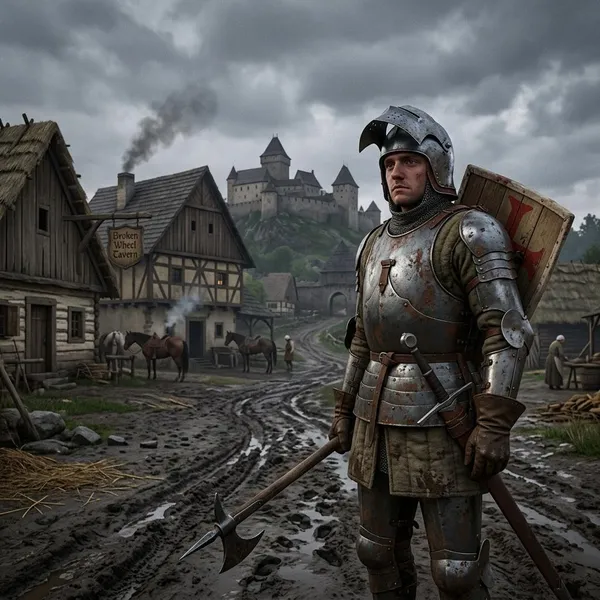
Kingdom Come: Deliverance is a single-player open-world RPG set in early 15th-century Bohemia. It is built around historical detail, ordinary human limits, and role-playing choices rather than fantasy races, magic, or exaggerated hero powers.
A realistic open-world RPG
Its realism is not just visual. Henry starts weak, poorly trained, and socially limited, so progress comes through practice rather than instant upgrades. That makes simple improvements feel satisfying, but it also means the opening hours can be awkward if you expect smooth action-RPG combat right away.
A medieval story set in Bohemia
The setting is Bohemia during a period of political unrest in the Holy Roman Empire. Instead of giving you a fantasy kingdom full of monsters, the game uses villages, castles, churches, roads, forests, and social ranks to create a believable medieval world.
This gives the adventure a different mood from many RPGs. You are not trying to become a legendary chosen hero; you are trying to survive and matter in a society shaped by war, class, loyalty, and local power.
A single-player game focused on immersion
Kingdom Come: Deliverance is entirely single-player, with no multiplayer mode or live-service structure. The appeal is immersion: talking to villagers, following tracks, getting lost in woods, training with weapons, and seeing how people react to your actions.
What is the story about?
The story follows Henry, a young blacksmith's son whose ordinary life is destroyed by war. What starts as a personal tragedy gradually pulls him into noble politics, military conflict, and the larger instability of Bohemia.
Henry begins as a blacksmith's son
Henry's humble background matters because the game does not pretend he is ready for adventure. He cannot suddenly fight like a knight, impress nobles, or solve every problem with confidence. His lack of experience makes the early story more personal and also explains why the gameplay starts with real limitations.
War changes his life and home
An attack on Henry's home forces him out of a small, familiar life and into a violent world he barely understands. The revenge motive is clear, but the story becomes stronger when it shows how war affects villages, families, soldiers, and local authority.
That grounded angle helps the plot avoid feeling like a generic "save the world" setup. Henry has personal reasons to keep going, while the wider conflict gives those choices more weight.
Real history shapes the main conflict
The main conflict is tied to real historical tensions involving King Wenceslas IV, Sigismund, and the politics of Bohemia. You do not need to know the period beforehand, but the historical base makes quests and character motivations feel less artificial.
The useful thing to know before playing is that the game treats history as atmosphere and structure, not as a school lesson. The political names can be dense at first, but the personal stakes keep the story readable.
How does the gameplay work?
The gameplay mixes exploration, quest choices, melee combat, dialogue, stealth, reputation, and skill growth. The strongest advice for new players is to slow down: talk first, train often, and avoid fights you are not ready for.
Explore towns, forests, and countryside
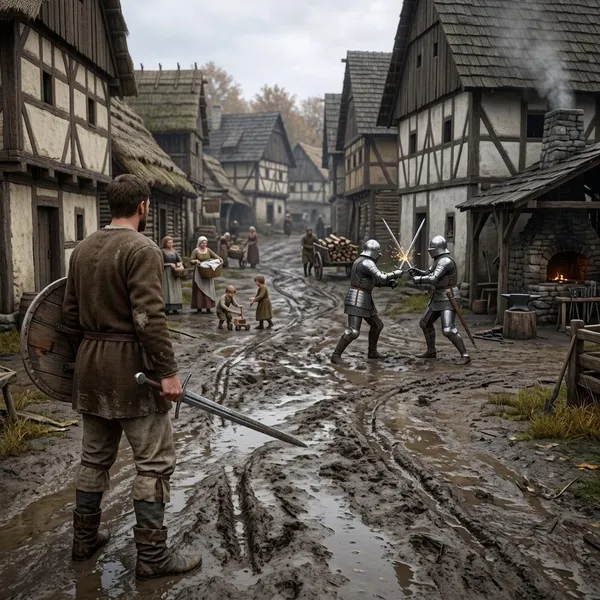
The open world is not impressive because it is huge; it is impressive because it feels connected. Roads lead naturally between settlements, forests can be confusing in a believable way, and different places have their own social feel.
- Towns are best for trading, training, quests, and reputation checks.
- Forests suit hunting, ambushes, hidden paths, and getting lost if you stop paying attention.
- Roads and villages make travel feel lived-in, with small encounters and local problems.
Complete quests in different ways
Many quests give you more than one route. You might persuade someone, sneak in at night, investigate clues, pay for information, fight, or simply return later when Henry is better prepared.
- Henry's current strengths: speech, stealth, combat, money, and equipment can all change the best approach.
- The social situation: clothing, cleanliness, and reputation can affect how people respond.
- The risk of violence: one guard or bandit is different from walking into a camp outnumbered.
Fight with timing-based melee combat
Combat is timing-based, defensive, and uncomfortable at the start by design. Directional attacks, blocks, stamina, armor, weapon type, and spacing matter more than button-mashing.
Training is the real beginner checkpoint. If combat feels unfair, spend time with instructors before judging the whole system. One-on-one duels become more readable after practice, while fighting multiple enemies remains dangerous even later.
- Do not swing wildly: stamina loss can turn a fight quickly.
- Pick fights carefully: being outnumbered is often worse than being underleveled.
- Match weapons to armor: heavily armored enemies may require a different approach than lightly protected bandits.
Improve skills through practice
Skills improve by using them, so Henry becomes shaped by how you actually play. Fighting, sneaking, riding, bargaining, reading, and weapon use all develop through repetition.
This is satisfying for long-term role-playing, but it is slower than simply earning points and buying broad upgrades. A patient player who trains deliberately will feel the payoff; someone looking for quick build freedom may find the system restrictive.
Is Kingdom Come Deliverance worth playing?
Kingdom Come: Deliverance is worth playing if you want a realistic medieval RPG and are willing to meet it halfway. It is less suitable if you want instant mastery, constant spectacle, or a very forgiving adventure.
Great for realistic RPG fans
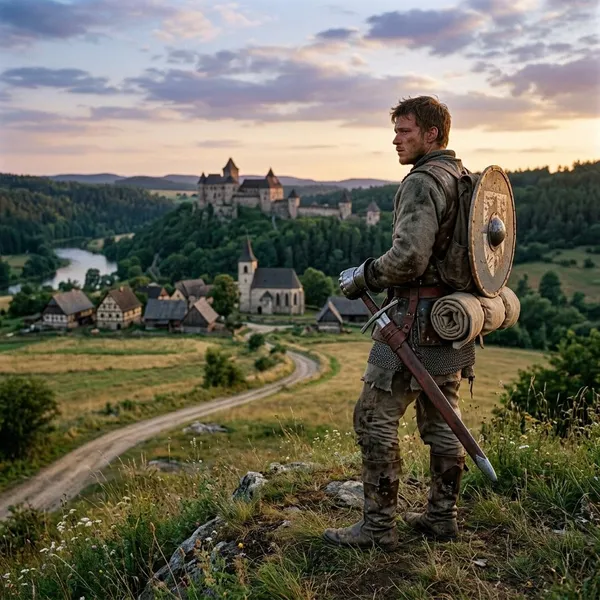
This is the easiest recommendation: players who like grounded medieval settings, slow character growth, and systems with consequences are the best fit. The game makes small choices matter, from how you dress to whether you trained before accepting a risky mission.
It is not realism for decoration only. The friction is part of the design, so it works best when you enjoy overcoming limits rather than avoiding them.
Strong for exploration and role-playing
Exploration and role-playing are where the game feels most distinct from many open-world RPGs. It is not built around endless loot showers or magical builds; it is built around place, reputation, skill, and believable choices.
Rewarding for patient players
Patience is the main deciding factor. The first hours can feel clumsy because Henry is inexperienced and the game does not hide that from you. Once you train, earn better gear, and understand how quests respond to preparation, the experience becomes much more satisfying.
It is not a bad beginner RPG, but it is a demanding one. New players should treat early failure as feedback: train more, avoid groups, save when possible, and do not assume the direct route is the best route.
Conclusion
Kingdom Come: Deliverance is easiest to recommend to players who want a grounded medieval RPG and do not mind learning its rough edges. If realism, exploration, and earned progression sound exciting, it can be memorable in a way few RPGs are; if you want speed, convenience, and instant power, it is better to know that before buying.
FAQ
Is Kingdom Come Deliverance an open-world game?
Yes. It has a connected open world with towns, villages, roads, forests, castles, side quests, and optional exploration, though its scale is more grounded than oversized.
How long does Kingdom Come Deliverance take to finish?
A main-story playthrough often takes roughly 35 to 45 hours. Side quests, DLC, training, and exploration can push it well beyond that, especially if you play slowly.
Is Kingdom Come Deliverance suitable for beginners?
Yes, but beginners should expect a learning curve. The best early move is to train combat, avoid unnecessary fights, and accept that Henry is supposed to feel weak at first.