Should You Watch the Junji Ito Collection Anime?
The junji ito collection anime is worth trying if you want quick, weird horror stories rather than a polished masterpiece. Its best value is as a sampler of Junji Ito's unsettling ideas, not as the strongest way to experience his work. If you care most about detailed horror art and slow-building dread, the manga is usually the better first choice.
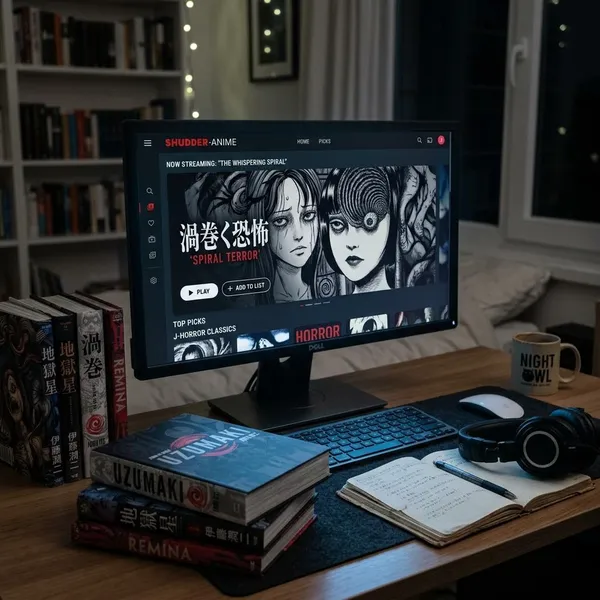
What Is the Junji Ito Collection Anime?
Junji Ito Collection is a horror anthology anime adapted from different Junji Ito manga stories. Instead of following one main plot, it moves from one strange scenario to another: curses, obsessions, body horror, grotesque transformations, and social situations that slowly turn wrong.
That makes it easy to sample, but it also means the quality changes from story to story. A good way to approach it is to watch a few episodes for the ideas, then decide whether you want the stronger manga versions afterward.
An anthology of standalone horror stories
The anthology format is the main reason the show is easy to start. Most stories stand on their own, so you do not need to memorize characters, lore, or a long timeline. If one segment feels flat, the next one may have a completely different mood or premise.
- Good for casual viewing: one episode gives you a complete horror experience.
- Good for testing the style: you can sample Junji Ito's themes without committing to a long series.
- Less ideal for binge tension: the reset between stories can make the show feel uneven.
Adapted from Junji Ito's manga
The source material gives the anime its strongest asset: disturbing concepts that do not feel like standard horror plots. Junji Ito often starts with something ordinary, such as vanity, curiosity, a rumor, or a fixation, then pushes it into a grotesque extreme.
The difficult part is that his manga depends heavily on still images, fine line work, and page-turn shocks. The anime keeps many of the story ideas, but it cannot always reproduce the discomfort of staring at one carefully drawn panel for too long.
Built around short, unsettling episodes
The episodes are designed for quick impact. That works well when a story has one sharp idea, such as a bizarre curse or an obsession that spirals out of control. It works less well when the original manga needs a slower buildup, because the anime sometimes reaches the disturbing reveal before the tension has fully settled.
What Is Junji Ito Collection Like to Watch?
Watching Junji Ito Collection feels like moving through a shelf of odd horror miniatures. Some stories are creepy, some are grotesque, and some are so absurd that they may feel more strange than frightening. The appeal is not consistency; it is curiosity.
If you want a tight, atmospheric horror anime that slowly builds dread across a full season, this may frustrate you. If you like short nightmares with unusual premises, it is easier to enjoy the show's rougher edges.
Creepy and grotesque horror
The horror leans more toward discomfort than jump scares. Expect warped bodies, unnatural expressions, obsessive behavior, and ordinary spaces that start to feel unsafe. A viewer who enjoys body horror or uncanny imagery will probably get more from the anime than someone looking for fast shocks.
Short standalone stories
The standalone structure makes the show useful for two kinds of viewers: someone who only wants a quick horror episode before bed, and someone who is deciding whether Junji Ito's style is worth exploring further. You can stop after one episode without feeling lost, which is helpful because not every adaptation lands with the same force.
There is a trade-off, though. Short stories do not always leave enough room for dread to build. When an episode feels rushed, treat it as a signpost: if the idea still bothers you, the manga version may be worth reading.
A mix of dark and absurd tones
One of the stranger pleasures of Junji Ito's work is that a premise can sound almost ridiculous and still become disturbing. The anime keeps some of that contrast. A story may begin with an odd social situation or a bizarre obsession, then slide into something much nastier.
This tone will not work for everyone. If you prefer grounded horror, a few segments may seem silly. If you enjoy horror that feels dreamlike, awkward, or uncomfortably imaginative, the tonal shifts are part of the draw.
What Does Junji Ito Collection Do Well?
The anime works best when it lets the original story concept carry the episode. Even when the visuals are not as strong as the manga, many premises are still memorable enough to hold attention. That is the main reason the series remains worth sampling despite its reputation for being uneven.
Its strongest use case is simple: watch it when you want variety, quick horror, and a first taste of Junji Ito's imagination. Do not watch it expecting every episode to feel like a definitive adaptation.
Disturbing story ideas
Junji Ito's ideas are the reason to be here. The stories often turn everyday weaknesses into horror: obsession, vanity, fear of being watched, fear of losing control of your body, or the pressure of strange social rules. Even a visually plain episode can still leave you thinking about the central concept afterward.
Plenty of story variety
The range keeps the show from becoming one-note. One episode may lean into body horror, another into psychological unease, and another into a surreal curse that follows its own nightmare logic.
| Viewer mood | What the anime offers |
|---|---|
| Quick horror sample | Short stories with minimal setup |
| Weird, grotesque ideas | Premises that feel different from typical horror anime |
| Consistent dread | Less reliable, because tone and quality shift often |
Easy anthology viewing
The show is low-commitment in a practical way. You can watch one or two segments, skip a break of several days, and come back without needing to remember a complicated plot. For a curious anime fan who has never read Junji Ito, that makes the series less intimidating than starting with several manga volumes.
For someone already familiar with the manga, the appeal is different. The anime becomes more of a comparison watch: interesting for seeing how certain stories were translated, but rarely the version you would recommend as the strongest one.
Where Does Junji Ito Collection Fall Short?
The main problem is expectation. Junji Ito's reputation comes from manga pages that are dense, precise, and deeply uncomfortable to look at. The anime often feels cleaner, flatter, and faster than the material needs.
That does not make it worthless. It means the best viewing mindset is cautious: enjoy the concepts, notice which stories interest you, and do not assume the anime represents the full strength of the original work.
Less visual impact than the manga
The manga has a kind of visual pressure the anime rarely matches. In print, a shocking image can sit in front of you until you choose to turn the page. In the anime, the same idea may pass quickly, with less texture and less time to become uncomfortable.
This matters most for viewers who are drawn to horror art. If the visual shock is your priority, start with the manga. If you mainly want to understand the story concepts, the anime can still do that job.
Uneven animation quality
The animation is not consistently strong enough to support every horror moment. Some scenes create a decent eerie mood, while others look too stiff or plain for the fear they are trying to sell. Horror depends on timing, framing, and texture; when those are only average, a disturbing idea can feel like a summary rather than a nightmare.
Some stories feel rushed
Several stories move too quickly from setup to reveal. That is a problem because Junji Ito's horror often needs escalation: a small wrong detail, a character's bad reaction, then the full collapse into something grotesque.
A useful test is whether the idea still sticks after the episode ends. If the answer is yes, the rushed pacing may be forgivable. If the answer is no, the manga version may give the story the space it needed.
Junji Ito Collection Anime vs Manga
If you are choosing only one version, the manga is the safer recommendation. It gives you Junji Ito's visual detail, pacing, and page-turn dread in the form that made his work famous. The anime is better treated as an accessible side route, especially for viewers who prefer watching first.
The choice depends on what you want from the experience:
- Choose the anime if you want a quick, low-effort introduction.
- Choose the manga if you want the strongest horror atmosphere.
- Use both if you enjoy comparing adaptations and source material.
Visual detail
The manga wins clearly on visual detail. Junji Ito's line work, facial distortions, textures, and page compositions do much of the frightening work. The anime can show the same monster or situation, but it often loses the dense ugliness that makes the original image linger.
Pacing and atmosphere
Reading gives you control over the pace. You can pause on a panel, hesitate before turning a page, or go back to inspect a detail you almost missed. That rhythm suits Junji Ito's horror because anticipation is often as important as the reveal.
The anime does have sound, voices, and music, which can help certain scenes. Still, the shorter runtime often makes the atmosphere feel lighter than the manga. For slow dread, the page usually has the advantage.
First-time experience
For a first-time viewer who is not sure about manga, the anime is a reasonable test. Watch a few episodes and pay attention to the ideas that bother you most. If you are already comfortable reading manga, starting with the original stories is the better route.
A practical middle path is to watch one episode, then read the manga version of the story that interested you. That comparison quickly shows what the anime preserves and what it loses.
Conclusion
Junji Ito Collection is worth watching as a strange, uneven horror sampler, not as the best version of Junji Ito's work. Try a few episodes if you want short, grotesque ideas with minimal commitment; go to the manga if you want the full visual force and heavier atmosphere. The fairest judgment is that the anime is a decent doorway, while the manga is the room you probably came for.
FAQ
Is Junji Ito Collection scary?
Sometimes, but it is more unsettling than consistently terrifying. It works best if body horror, bizarre obsessions, and uncanny situations bother you more than jump scares.
How many episodes are in Junji Ito Collection?
Junji Ito Collection has 12 main TV episodes. Some releases may also include special episodes or bonus material, depending on the platform or edition.
Do you need to read the manga first?
No. The anime is easy to watch without background knowledge, but reading the manga first gives you a stronger sense of why these stories are so highly regarded.
Is there a watch order for Junji Ito Collection?
Release order is the simplest choice. Because the series is mostly standalone, skipping around will not usually make the stories confusing.
Where can you watch Junji Ito Collection?
Streaming availability changes by region and licensing period. Check the anime services and digital rental stores available in your country rather than relying on an old platform listing.