Where Should You Start with the Fallout Games?
If you are trying to understand the fallout video game series, the simplest answer is this: it is a post-apocalyptic RPG series about exploring a ruined America, building your own kind of survivor, and making choices that can change quests, factions, and endings. For most new players, Fallout 4 is the easiest place to start, while Fallout: New Vegas is usually the stronger pick if story choices matter more to you than modern polish.
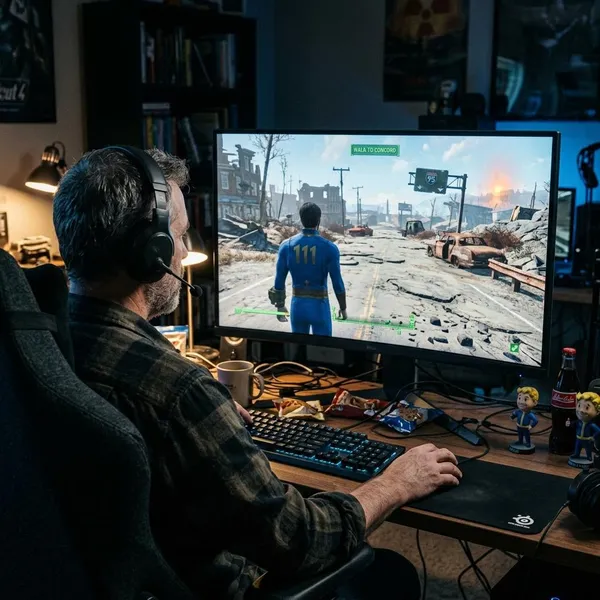
What is the Fallout video game series?
Fallout is a long-running RPG franchise set in an alternate version of America after nuclear war. The games mix exploration, combat, character building, strange humor, faction politics, and choices that often have consequences beyond a single mission.
A post-apocalyptic RPG franchise
Fallout is post-apocalyptic, but it is not just about ruined cities and survival gear. It is an RPG first, so your stats, skills, perks, dialogue choices, and reputation can affect how you solve problems. A smooth-talking character may avoid a fight entirely, while a stealth build or heavy-weapons build can turn the same quest into a very different experience.
A retro-futuristic version of America
The setting imagines a future shaped by 1950s-style optimism: atomic power, chrome machines, cheerful advertising, patriotic slogans, household robots, and old radio music. The twist is that this bright version of the future collapsed into nuclear destruction.
That contrast is what makes Fallout feel different from a standard wasteland story. You might walk through a destroyed town while upbeat music plays, or find a smiling mascot beside evidence of corporate cruelty. The world is funny, bleak, and uncomfortable at the same time.
A series built around exploration and choice
Most Fallout games give you a main goal, then let you get distracted almost immediately. That freedom is part of the appeal. You can follow the main quest, wander into a suspicious Vault, help a settlement, pick sides in a faction dispute, or spend an evening chasing a radio signal just because it sounds odd.
How does Fallout gameplay work?
The basic gameplay loop is simple: create a character, explore the wasteland, collect gear, complete quests, fight enemies, improve your build, and decide how to handle people who want very different things from you. The exact feel depends on the game, but the priorities stay fairly consistent.
- Check your build first: your stats shape combat, dialogue, and exploration options.
- Explore with curiosity: terminals, notes, and small rooms often hide important stories.
- Do not rush every choice: talking to more than one side can change how a quest looks.
- Keep supplies practical: carry weapons you actually use, enough healing, and ammo you can support.
Build characters with SPECIAL
Fallout characters are built around SPECIAL: Strength, Perception, Endurance, Charisma, Intelligence, Agility, and Luck. These attributes affect things such as carrying capacity, dialogue, accuracy, survivability, stealth, critical hits, and access to perks.
If you are new, a balanced character is usually safer than an extreme one. For example, a first-time player who wants to talk, shoot, and explore should avoid putting everything into one stat too early. A second playthrough is a better time to try a very specific build, such as a low-Charisma melee bruiser or a stealthy sniper.
Explore and complete quests
Exploration is rarely just travel between map markers. Fallout rewards you for opening side rooms, reading terminal entries, checking odd radio signals, and noticing visual clues. A building that looks like simple loot may turn out to contain a family story, a failed experiment, or a clue that changes how you view a faction.
For a casual player, the best approach is to follow the main story until the world opens up, then take side quests when they sound interesting. For a more completion-focused player, it is worth slowing down in major settlements and speaking to named characters before moving on.
Fight using weapons and V.A.T.S.
Combat uses familiar weapons such as pistols, rifles, shotguns, explosives, melee weapons, energy weapons, and heavy guns. V.A.T.S., the Vault-Tec Assisted Targeting System, adds a tactical layer by letting you slow or pause combat and target specific body parts, depending on the game.
Make choices that shape outcomes
Fallout quests often become better when you resist the first obvious solution. Speak to both sides, check whether a faction is using you, and think about whether your character values money, order, mercy, independence, or power. The games are more memorable when your choices fit the survivor you are role-playing.
- Ask who benefits. Many quest givers leave out details that make them look worse.
- Match the choice to your build. A diplomat, thief, soldier, and scientist should not all solve problems the same way.
- Consider the later cost. A quick reward can damage faction access, companions, or settlement outcomes.
What makes the Fallout world unique?
Fallout stands out because its wasteland has history, style, and political tension. It is not only a place where people scavenge after the bombs. It is a world full of failed institutions, buried experiments, competing factions, and old propaganda that still shapes the present.
The Great War and nuclear wasteland
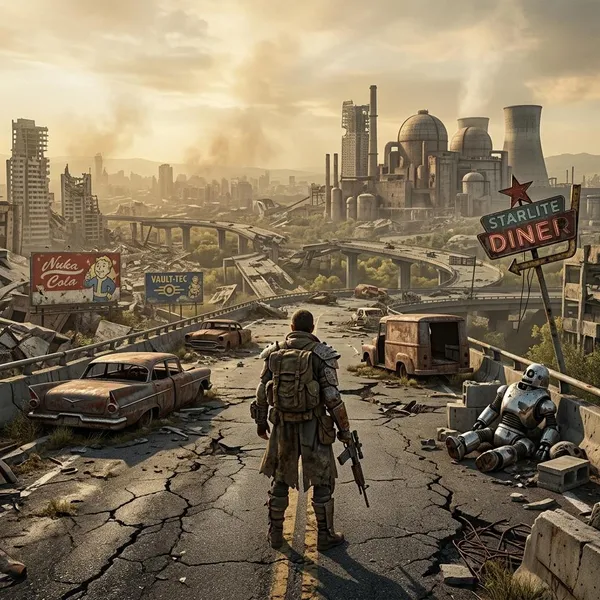
The Great War is the nuclear conflict that destroyed the old world in Fallout's lore. Its effects are everywhere: ruined cities, radiation, mutated creatures, broken infrastructure, and communities trying to survive with whatever they can recover.
The wasteland is not frozen in time, though. New towns, raider groups, trade routes, militias, and governments rise from the wreckage. That is why the setting works for both survival stories and bigger questions about what kind of society should replace the old one.
Vaults and their hidden experiments
Vaults look like shelters, but many were designed as social experiments rather than simple protection. Some tested obedience, isolation, leadership, scarcity, technology, or psychological pressure. When you enter a Vault, the real story is often hidden in terminals, recordings, locked rooms, and strange design choices.
Competing wasteland factions
Factions give Fallout its political weight. Groups such as the Brotherhood of Steel, New California Republic, Caesar's Legion, and the Institute are not just quest hubs; they represent different answers to the same problem: how should people rebuild after collapse?
A useful way to judge factions is to separate what they promise from what they demand. Stability may come with control. Freedom may come with disorder. Technology may help people, but it can also become another excuse for domination. Fallout is at its best when no option feels completely clean.
Dark humor and retro-futurism
Fallout's dark humor comes from putting cheerful old-world style next to disaster. A happy advertisement, a polite robot, or a playful jingle can become disturbing when it appears inside a ruined office, military bunker, or irradiated neighborhood.
- Visual jokes carry lore: posters, products, and room layouts often say as much as dialogue.
- Old optimism feels suspicious: the pre-war world promised comfort while building toward collapse.
- The style stays consistent: power armor, terminals, robots, and weapons all feel part of the same alternate future.
Why is Fallout so popular?
Fallout remains popular because it gives different players different reasons to care. Some come for the open world, some for the factions, some for the strange humor, and some for the ability to replay the same game with a completely different character.
- Choose Fallout 4 if you want the smoothest modern entry, easier combat, clearer presentation, and optional crafting or settlement building.
- Choose Fallout: New Vegas if you care most about writing, factions, role-playing choices, and flexible quest outcomes.
- Choose Fallout 3 if you want a bleak, atmospheric introduction to 3D Fallout and do not mind an older feel.
- Choose Fallout or Fallout 2 if you already enjoy older PC RPGs and turn-based systems.
Freedom to explore
Fallout exploration works because the map usually feels dense rather than empty. A roadside shack, bunker, subway tunnel, or abandoned factory can hold loot, danger, a joke, a tragic note, or a clue about a larger story.
Meaningful role-playing choices
Role-playing choices matter because they can affect more than dialogue flavor. Your decisions may change faction relationships, quest endings, companion reactions, town outcomes, or final story details.
The stronger Fallout entries connect build and story well. A high-Charisma character may talk through problems, a stealth character may avoid them, and a combat-heavy character may force a direct answer. That connection makes your character feel like more than a set of numbers.
Memorable worlds and characters
Fallout's best places are easy to remember because they have a strong idea behind them: a city built around old-world glamour, a Vault with a horrible secret, a settlement trying to stay decent, or a military group convinced it alone can save civilization.
Companions add another layer. They can make long walks less lonely, challenge your choices, or reveal how ordinary people survive between major factions. For many players, those smaller relationships are just as memorable as the main plot.
Strong replay value
Replay value comes from trying a different build, backing another faction, choosing harsher or kinder outcomes, or solving quests with methods you ignored the first time. A player who begins with Fallout 4 for comfort may later move to New Vegas for deeper choice, while someone who loves classic RPGs may eventually go back to the first two games.
Conclusion
Fallout is easiest to enjoy when you pick the entry that matches your patience and play style. Start with Fallout 4 if you want the most accessible modern experience, try Fallout: New Vegas if you want sharper role-playing choices, and go older only if classic RPG systems appeal to you. Once the series clicks, the real draw is not just the wasteland itself, but the kind of survivor you decide to become inside it.
FAQ
Do I need to play Fallout 1, 2, and 3 before Fallout 4?
No. Fallout 4 works as a first Fallout game because its main story and systems are understandable without earlier entries. You will catch more references if you know the older games, but they are not required homework.
What is V.A.T.S. in Fallout?
V.A.T.S. is Fallout's targeting system for combat. It lets you slow or pause the action and aim at specific enemy body parts, which is useful if you want more tactical control than normal shooting offers.
Which Fallout game is best for beginners?
Fallout 4 is the safest beginner choice for most players because it feels the most modern. If you already like older RPGs and care more about writing than smooth combat, Fallout: New Vegas may be the better first pick.