How Can You Showcase Anime Figures at Home?
To display an anime figure collection well, start with the things that affect the shelf every day: dust control, visibility, spacing, and light. A few figures on a clean, layered shelf usually look better than a packed cabinet where faces, bases, and effect parts disappear.
What is the best way to display an anime figure collection?
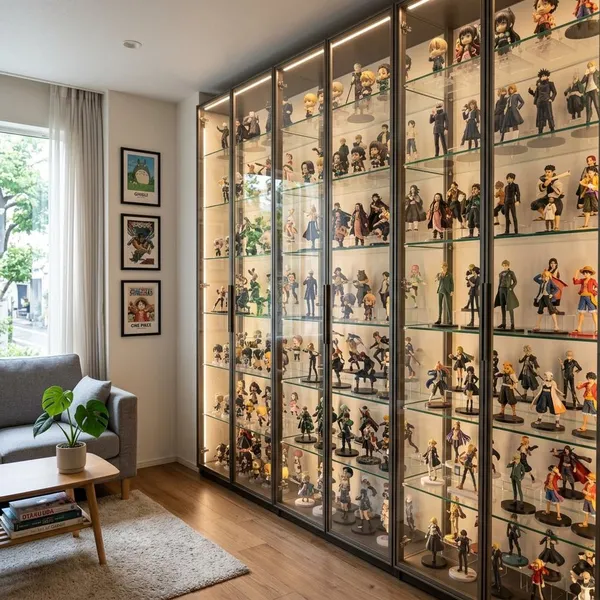
The best setup is one that lets you enjoy the figures without making them hard to maintain. For most collectors, that means an enclosed shelf or cabinet, a few risers, clear grouping, and LED lighting instead of window light.
If you are setting up your first shelf, do not begin with decorations. Begin by checking shelf depth, figure height, base width, and where sunlight hits the room. A display that ignores those basics may look fine on day one but become dusty, crowded, or faded over time.
- First priority: protect figures from dust, sunlight, and accidental bumps.
- Second priority: make faces and key details visible from normal viewing distance.
- Optional upgrade: add backdrops, props, or themed styling after the layout works.
Use enclosed shelves for dust control
Enclosed shelves are usually the easiest long-term choice because they reduce dust before it lands on hair strands, clothing folds, and detailed bases. They are especially worth it if the display is in a bedroom with fabric dust, a room with pets, or a living area where people pass by often.
Open shelves are still fine for a small casual setup, but expect more frequent cleaning. If a figure has delicate paint, tiny accessories, or a pose that is easy to knock, a glass cabinet or acrylic cover is the safer option.
Add risers for better visibility
Use them when two or more figures have similar height, or when smaller figures sit behind larger bases. Even one low riser can make a prize figure row look more intentional instead of flat.
Group figures by series or theme
A shelf looks cleaner when the figures share one obvious connection. That can be a single anime series, a character pairing, a color palette, a season, or a mood such as battle poses or school uniforms.
Leave space around focal pieces
Your strongest figure needs room to be noticed. A large scale figure, a dramatic effect piece, or a favorite character should not be squeezed between unrelated figures just because there is technically space.
Use LEDs instead of direct sunlight
LED lighting is better than sunlight because it gives you controlled brightness with less heat. Direct sun can fade paint and yellow lighter plastic over time, and it often creates glare on glass doors.
If your only available wall gets afternoon sun, move the cabinet, use curtains, or keep the most valuable figures away from that spot. A nice bright shelf is not worth long-term color damage.
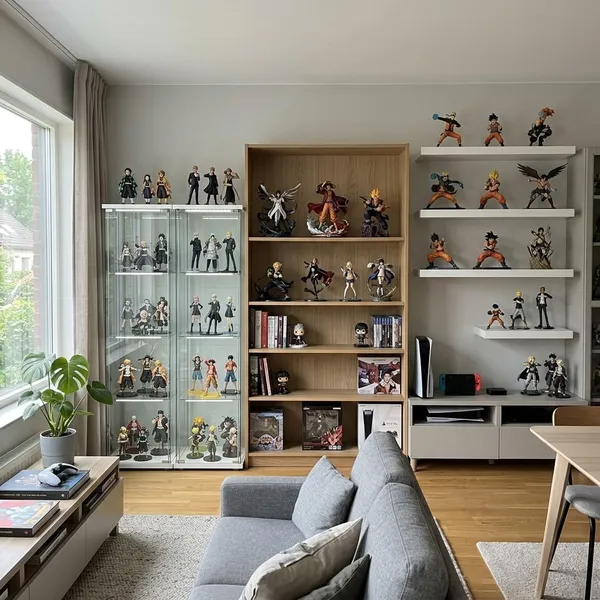
Which display furniture works best for anime figures?
The best furniture depends on how many figures you own, how fast the collection is growing, and how much cleaning you want to do. A small desk display has different needs from a full wall of scales, so choose the furniture around your real use case rather than the prettiest photo online.
| Display situation | Best furniture choice | Watch out for |
|---|---|---|
| Full collection in one place | Glass cabinet | Weight, door gaps, shelf height |
| Mixed figures, manga, and boxes | Bookshelf with doors | Depth and adjustable shelves |
| One or two premium figures | Acrylic case | Scratches and static dust |
| Small room or no floor space | Wall shelves | Secure mounting and dust |
| Collection still growing | Modular shelves | Planning enough expansion space |
Glass cabinets for full collections
Glass cabinets are a strong choice when you want the collection to feel like a display rather than storage. They show figures clearly, pair well with LED strips, and look polished in a living room, office, or dedicated hobby corner.
Bookshelves with doors for flexible setups
A bookshelf with doors is often the best middle ground if your collection shares space with manga, art books, games, or boxes. It feels less like a museum case and more like a lived-in hobby setup.
This works well for collectors who rotate figures. Keep current favorites behind the clear doors and use lower or closed sections for spare parts, boxes, or seasonal swaps.
Acrylic cases for smaller displays
Acrylic cases are useful when you do not need a full cabinet. They are light, easy to move, and good for protecting a single special figure on a desk, dresser, or shelf.
- Good for: small groups, fragile figures, rented rooms, temporary displays.
- Less ideal for: large statues, rough cleaning, or places where scratches will bother you.
Wall shelves for limited floor space
Wall shelves make sense when floor space is the real problem. They can turn an empty wall into a display area without adding another cabinet to a small bedroom or apartment.
Keep them for lighter figures and smaller groups. If the shelf holds heavy statues, large bases, or multiple figures across a long span, use proper anchors and check the load rating instead of guessing.
Modular shelves for growing collections
Modular shelves are best if your collection changes every few months. You can add sections, doors, cubes, or lighting later without replacing the whole setup.
They are also useful for mixed collecting habits. One cube can hold nendoroids, another can hold manga, and a taller section can handle scale figures. The main mistake is buying only enough space for today; leave room for the next few figures you already know you are likely to buy.
How to arrange anime figures on a shelf
Arrange the shelf from back to front, not randomly from left to right. Put tall or visually heavy figures in the back, bring the focal figure close to eye level, lift the middle row with risers, and keep smaller pieces near the front.
A quick way to test the layout is to step back to where you normally view the shelf. If you cannot see the faces, if one side feels heavier, or if the front row looks like a wall of bases, the arrangement needs editing.
Place larger figures at the back
Larger figures usually belong at the back because they create the shelf's structure without blocking smaller pieces. This is especially important for figures with wings, weapons, long hair, or wide effect parts.
Keep focal figures near eye level
Eye-level placement gives your best figure the attention it deserves. Reserve the easiest-to-see shelf for the piece with the strongest sculpt, most expressive face, or highest personal value.
On a tall cabinet, avoid putting your favorite figure on the very top shelf if you mainly see it from below. A lower shelf with a small riser often shows the face and pose much better.
Use risers for middle rows
The middle row is where figures most often get lost. A riser lifts them above the front row without pushing them all the way to the back.
- Use low risers for scale figures with detailed faces.
- Use tiered risers for nendoroids, trading figures, or small prize figures.
- Avoid bulky risers if they compete with the bases or make the shelf feel cramped.
Put smaller figures at the front
Smaller figures work best near the front edge because their faces and accessories are easier to see there. This also keeps them from being swallowed by taller figures behind them.
For tiny figures, group them in pairs or small clusters instead of scattering them across the entire shelf. A small group reads as intentional; scattered mini figures can look like leftover space fillers.
Leave space between display groups
Space is part of the display, not unused storage. A small gap between groups helps the eye understand where one theme ends and another begins.
If a shelf looks messy even though the figures are arranged by height, remove one or two pieces before adding props. Overcrowding is often the real issue, especially on shelves that combine several series.
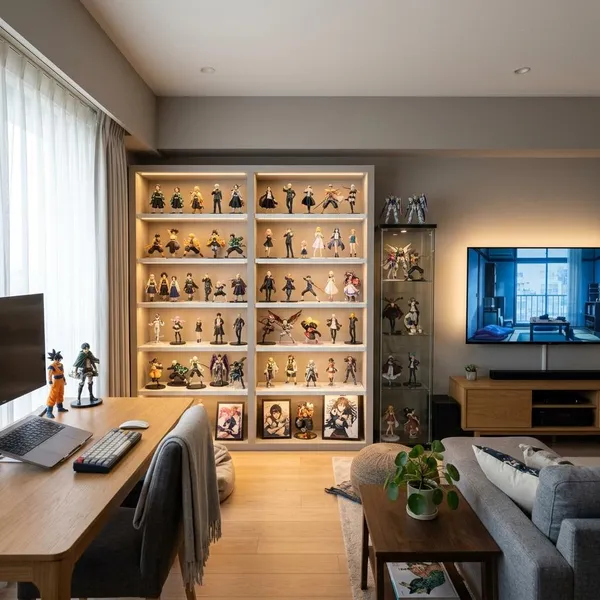
How to make an anime figure display look better
A better-looking display is usually more edited, not more decorated. Once the figures are protected and visible, focus on one clear theme, one focal point, balanced colors, and simple background elements that support the figures.
This is where the display can feel more personal. A shelf for daily enjoyment in a bedroom can be cozy and simple, while a collection shown in a living room may need cleaner spacing and fewer loud props so it does not overwhelm the room.
Group figures by one clear theme
Choose one idea per shelf. It could be one franchise, one character, one color mood, or one type of scene. The exact theme matters less than whether the viewer can understand it quickly.
Build around a focal figure
Start with the figure that should lead the shelf, then place the others around it. Supporting figures should make the focal piece look stronger, not compete with it.
Balance colors across the shelf
Color balance keeps one side from feeling visually heavier than the other. If all the red, black, or neon effect parts sit together, that corner will pull attention even if the height arrangement is correct.
You do not need perfect symmetry. Just spread strong colors enough that the shelf feels stable when viewed from a few feet away.
Add simple backdrops and props
Backdrops and props can help, but they should stay secondary. A printed background, manga volume, small fabric panel, or a few themed accents can add depth without turning the shelf into clutter.
- Good prop: supports the theme and does not hide the figure.
- Bad prop: becomes the first thing you notice.
- Easy test: take one step back and check whether the figures still lead the scene.
Keep each shelf visually consistent
Consistency makes the collection feel calmer. Matching risers, similar spacing, related poses, or a controlled color palette can make even a mixed collection look planned.
If one shelf feels off, do not rebuild everything immediately. First remove the figure that breaks the scale, color, or theme most sharply. Small edits often fix the shelf faster than adding more decoration.
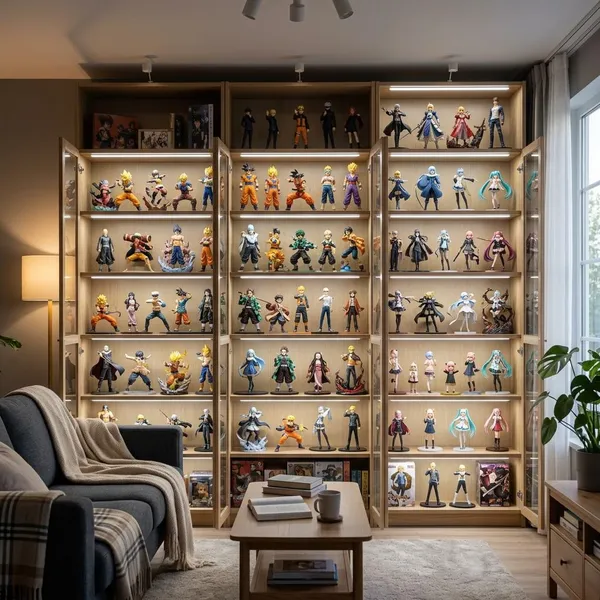
How to light an anime figure collection
Use cool, low-heat LED lighting to make faces, paintwork, and sculpted details easier to see. Good lighting should reveal the figures without creating glare, heat, or harsh reflections on glass and acrylic.
If the shelf is in a bright room, lighting is not only about adding more brightness. Sometimes the better fix is moving the display away from a window, changing the LED angle, or dimming the strips so the figures do not look washed out.
Use LED strips for even lighting
LED strips are the best simple upgrade for full shelves because they spread light across the display. Place them along the front underside or side edges so the light reaches faces instead of only shining on the top of the cabinet.
Dimmable strips are worth considering if the room changes brightness during the day. Too much light can flatten details, while a softer setting often makes paint and shadows look more natural.
Add spotlights for centerpiece figures
Spotlights work best when used sparingly. One focused light can make a centerpiece figure stand out, but several bright points on one shelf can create glare and strange shadows.
Use spotlights for dramatic poses, translucent effects, or darker figures that disappear under general lighting. Aim the light at the upper body and face first, then adjust from normal viewing distance.
Keep lighting cool and low heat
Cool-running lighting matters because figures are displayed for long periods, not just photographed for a few minutes. LEDs are usually the safer choice than bulbs that become hot to the touch.
This is more important in enclosed cabinets, where heat can build up. If a light warms the inside of the cabinet noticeably, it is not a good long-term option for figures, backdrops, or acrylic parts.
Avoid direct sunlight and glare
Direct sunlight is one of the easiest display mistakes to avoid. It may look attractive for photos, but repeated exposure can fade colors and yellow pale plastic.
Glare is a separate problem. If the cabinet door reflects a window or ceiling light, the figures become harder to see even when the shelf is bright. Try changing the cabinet angle, moving the light source, or using curtains before adding stronger LEDs.
Conclusion
A good figure display does not need to be expensive, but it does need priorities: protect the figures first, make them visible second, then style the shelf once the basics work. If you start with one clean shelf, leave enough space, use risers where figures get hidden, and keep sunlight away, the collection will look more intentional and be easier to enjoy every day.
FAQ
Do anime figures need a display case?
No, but a case is the better choice for valuable, delicate, or hard-to-clean figures. Open shelves are fine for casual displays if you are willing to dust more often.
How often should displayed anime figures be cleaned?
Open-shelf figures often need light dusting every few weeks, while enclosed displays can usually go longer. If you can see dust on hair, shoulders, or bases, clean gently before it builds up.
Should you keep anime figure boxes?
Keep the boxes if you may move, store, rotate, or resell the figures later. If space is tight, prioritize boxes for expensive figures, fragile parts, and pieces with custom plastic inserts.
How much space should you leave between figures?
Leave enough space so parts do not touch and each main figure can be seen from the front. If removing one figure makes the whole shelf look better, the shelf was too crowded.