How Can You Display Your Anime Shelf Collection?
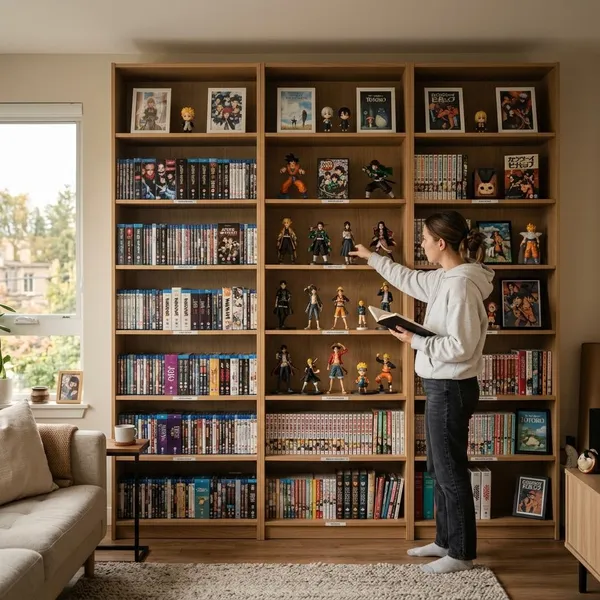
Start by deciding what deserves the best viewing space, not by trying to fit every manga volume, figure, and acrylic stand onto one shelf. A good anime shelf collection has a clear main system, enough breathing room, and furniture that matches what you collect most. If the shelf is already packed before your next purchase, it is storage, not a display.
How to Plan Your Anime Shelf Collection
The planning stage should answer three practical questions: what fits safely, what should be visible every day, and what can wait in storage. This is where most shelf problems are prevented, especially overcrowding, weak layouts, and figures placed on shelves that are too shallow or too low.
Measure your shelf space
Measure the width, depth, and height of each shelf before moving anything around. Depth is especially important for figure bases, boxed items, and risers; vertical height matters for taller prize figures, acrylic stands, and books with display stands. If an item only fits when it touches the back panel or the shelf above it, choose another spot.
- For manga rows: check that the shelf will not bow under a full line of volumes.
- For figures: leave room around hair, weapons, bases, and raised poses.
- For risers: measure the riser and the figure together, not separately.
Sort what you want to display
Separate your collection into daily-display pieces, support pieces, and rotation items. A favorite scale figure, a complete manga run, or a character shrine deserves clearer space than duplicate keychains or seasonal merch. If you have a small room, rotating items is usually better than forcing everything into view.
Choose one organization style
Pick one main rule before styling: series, character, item type, or color. Mixing all of them at once usually makes the shelf harder to read. For a collector who reads manga often, series or item type is easier to maintain; for someone building a display corner mostly for figures and acrylic stands, character or theme can look stronger.
Leave room for new items
Leave open space on purpose, especially if you collect ongoing manga or characters that get frequent merch releases. Around 15 to 25 percent empty space is a practical starting point for many shelves, but the real check is visual: you should be able to add one new volume or one small figure without rebuilding the whole section.
Best Shelves for Anime Collections
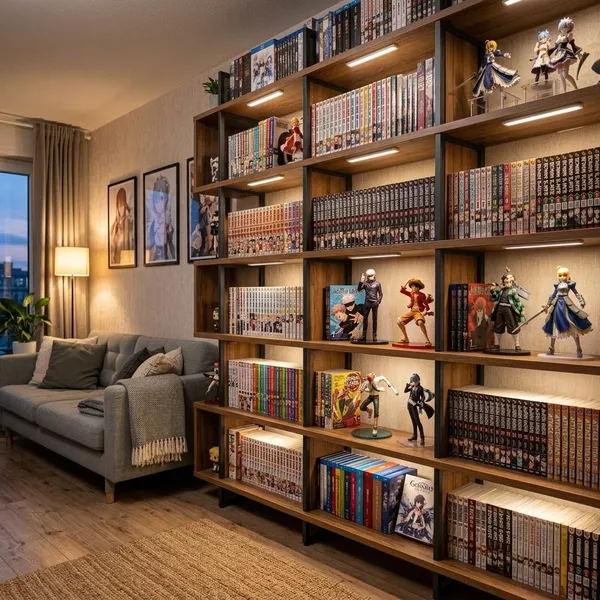
The best shelf depends on what you collect most. Manga needs strength and clean rows. Figures need depth, visibility, and protection. Mixed merch needs flexible sections that do not turn into random storage.
Bookcases for manga-heavy collections
Bookcases are the safest default for a manga-heavy collection because they keep volumes accessible and organized. Look for shelves that feel stable, have enough depth for your editions, and do not flex under weight. Oversized manga, art books, and hardcovers may need different spacing than standard volumes.
Glass cabinets for figure displays
Glass cabinets make the most sense when the figures are the main attraction or when you want extra dust protection. They are especially useful for delicate accessories, limited pieces, and Nendoroids with small parts. The tradeoff is that cabinets cost more, hold less manga, and can feel cramped if the shelves are not adjustable.
Floating shelves for small collections
Floating shelves are best for lightweight, focused displays: a few acrylic stands, a small figure lineup, framed prints, or a short themed manga stack. They are not the place for heavy manga runs unless the shelf and wall mounting are clearly rated for that load.
This option works well for someone in a dorm room or small bedroom who wants one clean anime corner without adding another bookcase. Keep each floating shelf narrow in purpose, such as one character, one series, or one color mood.
Modular shelves for mixed displays
Modular shelves are useful when your collection keeps changing. One cube can hold manga, another can become a figure scene, and another can hide extra merch in a storage bin. Before buying, compare the actual cube dimensions with your tallest figure, deepest base, and largest book format; many cute cube shelves are less flexible than they look.
How to Organize an Anime Shelf
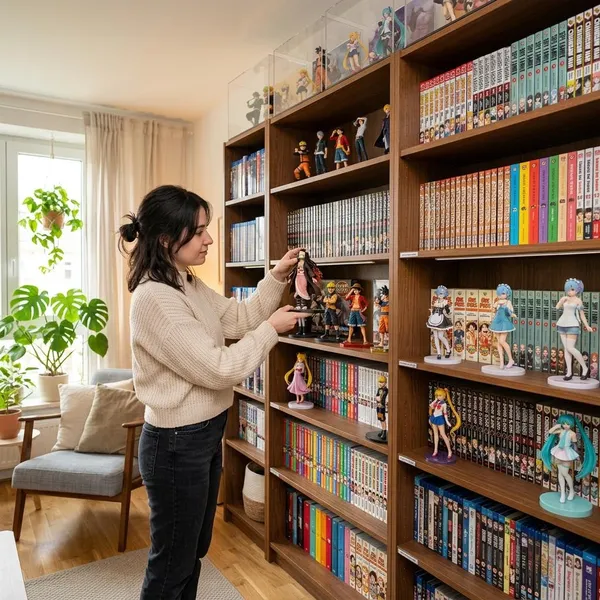
Once the shelf type is settled, organize around how you actually use the collection. A reading shelf should not sacrifice convenience just to match colors. A display shelf can be more dramatic, but it still needs a clear logic so new items have somewhere to go.
Group by series
Grouping by series is the easiest all-around method. Keep the manga together, then add related figures, acrylic stands, postcards, or art cards nearby. It works especially well for ongoing collections because new volumes and merch have an obvious home.
Group by character
Use character grouping when you have several items for one favorite character. Give the strongest piece the best sightline, then build around it with smaller stands, badges, keychains, or prints. Risers are helpful here because flat merch can disappear behind figures if everything sits on the same level.
Group by item type
Grouping by item type is the practical choice for larger collections. Manga stays easy to grab, figures can be spaced and lit properly, and small merch can live in trays or bins instead of scattering across every shelf.
- Best for daily reading: manga grouped by series and volume number.
- Best for cleaning: figures grouped with enough hand space between them.
- Best for loose merch: acrylic stands, badges, and keychains kept in defined zones.
Group by color or theme
Color or theme grouping is mostly a styling choice. It can look polished for a feature shelf, but it becomes annoying if you often pull manga out to read. A good compromise is to keep most books by series and use color styling only on one display section, such as a pastel romance shelf or a darker action-themed cube.
How to Make an Anime Shelf Look Better
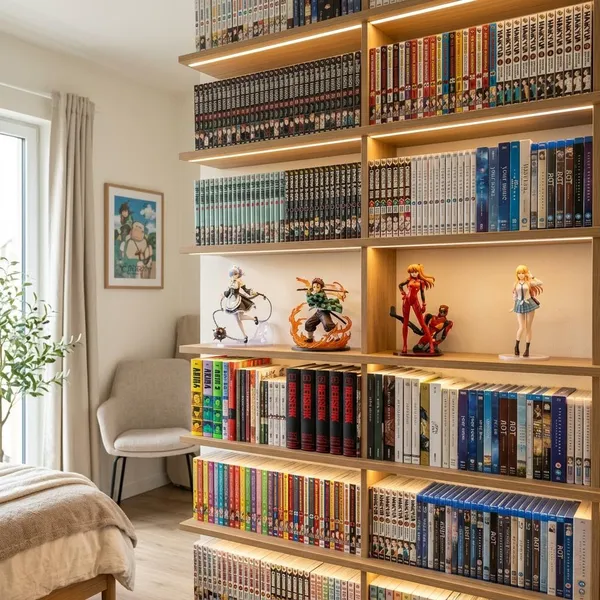
Most anime shelves improve faster by editing than by adding more decor. Start with the pieces that matter, create a clear focal point, and then use small styling choices to support it. If the shelf already has colorful spines, figures, and acrylic stands, extra decorations should be used carefully.
Create a series-themed shelf
A series-themed shelf gives the display an instant point of view. Choose one title, place the strongest item first, then support it with matching manga, figures, art cards, or colors from that series. This works well even with a small collection because the shelf feels deliberate instead of half-filled.
If you collect across many series, use one themed shelf as the focal point and keep the rest simpler. Trying to make every section equally dramatic can make the whole room feel busy.
Add simple backdrops
Backdrops are an easy upgrade when the wall or shelf backing looks plain. Printed art, colored board, fabric, or scrapbook paper can work as long as it does not fight the items in front. Busy figures usually need a calmer background; plain manga rows can handle a stronger color behind one centerpiece.
Use subtle shelf lighting
Soft lighting can make figures easier to see, especially in deep shelves or glass cabinets. LED strips, puck lights, or small clip lights are enough for most setups. Avoid harsh direct light on glossy boxes or figure faces, and keep heat and strong sunlight away from printed items when possible.
Leave negative space
Negative space is what stops a display from looking like a crowded haul photo. Leave room above taller figures, small gaps between series, and a little expansion space at the end of manga rows. If you can dust without knocking items over, the shelf is probably spaced better than most.
Limit extra decor
Decor should support the collection, not compete with it. A small faux plant, a frame, a stand, or a storage box can help, but too many unrelated objects make the anime items harder to notice. When a shelf feels messy, remove one thing before buying another accessory.
Conclusion
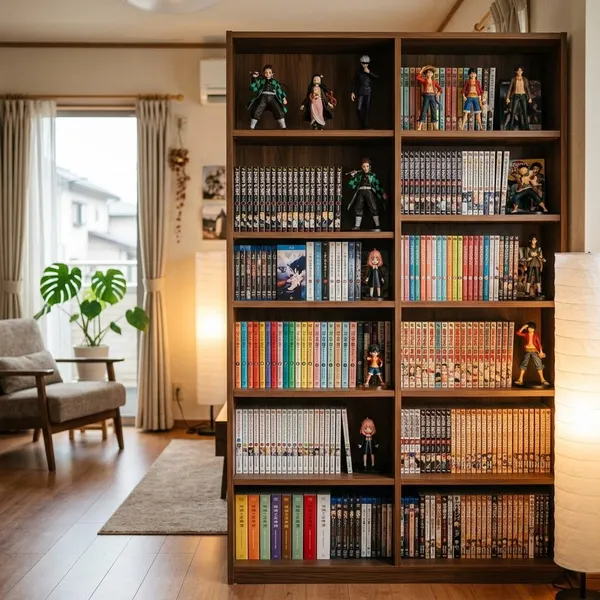
A shelf looks better when it has a job: store manga clearly, protect figures, show off a favorite series, or create one strong display moment. Measure first, choose the layout that matches how you collect, and leave enough space for the next volume or figure. The most polished anime shelves usually are not the fullest ones; they are the ones where every visible item feels chosen.
FAQ
Should manga be organized by series or color?
Organize manga by series if you read it or collect ongoing volumes. Use color only for a display-focused shelf where looks matter more than finding the next book quickly.
Are glass cabinets better for anime figures?
Glass cabinets are better when dust protection and accidental bumps are real concerns. Open shelves are fine for lower-risk figures if you clean regularly and leave enough space around each piece.
How do you display Nendoroids on a shelf?
Use risers so their faces are visible, then group them by series, character, or outfit style. Keep spare faceplates and accessories stored unless they are part of the pose.