How Do You Create an Ideal Shelf for Anime Figures?
The best anime figure collection shelf is the one that fits your figures first and your room style second. Start by checking figure height, base depth, shelf strength, and dust risk before buying anything, because a beautiful shelf that is too shallow or weak quickly becomes frustrating.
Best Shelves for Anime Figure Collections
Different shelves solve different collector problems. A small prize figure setup does not need the same display as a cabinet full of scale figures, and a bedroom shelf used every day may need more flexibility than a protected showcase corner.
Glass cabinets for dust protection
Glass cabinets are the safest all-round choice when you want figures to stay cleaner with less handling. They reduce dust, protect against casual bumps, and make a collection look more finished without needing much extra decor.
Open bookcases for flexible displays
An open bookcase works well if you like changing your display often. It is easy to move figures, add manga, rotate seasonal setups, or create a casual shelf around one favorite series.
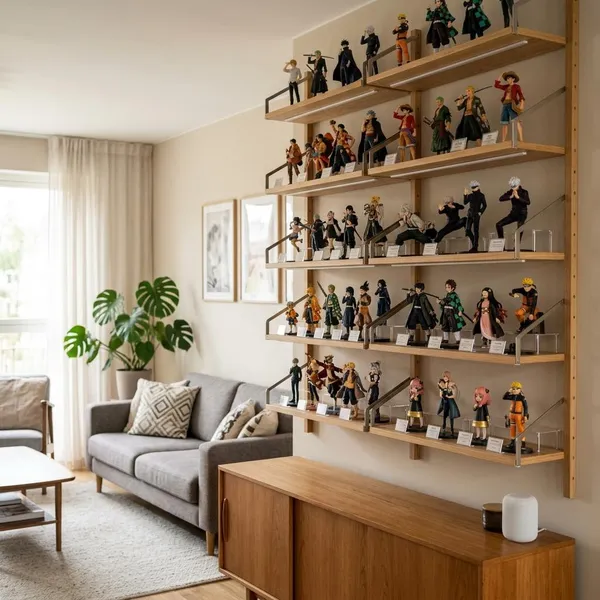
Floating shelves for small collections
Floating shelves are best for a focused display rather than a full collection. If you only want to show three to six favorite figures above a desk or dresser, they can look cleaner than a crowded bookcase.
Cube shelves for themed displays
Cube shelves are useful when you want clear separation. One cube can hold a single anime, another can hold character variants, and another can store accessories or boxes.
Acrylic cases for premium figures
Acrylic cases are a practical middle ground when only a few figures need extra protection. Instead of enclosing the whole collection, you can protect a centerpiece figure, a signed item, or a figure that would be annoying to dust.
Choose clear, stable acrylic with enough internal height and base space. Very cheap cases can look cloudy or flimsy, which defeats the purpose if the figure is meant to be the highlight.
How to Choose the Right Figure Shelf
The first checks should be practical: figure size, shelf depth, weight limit, room space, and future growth. Style matters, but it should come after the shelf can safely hold and show the collection.
Match the shelf to your figure sizes
Anime figures vary more than product photos suggest. A standing 1/7 scale figure may fit easily, while a smaller figure with wings, a sword, or a large base may need more space.
Check the shelf depth
Shelf depth decides whether your figures look displayed or squeezed in. Measure the full footprint, including the base, hair, weapons, capes, and effects, not just the character's body.
| Collection type | Depth check that matters |
|---|---|
| Nendoroids and small figures | Enough room for bases plus a little front clearance |
| Prize figures | Base depth and whether faces stay visible in two rows |
| Scale figures | Wide bases, leaning poses, hair, weapons, and display angle |
| Diorama-style setups | Front-to-back layering without hiding the rear figures |
Check the weight limit
Weight adds up faster than it looks, especially when figures share space with manga, acrylic cases, risers, and lighting. Check the load limit per shelf, not only the total limit for the whole unit.
Be extra cautious with wall-mounted shelves, thin particleboard, glass shelves, and budget cube units. If the shelf starts to bow, doors may stop lining up and figures can become easier to knock over.
Measure your available space
Measure the room the way you actually live in it. Include doors, drawers, curtains, outlets, chair movement, baseboards, and the space needed to stand in front of the display.
Leave room for new figures
A shelf that is full on the first day is already too small. Leave at least one section, cube, or shelf area open if you preorder figures or collect from ongoing series.
Open Shelves vs Glass Cabinets
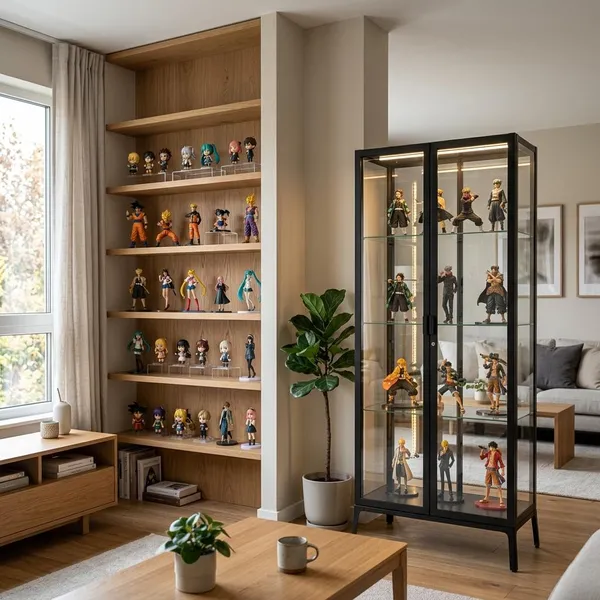
Open shelves are better for access, lower cost, and a more casual room setup. Glass cabinets are better for dust control, protection, and a cleaner collector-style display.
Open shelves for easy access
Open shelves suit collectors who enjoy interacting with their display. You can swap figures, add manga volumes, move acrylic stands, or change a theme without opening doors or working around cabinet frames.
The downside is exposure. In a low-risk room with no pets and little dust, that may be fine. In a busy living room or a bedroom with fans and fabric, the extra dusting becomes more noticeable.
Glass cabinets for better protection
Glass cabinets are the stronger choice when the collection needs a barrier. They help protect against dust, accidental touches, and curious pets, while still keeping the figures visible.
- Choose glass for expensive scales, fragile accessories, or resin pieces.
- Stay open if you constantly rotate figures and do not mind regular cleaning.
- Mix both if only a few figures are high-value and the rest are casual display pieces.
Open shelves for lower costs
Open shelves are usually cheaper and easier to expand. A basic bookcase can become a good display with risers, better spacing, and simple lighting.
Just avoid buying the cheapest shelf without checking stability. Low cost is only a good deal if the shelf can handle the weight and does not wobble when you move figures around.
Glass cabinets for cleaner displays
Glass cabinets make a collection look more contained. Doors create a visual frame, so even a simple arrangement can feel more intentional.
They also work well with hidden LED strips because wires and light sources are easier to tuck away. If you prefer a neat collector wall over a lived-in manga shelf, cabinets usually fit that style better.
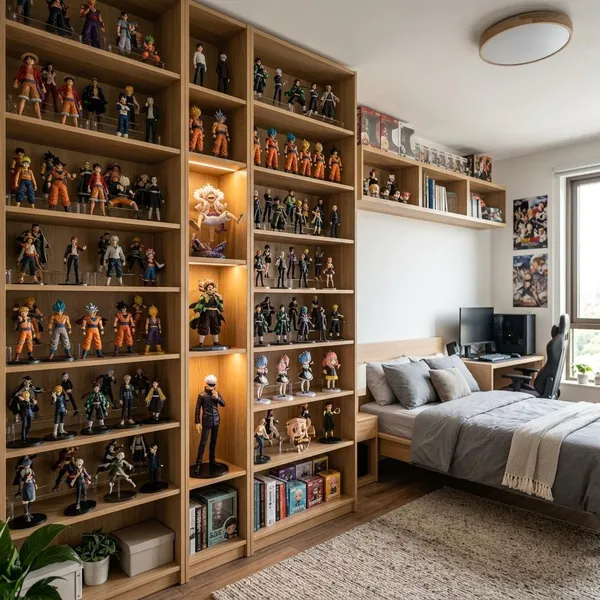
How to Organize an Anime Figure Collection Shelf
Good organization should make the shelf easier to understand at a glance. The best method depends on what you collect most: series, characters, sizes, colors, or themes.
Group figures by series
Series grouping is the easiest way to make a shelf feel intentional. Figures from the same anime usually share design language, colors, and character relationships, so they look natural together.
Group figures by character
Character grouping is best when you collect multiple versions of the same character. Prize figures, scale figures, seasonal variants, and special outfits can become one strong display instead of feeling repetitive.
Group figures by size
Size grouping solves a visibility problem. Tall figures stop blocking short ones, and small figures do not disappear behind oversized bases.
Group figures by color or theme
Color or theme grouping works when your collection comes from many different series. Red-heavy characters, pastel figures, school uniforms, fantasy armor, or villain designs can each form a visually clear zone.
This method is useful if the shelf is part of your room decor, not just storage. Matching the mood of figures, backgrounds, and lighting can make a mixed collection feel designed rather than random.
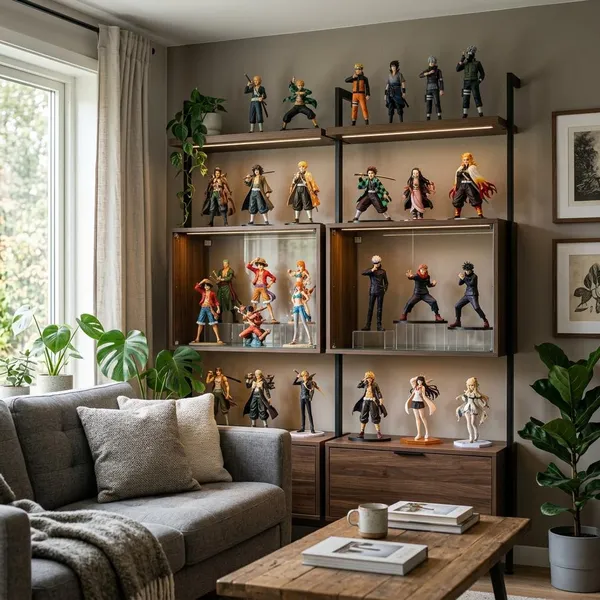
How to Arrange Figures on a Shelf
Arrangement is mostly about sightlines. Every important face, pose, and base detail should be visible from the place where you normally view the shelf.
Place tall figures at the back
Tall figures usually belong at the back because they create depth without hiding everything else. This is especially helpful on deep shelves where a front-row tall figure can block half the display.
Raise small figures with risers
Risers are one of the simplest upgrades for a crowded shelf. They lift short figures above bases and front-row details, so more of the collection can be seen at once.
- Clear acrylic risers: best when you want height without visual clutter.
- Stackable risers: useful for nendoroids, trading figures, and small prize figures.
- Wide risers: better for several figures from the same series.
Keep focal figures at eye level
Put your favorite or most detailed figures where you naturally look first. Eye-level shelves are the strongest display area, so save them for figures with the best sculpting, expression, paintwork, or personal meaning.
Less important figures can still look good above or below, but the centerpiece should not require crouching or standing on tiptoe to enjoy.
Leave space between displays
Empty space is not wasted space. Small gaps between groups make each display easier to read and reduce the risk of catching a sword, hair strand, or accessory while dusting.
Keep every figure visible
A figure that cannot be seen is being stored, not displayed. Stand where you normally view the shelf and check whether faces, silhouettes, and signature details are clear.
If something disappears, fix it with one of three moves: raise it, angle it, or remove the figure blocking it. Small adjustments usually do more than adding another background item.
Best Lighting for an Anime Figure Shelf
Lighting should help you see the figures clearly without creating glare, heat concerns, or visible cable mess. LEDs are usually the most practical option because they run cooler than older bulbs and are easy to fit into cabinets, bookcases, and floating shelves.
Avoid placing figures in direct sunlight. Room lighting can be adjusted, but long sun exposure is much harder on colors and materials over time.
LED strips for even lighting
LED strips are the easiest first lighting upgrade. Placed under shelves or along cabinet frames, they brighten lower levels that normal room lights often miss.
Neutral white usually gives the most natural color for figures. Very warm light can make pale colors look yellow, while very blue light can make skin tones and soft colors look harsh.
Spotlights for featured figures
Spotlights work best for one centerpiece or a small premium group. They add drama and can make sculpted hair, folds, weapons, and translucent effects stand out.
Use them carefully. A beam that is too strong or too direct can create glare on glossy paint or glass. Aim slightly off-center and keep the brightness moderate.
Diffused lights for softer displays
Diffused lights are better for everyday viewing. Frosted covers, light bars, or hidden strips soften the light so the shelf looks calmer and less harsh.
Hidden lights for a cleaner look
Hidden lighting keeps attention on the figures instead of the equipment. Tuck strips under shelf lips, behind frames, or inside trim so the light source and wires are less obvious.
Cable clips, channels, and adhesive guides make a big difference here. A visible wire running across a cabinet can make an otherwise polished display feel unfinished.
Conclusion
A strong figure shelf starts with fit and safety, then improves through layout, spacing, and lighting. If you are unsure where to begin, measure your largest figures, choose the shelf type that matches your dust and access needs, and leave enough open space for the collection to grow without turning crowded.
FAQ
How deep should a shelf be for anime figures?
Many collections are comfortable around 10 to 14 inches deep, but wide bases and effect parts can need more. Measure the full base and the widest pose point before choosing a shelf.
Should expensive anime figures be kept in a case?
Usually, yes. A glass cabinet or acrylic case reduces dust and accidental contact, which matters more when the figure has fragile parts, detailed paint, or high resale value.
How often should you dust anime figures?
Open shelves often need light dusting every few weeks, while enclosed cabinets can go longer. Use a soft brush or gentle air from a safe distance rather than wiping across small details.