How Can You Organize an Anime Collection Room?
Start an anime collection room by deciding what deserves display space, not by buying the biggest shelves you can fit. Figures, manga, plushies, and wall decor all need different storage, so the room works best when each category has a clear zone and a little breathing room.
How to Plan Your Anime Collection Room
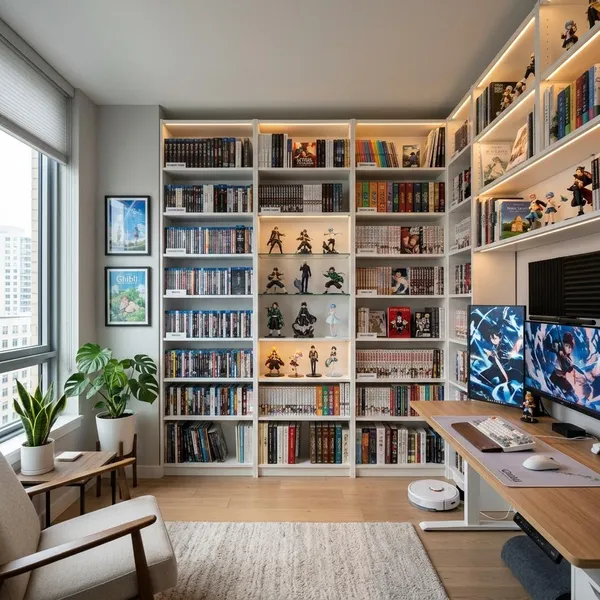
The first priority is control: control the space, the amount on display, and how much cleaning you are willing to do. A room can look impressive online but feel frustrating at home if the chair cannot move, the shelves are too shallow, or every figure needs dusting twice a week.
List what you want to display
Make three groups: items that should always be visible, items you can rotate, and items that can stay stored. Favorite figures, signed pieces, complete manga runs, or one main franchise shelf usually belong in the first group. Extra plushies, seasonal decor, duplicate items, and less-loved figures are better for rotation.
- Always display: your best pieces and the items you enjoy seeing daily.
- Rotate sometimes: plushies, smaller figures, acrylic stands, and seasonal items.
- Store long-term: empty boxes, backups, delicate extras, and items that make shelves look crowded.
Measure your space
Measure wall width, shelf depth, ceiling height, door swing, outlet position, and the space needed for a chair or bed. These boring numbers prevent the most common mistake: buying furniture that technically fits but makes the room annoying to use.
For figures, measure the tallest piece including its base. For manga, check whether you collect standard volumes only or also box sets, omnibuses, art books, and hardcovers. A quick sketch with windows, doors, and existing furniture is usually enough to see which wall can actually support the main display.
Choose your display zones
Display zones keep the room from turning into one busy pile of fandom items. A simple setup might use one wall for figures, one bookcase for manga, a desk corner for small decor, and one soft zone for plushies.
Set your budget
Spend first on the pieces that solve real problems: stable shelves, a cabinet if dust is a major issue, and lighting that makes the collection easy to see. Posters, small decor, and extra accessories are easier to add later.
If the budget is tight, finish one good display area instead of half-finishing the entire room. A clean figure cabinet or one organized manga wall will feel better than five mismatched storage fixes that still leave items on the floor.
Best Anime Collection Room Layouts
The best layout depends less on the size of the collection and more on how the room is used every day. A spare room can handle wider zones and taller cabinets. A bedroom or rented apartment needs a layout that protects walking space, sleep space, and desk space.
| Layout | Best for | Watch out for |
|---|---|---|
| One-wall display | Bedrooms, beginners, cleaner rooms | Overloading the single wall |
| Desk and display | Gaming, studying, working, streaming | Losing usable desk space |
| Mixed collection zones | Larger collections with many item types | Repeating the same clutter in every zone |
| Small-room vertical | Tight bedrooms or shared spaces | Putting heavy items too high |
How to Display Anime Figures
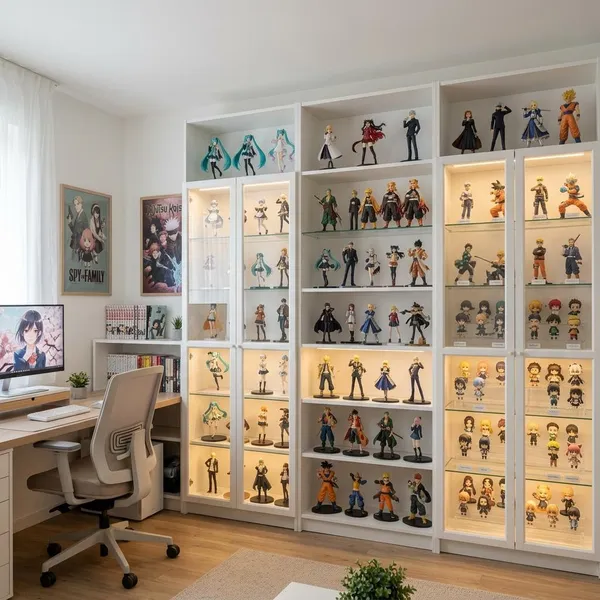
Figures usually become the visual center of the room, so they need more than just an empty shelf. The main choice is between easy access and lower maintenance. Open shelves are flexible but collect dust. Glass cabinets cost more and take more space, but they protect figures better.
Before placing figures, check height, base size, shelf depth, and sunlight. Direct sun can fade packaging and may affect materials over time, so a bright window is not always the best display spot.
Open shelves for easy access
Open shelves are best if you like rearranging figures, taking photos, or changing displays often. They are affordable, easy to expand, and work well for prize figures, Nendoroids, and mixed displays with books or prints.
The trade-off is dust. If the shelf is near a bed, window, fan, or high-traffic area, expect to clean it more often. Keep the display loose enough that you can dust around figures without moving the whole shelf every time.
Glass cabinets for dust control
Glass cabinets make sense for scale figures, delicate pieces, or figures you do not want to clean constantly. They also make a small collection look more deliberate because the cabinet creates a clear boundary.
- Choose cabinets for higher-value figures or long-term displays.
- Use soft lighting so colors look clean without turning the cabinet blue or harsh.
- Check door clearance before placing the cabinet in a tight corner.
Risers for smaller figures
Risers solve the "back row disappears" problem. Clear acrylic risers are especially useful for small figures because they add height without adding much visual clutter.
Wall shelves for tight spaces
Wall shelves are useful above desks, dressers, or low bookcases when floor space is limited. They are good for themed mini displays, smaller figures, and lightweight decor.
Be cautious with weight and mounting. Renters or anyone unsure about wall hardware may be better off with freestanding shelves, adhesive options for light art only, or over-desk units. A fallen shelf can damage both the wall and the collection.
How to Store and Display Manga
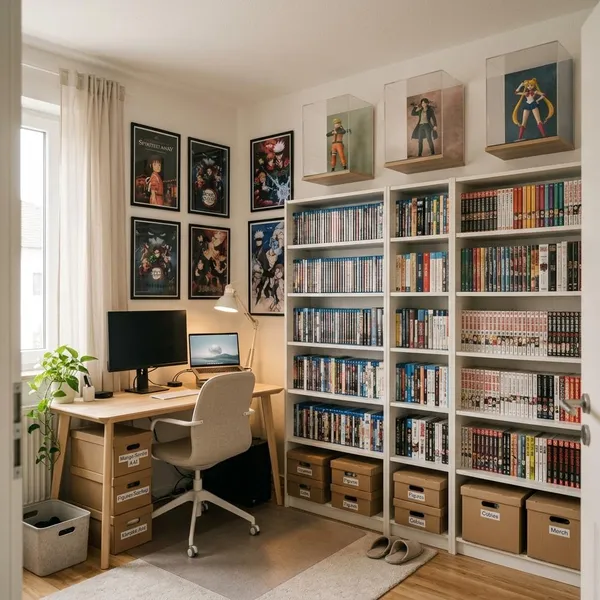
Manga storage has to handle weight first and style second. A shelf full of books gets heavy fast, and weak shelves can bow over time. Once the support is right, you can think about sorting, display rows, box sets, and special editions.
Adjustable shelves for mixed sizes
Adjustable shelves are helpful if your manga collection includes standard volumes, omnibuses, hardcovers, art books, or Japanese editions. They let you reduce wasted vertical space instead of forcing every shelf to fit the tallest book.
Bookcases for larger collections
For a larger manga collection, use a full bookcase rather than scattered small shelves. It keeps series together, makes the room look more intentional, and is usually easier to maintain.
- Sort by series if you want the easiest reading access.
- Sort by genre or publisher if that matches how you browse.
- Place heavy rows lower to keep the bookcase more stable.
Deep shelves for box sets
Box sets and collector editions need deeper shelves than regular paperbacks. If they hang over the edge, they look messy and are easier to bump.
Use box sets as visual breaks rather than stacking them wherever they fit. A box set beside the matching manga run can make the shelf feel styled while still keeping the collection easy to understand.
Closed storage for special editions
Closed storage is best for signed books, limited bonuses, first-print extras, delicate slips, or editions you rarely handle. It reduces dust and keeps fragile items away from daily shelf movement.
How to Display Plushies Without Clutter
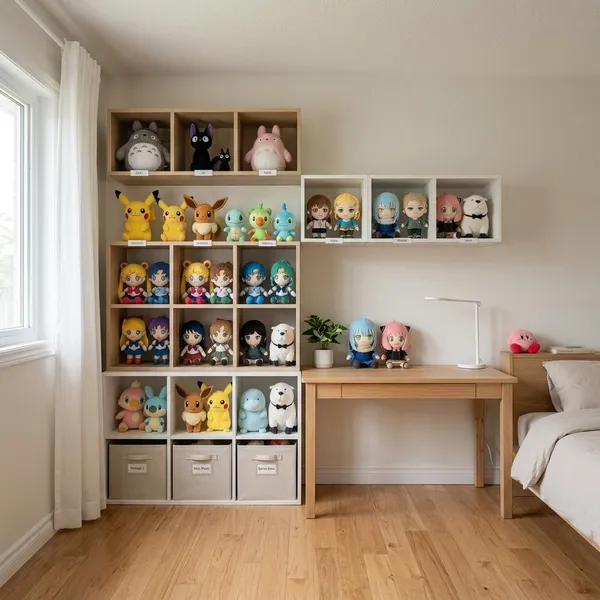
Plushies make an anime room feel warmer, but they also create clutter faster than figures or manga because they spread onto beds, chairs, and corners. Give them a limit from the start: one shelf, one hammock, one basket, or a small bed display.
Dedicated plush shelves
Dedicated shelves make plushies look collected instead of scattered. They work best for medium plushies that can sit upright, lean neatly, or group by franchise.
Wall hammocks for small plushies
A wall hammock is a good choice for small plushies that disappear on deep shelves. It also uses corner space that might otherwise do nothing.
Baskets for rotating displays
Baskets are useful when you own more plushies than you want visible every day. Keep the current favorites on display and place the rest in a basket or lidded bin so they do not migrate to the floor.
- Use open baskets for plushies you swap often.
- Use lidded bins for longer storage or dust control.
- Rotate by theme if you like changing the room without buying more decor.
Bed displays for a few favorites
A bed display works only when it stays small. Two or three favorite plushies can make the room feel cozy and personal, especially in a bedroom setup.
Conclusion
A good anime room is not the one with the most items on show; it is the one where your favorite pieces are easy to enjoy and the room still works for daily life. Start with the collection you actually have, give each category a clear place, and leave enough space to clean, sit, read, and add new items without rebuilding everything later.
FAQ
What is an otaku room?
An otaku room is a personal space built around anime, manga, games, figures, or related fandom interests. It can be a full room, a bedroom corner, or even one well-planned wall.
Should anime figures stay in their boxes?
Only if protection or resale matters more to you than display. Many collectors display favorites and store the original boxes separately for moving, long-term storage, or future selling.
How often should you dust an anime collection room?
Open shelves usually need light dusting every week or two, while glass cabinets can often go longer. If the room has pets, fans, or a bed nearby, check visible surfaces more often.