ACNH Animal Crossing Collectibles Checklist
If your ACNH collecting has turned into "I think I donated that already," you need a checklist that separates what you caught, donated, learned, cataloged, and still need. A good animal crossing collectibles checklist should tell you what to do next, not just show a giant completion list.
Animal Crossing Museum Checklist
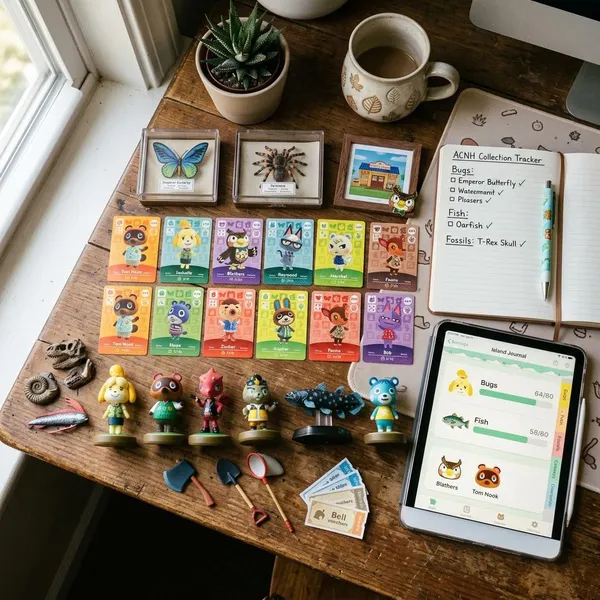
The Museum is the cleanest place to start because it has clear finish lines: fish, bugs, sea creatures, fossils, and genuine art. Track each category separately so you can see whether you are missing seasonal critters, final fossil pieces, or rare Redd purchases.
For museum items, the most useful columns are usually collected, donated, and missing. For critters, add month, time, and location. For art, add a short authenticity note. That keeps the checklist useful while you are actually playing, not just after the fact.
Fish
Fish need more detail than a simple name list because location and time matter. Mark whether each fish appears in the river, pond, sea, pier, river mouth, or clifftop, then add active months and hours for your hemisphere.
- Short play session: filter for fish available right now.
- End of the month: hunt anything leaving soon before common fish.
- Rare target: note if fish bait is worth preparing, especially for pier or river mouth fish.
Bugs
Bugs are easy to miss when the checklist does not show where they spawn. Add quick location notes such as palm trees, flowers, stumps, ground, villagers, or rotten turnips so you know where to look without opening another reference every few minutes.
If you only play casually in the evening, time windows matter more than rarity. A rare bug that appears while you are online is a better target than one that technically exists this month but only spawns during hours you never play.
Sea creatures
Sea creatures deserve their own section because diving has a different rhythm from fishing or bug hunting. Track months, hours, shadow size, speed, and donation status. A simple speed note like slow, medium, or fast can stop you from chasing the wrong shadow for too long.
Fossils
Fossils are not seasonal, so they are less urgent, but the final few pieces can be annoying without a tracker. Group them by dinosaur set and standalone fossil, then mark donated pieces clearly after Blathers assesses them.
This is also the easiest museum category to trade for. If your checklist says you only need a specific skull or tail, a friend can help directly instead of handing you random assessed fossils.
Art
Art should be tracked more carefully than most museum items because Redd's stock is slow and fakes can waste a visit. Use fields for seen, owned, genuine confirmed, and donated.
Keep authenticity notes short enough to read while shopping. A tiny reminder like "real has no stain" or "no fake version" is more useful during a Redd visit than a long description you will not check in time.
Collectibles to Track Beyond the Museum
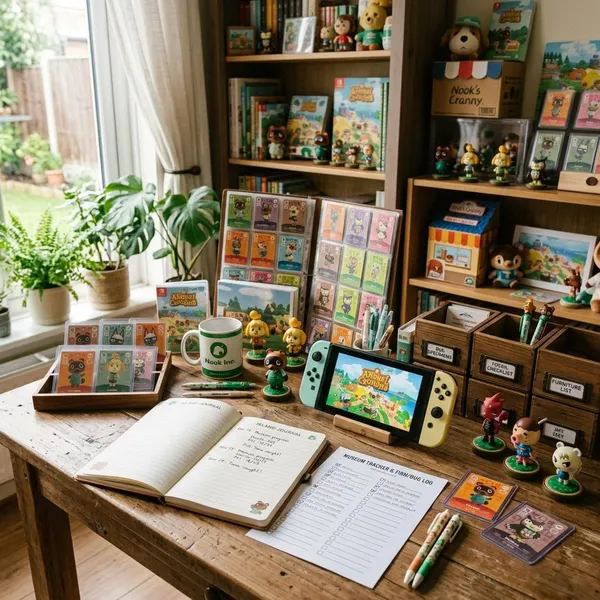
Museum completion is only one version of "done" in Animal Crossing: New Horizons. If you decorate a lot, trade with friends, or care about long-term completion, you will probably also want to track gyroids, K.K. Slider songs, DIY recipes, and cataloged items.
Gyroids
Gyroids are worth tracking by type first, then color only if you care about decorating with specific variants. A simple row for owned, duplicate, customized, and displayed is enough for most players.
For a player making music rooms or themed outdoor areas, duplicate tracking is useful. For someone who only wants one of each, it is better to keep the list lean and avoid turning gyroids into storage homework.
K.K. Slider songs
K.K. Slider songs are easy to underestimate because each song feels small, but the full set takes time. Track whether you own the song and whether it is registered, especially if you move music between rooms often.
- Own: you have a copy somewhere.
- Registered: it can play from a music player.
- Spare: safe to gift, trade, or place elsewhere.
DIY recipes
DIY recipes should not be mixed with furniture ownership. Learning a recipe means you can craft it whenever you have materials; owning the crafted item only means you have that one object.
Seasonal recipes are the ones most worth tagging. Cherry blossom, mushroom, festive, spooky, and other limited sets can be frustrating if you realize too late that you never learned the final recipe.
Cataloged items
Cataloged items matter most if you decorate often. Once a reorderable item is in your catalog, you may not need to keep it in storage, but you do need to know which color or variation you unlocked.
A practical catalog tracker should include item name, variation, source, and reorderable status. That prevents the common mistake of thinking a furniture set is complete when you only cataloged one color.
How to Track Your Collection Progress
One checkmark is not enough for ACNH collecting because different items have different kinds of progress. A fish can be caught but not donated. A recipe card can be owned but not learned. A chair can be cataloged but not sitting in storage.
The cleanest setup is to use separate status labels and update only the ones that apply. That makes the checklist faster to scan and reduces the "wait, did I actually finish this?" problem.
Collected
Collected means you obtained the item at least once. For critters, that usually means caught. For fossils, it means dug up and assessed. For songs, gyroids, art, or furniture, it means you owned or held it at some point.
This label is helpful, but it should not replace donated, learned, or cataloged. Treat it as proof of first contact, not proof of completion.
Donated
Donated should only mean the Museum accepted it. This applies to fish, bugs, sea creatures, fossils, and genuine art.
- Not donated: save the first copy for Blathers.
- Already donated: sell it, keep it, trade it, or use it for a model.
- Unsure: hold the item until the checklist is checked.
Cataloged
Cataloged mainly applies to reorderable furniture, clothing, and decorative items. If decorating freedom matters to you, this status can be more useful than storage tracking because it shows what you can order again later.
Track variations separately when color matters. A player building matching rooms will care about the exact version, while a casual collector may only need to know whether the base item has been unlocked.
Learned
Learned belongs to DIY and cooking recipes. Once a recipe is learned, the card does not need to stay in your pocket or storage, so it needs its own permanent marker.
If you trade recipe cards, add a small duplicate note. That tells you which extras are safe to give away without checking your inventory every time.
Missing
Missing is the action column. It should show what still needs work, but it becomes much more useful when paired with availability, location, or source.
| Status | Best used for | What it tells you |
|---|---|---|
| Missing now | Seasonal critters | Hunt this during the current month and time window |
| Missing later | Unavailable critters or events | Do not waste time looking for it today |
| Missing source | DIYs, art, songs | Check the right visitor, event, bottle, villager, or shop |
How to Track Seasonal Collectibles
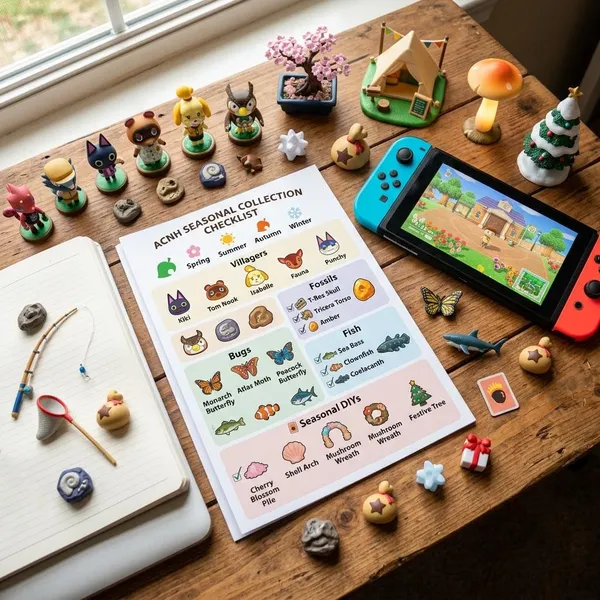
Seasonal tracking is where a checklist becomes more than a record. It should quickly answer: what can I get today, what is leaving soon, and what should I ignore until later?
This matters most for fish, bugs, sea creatures, seasonal DIYs, and event items. If you play year-round, you can spread the work out. If you only return to the game for a few weeks at a time, leaving-soon and active-now labels become essential.
Mark the available months
Use month columns or a simple active-month note for each seasonal collectible. Always match the list to your hemisphere, because Northern and Southern Hemisphere availability can differ.
A month grid is especially useful when you are deciding what can wait. Something available for several more months is lower priority than a creature leaving when the calendar flips.
Mark the active hours
Hours stop you from hunting at the wrong time. Use exact ranges when you have them, or broad labels like morning, afternoon, evening, and overnight if you prefer a cleaner checklist.
For a player with limited weekday time, this is the difference between a useful plan and a frustrating one. If you usually play after dinner, filter for creatures active then instead of chasing everything missing.
Mark the spawn locations
Location notes should be specific enough to change your behavior. "Sea" and "pier" are not the same hunt. "Tree" and "palm tree" are not the same bug route.
- Pier fish: prepare bait before starting.
- Palm tree bugs: check beach trees and clear distractions if needed.
- Clifftop fish: make sure your route reaches upper rivers quickly.
- Diving targets: watch shadow size and movement speed.
Flag items leaving soon
Leaving-soon flags should stand out more than normal missing marks. Use a color, star, or "last month" label so urgent targets are visible at a glance.
How to Finish the Museum Faster
The fastest museum progress comes from prioritizing by availability first, then rarity. Rare items matter, but an item that disappears tomorrow should usually beat one that stays in rotation for weeks.
A simple routine works well: check what is missing, filter for what is active today, save first copies for donation, and update the checklist before moving on to selling or decorating.
Focus on critters leaving soon
Start each month-end session with fish, bugs, and sea creatures that are leaving soon. If several targets share the same time and location, group them into one focused hunt instead of bouncing around the island randomly.
This is especially helpful for casual players. Even a 20-minute session can make real progress if it targets one urgent pier fish, palm-tree bug, or diving creature instead of a full missing list.
Check new monthly arrivals
At the start of a new month, check fresh arrivals before routine chores. New critters are easier to remember when they first appear, and catching them early gives you the rest of the month for harder spawns.
- First day of the month: filter for new arrivals.
- First week: donate easy catches immediately.
- Later in the month: switch attention to anything still missing and leaving soon.
Save new donations first
The first copy of any new museum item should go to Blathers before selling, gifting, decorating, or storing. This habit matters most for expensive fish, rare bugs, genuine art, and fossils near the end of completion.
If you are not sure whether something is donated, place it near the Museum or keep it in a dedicated "check first" spot until your list is updated. That small pause prevents a lot of avoidable repeat hunting.
Track missing fossils
Once most fossils are donated, stop thinking of fossils as a daily random task and start tracking exact missing pieces. Grouping by full dinosaur display makes it easier to see whether you need one final part or several unrelated fossils.
Fossils are not urgent like seasonal critters, but an accurate list makes trading much easier. Ask for the exact missing piece instead of accepting duplicates you will only sell later.
Verify art before donating
Verify art before you buy it when possible, not just before donating. Blathers rejects fakes, but the real loss is missing the chance to buy a genuine piece when Redd finally has one.
Keep authenticity reminders short and practical. During a quick Redd visit, a five-word visual note is often better than a full explanation.
Conclusion
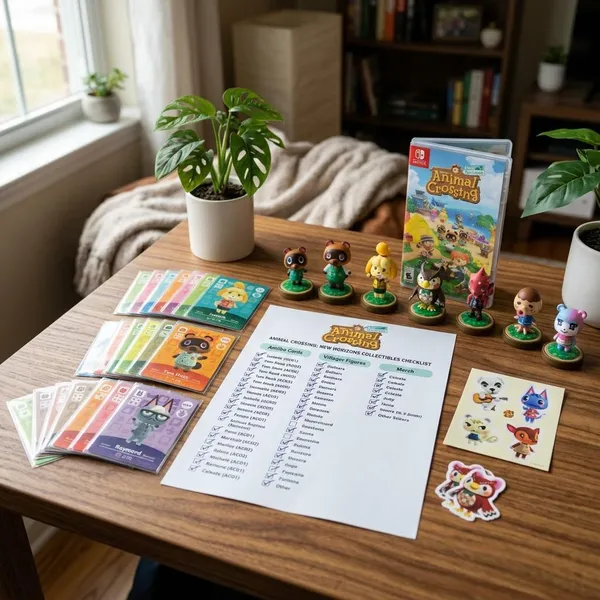
A checklist works best when it helps you choose the next action, not when it tries to record everything in the most complicated way possible. Start with Museum donations, add separate tracking for recipes, songs, gyroids, and catalog items if they matter to your play style, and give urgent seasonal items the loudest markers.
FAQ
Does the Museum checklist include every ACNH collectible?
No. The Museum checklist only covers fish, bugs, sea creatures, fossils, and genuine art; completionists should track non-museum collections separately.
Should I track DIY recipes separately?
Yes. A learned recipe is different from owning a crafted item, so a separate DIY list prevents confusion when trading cards or finishing seasonal sets.
Is a printable or digital ACNH checklist better?
Digital is better for filtering by month, time, and missing status, while printable works fine if you prefer a simple casual tracker beside your console.
What should I collect first for 100% completion?
Prioritize seasonal critters that are active now and leaving soon, then genuine art whenever Redd appears; fossils, songs, recipes, and catalog items can usually progress in the background.